On the Saturday of my third week studying in Cebu, I signed up for a day tour combining whale shark swimming in Oslob with cliff jumping and canyoneering at Kawasan Falls. What I’d looked forward to most was swimming with the whale sharks, and that part felt like it lasted five minutes; it was the afternoon of jumping and canyoneering, completely outside my comfort zone, that I still remember in detail. This post covers the full timetable, what the package includes and what it costs, and an honest account of what this kind of tour is like when you can’t really swim.
The full study abroad post: Studying English in Cebu | 6 Weeks of IELTS, NT$140,000 and What Cpils Is Really Like
01A cebu day tour, Start to Finish
We left at four in the morning, had breakfast at McDonald’s at 5:20, reached the car park at 9:30 ready to head out to sea, ate lunch at 11:30, spent the entire afternoon surviving in a gorge, grabbed dinner at a roadside convenience store at 6:30 in the evening, and got back to school at ten at night — nearly 18 hours door to door.
The operator’s published itinerary is a 4 a.m. pick-up and a 6:30 p.m. drop-off at your hotel, but once you’re on the road, almost every segment gets adjusted to the group’s fitness and the traffic, which stretches the return leg considerably. If you have anything planned for the next day, keep this whole day clear.
02Whale Shark Swimming in Oslob: The Part I Wanted Most, Over in Five Minutes
Oslob, at the southern tip of Cebu in the Philippines, is a world-famous spot for swimming with whale sharks. It opens daily from 6:00 a.m. to noon, which is also when the whale sharks feed. Since you can’t wear sunscreen in the water, the earlier you arrive the better — the sun is gentler, there are fewer people, and you get a closer look at several whale sharks feeding.
There are local rules for interacting with the whale sharks at Oslob, both for your own safety and to protect these gentle animals. The main ones: stay at least 4 to 6 metres away and never touch them; no flash photography; keep your life vest on the whole time; and avoid shouting or chasing them, so their natural behaviour isn’t disturbed.
After getting off the bus and changing into swimwear, we read the briefing in a pavilion and put on life vests. Worried about losing my flip-flops in the water, I left them on the shore — which turned out to be a mistake, because the whole walk from the beach into the water is over stones, and just getting to the outrigger was miserable. A friend lent me his slippers, which spared me the barefoot stone gauntlet; you can in fact leave your flip-flops on the boat without any risk of losing them.
Following the guide, our group boarded an outrigger with bamboo frames on both sides to hold onto and headed straight out. Not being handed a mask on the way out worried me — I thought I’d have to open my eyes in the sea — but masks were handed out once we reached the viewing area, and you can leave your glasses with the crew who stay on the boat. Unfortunately I never got mine to sit properly; it kept sliding down, I spent the whole session adjusting it, and I swallowed a lot of seawater as a result. On top of that I’m not a strong swimmer, and when the whale shark passed the current suddenly got much stronger. I nearly couldn’t get back to the boat, and in the end a friend had to push me back. The part of the trip I’d looked forward to most felt like it was over in five minutes.
The actual in-water time for whale shark snorkelling at Oslob is normally 30 minutes. That excludes the safety briefing and the boat ride to and from the viewing area — from arriving at the site to getting out of the water, the whole thing takes roughly 1 to 1.5 hours.
03Canyoneering to Kawasan Falls: Well Outside My Comfort Zone
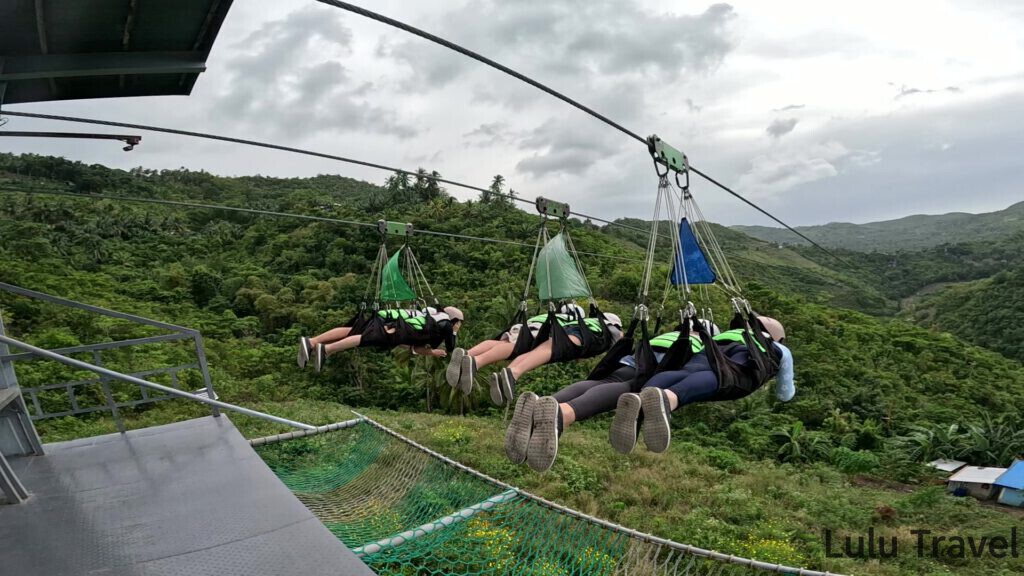
After lunch at 11:30, we put on canyoneering shoes and helmets, and the afternoon began with the optional zipline. Compared with walking an hour to the starting point, the zipline is the faster and easier way in, and it was the most relaxing part of my day — the ride even felt a little long. At that point I was still naively assuming I’d handle the rest of the afternoon just as easily.
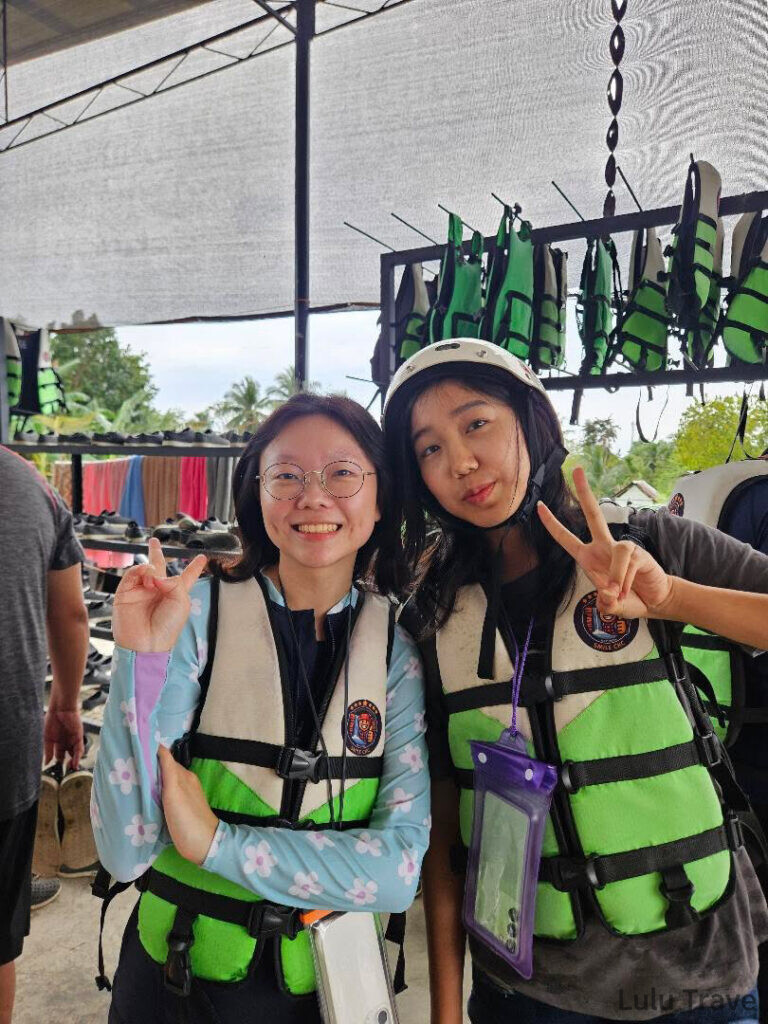
Don’t pick canyoneering shoes in your exact size, or wear socks with them. Mine were too snug and the rims rubbed my ankles raw over the course of the route.
Once we were off the zipline, it was an endless sequence of jumping, wading and drifting. At the first jump point, from somewhere I found the nerve to go first, and I choked immediately — even pinching my nose shut, the water forced its way up. It took a moment to come round, and the guide pulled me aside. After that I got steadily more timid and steadily more tired. The route does include stretches of floating on your back, and lying on the water watching the tall trees slide past overhead, like a video playing itself, time seemed to slow down. The rest of the time I kept asking the guide how many jumps were left, how much further it was, whether there was a route that skipped the jumps. By the time we reached the halfway rest area, I felt like I’d hit my limit.
Worried the force of the water would wash out our contact lenses, all of us wore glasses instead, which meant an endless loop of handing them to the guide, jumping, and putting them back on. It kept the glasses safe, but not being able to see clearly made everything more frightening.
04What the Package Includes
I joined a private charter, with the vehicle, guide, meals and all entrance fees included. On site you can pay extra for things like a waterproof camera, or the zipline that gets you to the canyoneering start point faster.
I joined a private charter; independent travellers can book the same route through the platform
What’s Included
- Private charter with an air-conditioned vehicle and a local driver-guide
- Light breakfast and lunch with drinks
- Whale shark swimming: fees, boat, snorkelling gear, life vest and guide
- Badian River canyoneering: licensed guide, life vest, helmet, canyoneering shoes and transfer to the jump-off point
- Kawasan Falls entrance fee and guided swimming (the end point of the canyoneering route)
- Return hotel transfers from Cebu City or Mactan, plus bottled water
We had ten people that day, above the nine-person minimum, so the published rate applied and each of us paid about PHP 4,800.
| Package rate (per person, min. 9 pax) | PHP 4,300 |
| Non-Filipino surcharge (per person) | PHP 500 |
| Paid per person | PHP 4,800 |
05If You’re Not Confident in the Water
- Don’t leave your shoes on the shore. The stretch from the beach to the outrigger is all stones and barefoot is rough going.
- You only get the mask once you’re at the viewing area, with barely any time to figure it out. Tighten it as far as it will go — if it doesn’t fit well, you’ll be adjusting it while floating in open water.
- Canyoneering shoes are handed out on site. Too small and they’ll rub the whole way, so swap them the moment they feel tight.
- You can do this without being able to swim, but if you try a jump and find you can’t face the rest, ask early whether there’s a route that skips them.
- The return can run much later than advertised, so don’t schedule anything else for that day.
ENDWas It Worth It?
The whale sharks I’d looked forward to most came down to a felt five minutes, and the jumping and canyoneering I’d expected nothing from is what stayed with me — that’s probably the most honest summary of the day. I won’t pretend it’s a relaxing tour; if you’re not comfortable in water, half of it is sheer stubbornness. But looking back afterwards, that “I actually did it” feeling isn’t something you get anywhere else.
If you’re a confident swimmer, this is the day tour in Cebu most worth booking. If you’re anything like me, read those five points above before you decide.
FAQFrequently Asked Questions
What’s the best season to see whale sharks in Oslob?
Because there’s continuous feeding at the site, whale sharks are there year-round, so the difference is the weather rather than your chances. November to May is the dry season, with settled weather, calm seas and good underwater visibility — that’s the ideal window. June to October is the rainy season and conditions are less predictable, so the tour is more likely to be affected. I went in January and the sea was in great shape.
Can I join if I can’t swim?
Yes. You wear a life vest the whole time, so you won’t sink. But be prepared: the current gets noticeably stronger when a whale shark passes, and I nearly couldn’t get back to the boat — a friend had to push me. The same goes for the afternoon canyoneering: buoyancy isn’t the problem, nerve is. Tell your guide how confident you are in water, and stay with a friend.
Do you have to do every jump on the canyoneering route?
I spent the whole route asking the guide whether there was an alternative that skipped the jumps, and in the end I went off every single one myself. The heights vary, and the later ones take more willpower. If you definitely don’t want to jump, confirm it with the operator before you book rather than once you’re already in the gorge.
What does the Kawasan Falls canyoneering involve?
From the entry point at Badian River you work through wading, cliff jumps, drifting down the gorge and a natural rock slide, finishing at Kawasan Falls. One thing worth knowing: Kawasan Falls isn’t a separate stop you drive to — it’s the end point of this route, so the “canyoneering” and “Kawasan Falls” lines on the itinerary are actually the same segment.
Can independent travellers join? How does it differ from a private charter?
Yes. The version sold on booking platforms is a shared van with guaranteed daily departures, so you don’t have to find other people — the trade-off is sharing the vehicle and moving at the group’s pace. I joined a private charter, which needs nine people to run but lets your own group set the pace. If you’re travelling as one or two, the platform version is the practical choice.