01One Reality Check Before You Go
Hallstatt’s fame needs no introduction — that postcard of the church spire mirrored on a glass-still lake is an image almost everyone who has seen it wants to witness in person. As a UNESCO World Heritage site, it appears in countless Central-Europe guides and is practically a standard fixture of any Austria itinerary. This is an honest account of a day trip from Salzburg; knowing a few things beforehand will set your expectations more accurately.
02Getting to Hallstatt from Salzburg
Hallstatt has no direct train station. From Salzburg the main options are: the Salzkammergut regional train plus a ferry, or a group day trip departing from Salzburg. This time I booked a group day trip through Agoda, departing Salzburg — about 5.5 hours total, of which free time in Hallstatt is 2.5 hours. Each one-way journey is roughly 1.5 hours, longer in rush-hour traffic — a number that matters a lot: subtract three hours of round-trip travel and the time actually spent in Hallstatt is quite limited. If you’re interested in the full Europe itinerary, start here: Traveling Europe with Elderly Family — Planning Logic and Honest Reflections.
03Arriving in Hallstatt: Cloud Cover Blocked the Famous Light
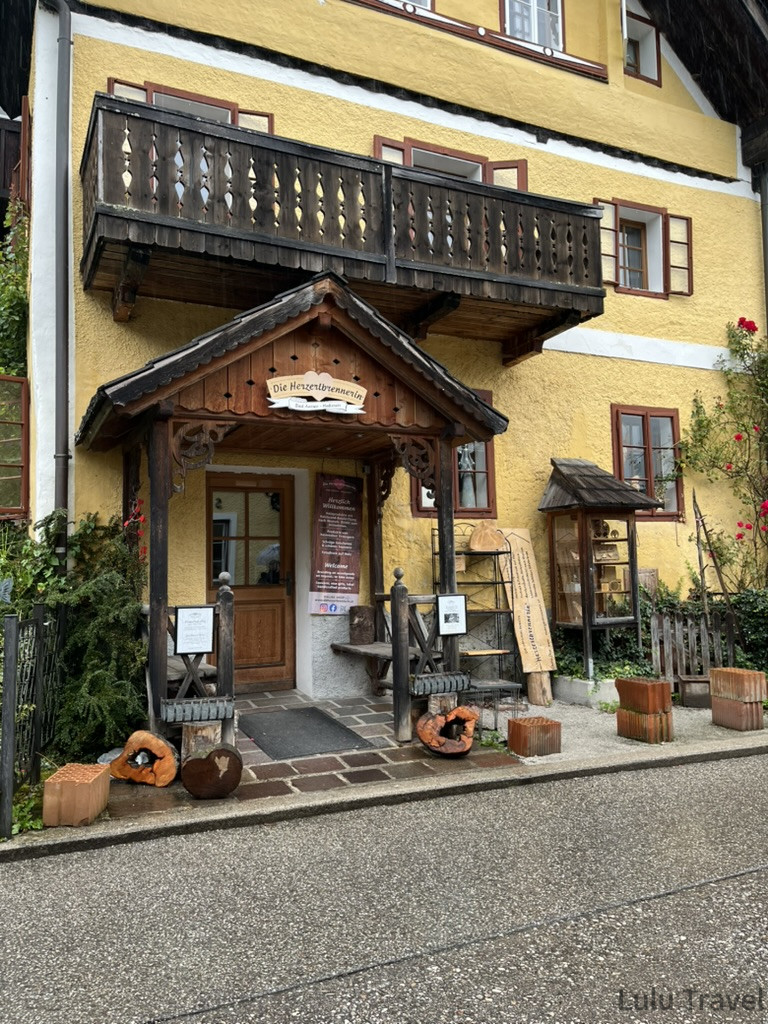
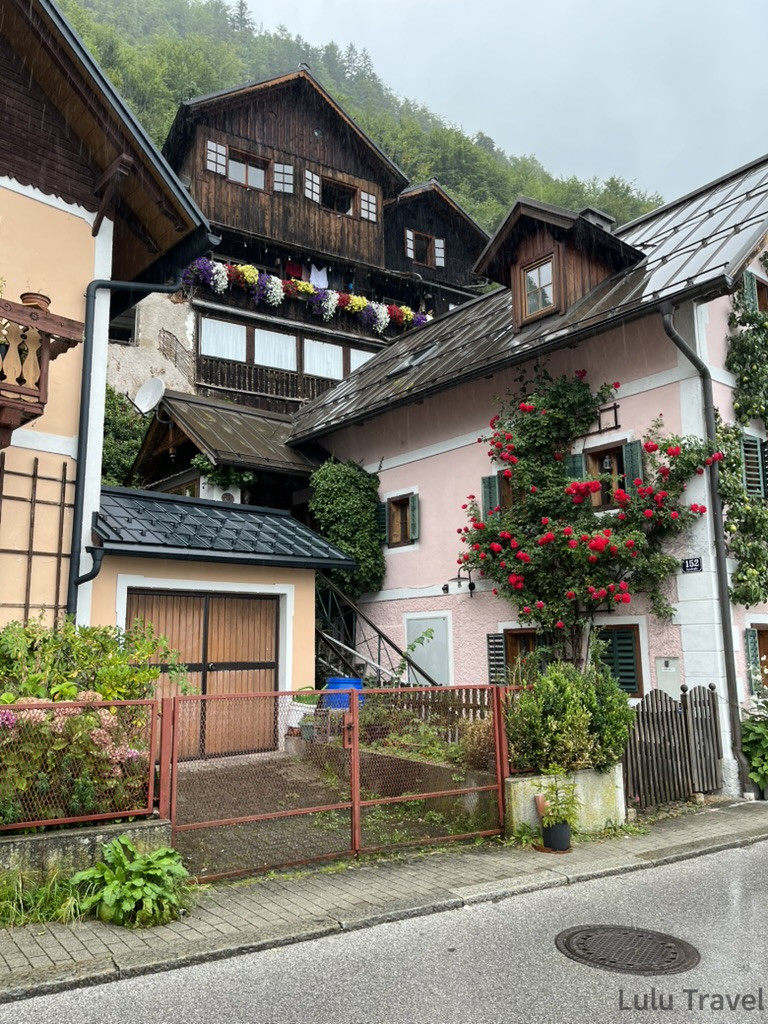
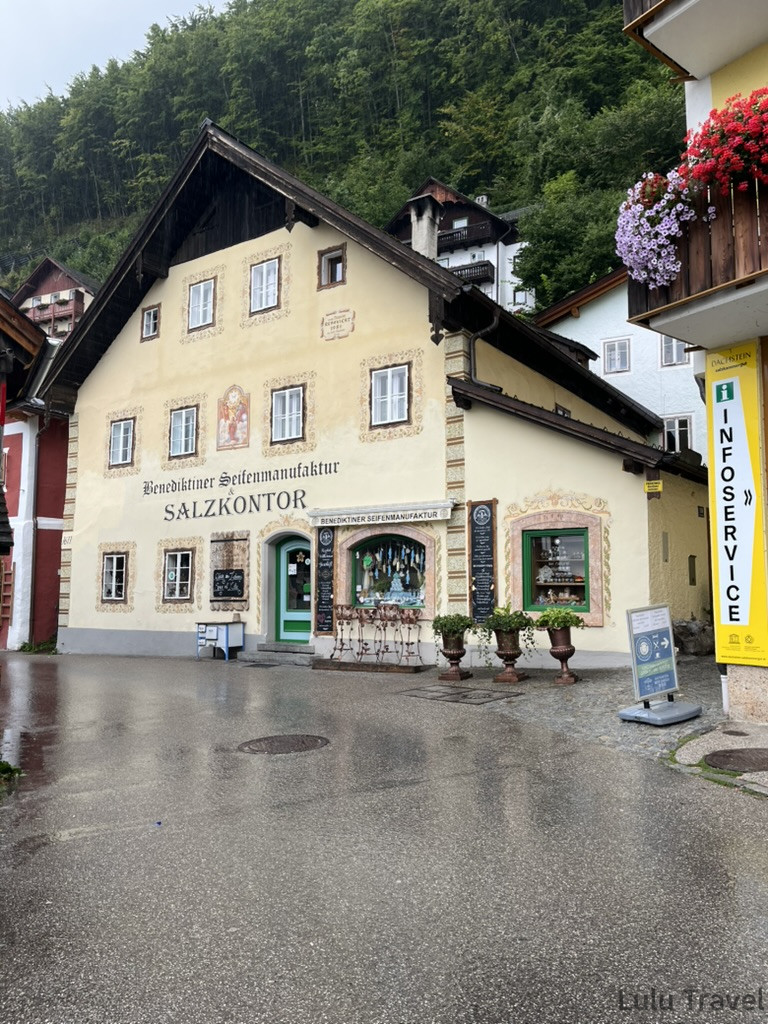
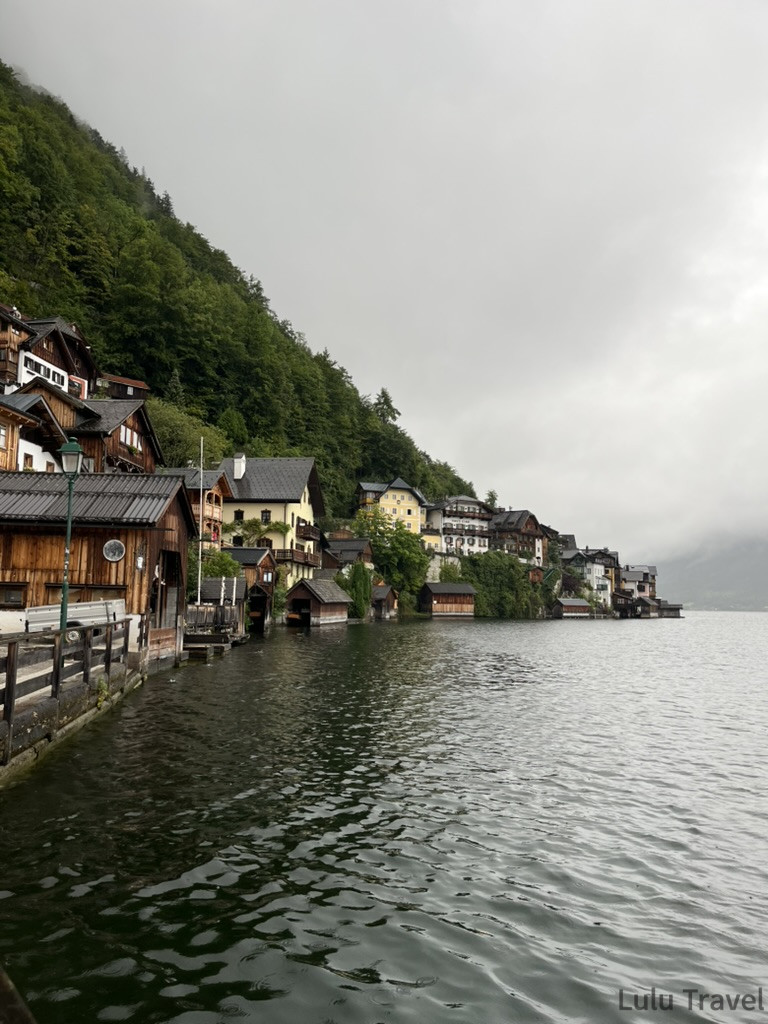
The day we set out was overcast and drizzling, clouds thick as a winter duvet; from the bus window I already knew this wouldn’t be the postcard version. I’d prepared for it mentally, but actually walking into Hallstatt, the “oh, so this is it” feeling landed more clearly than expected. The streets aren’t especially narrow, but with almost no flat land the buildings press tight against the mountainside — the whole town is essentially stacked along the lakeshore and slope.
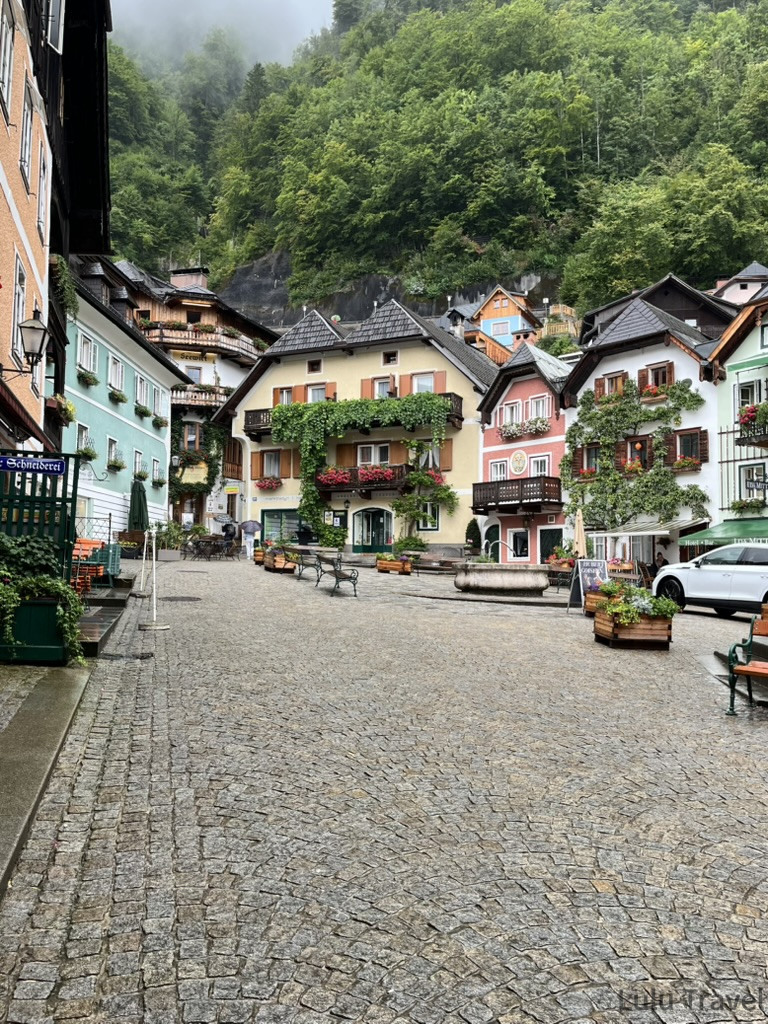
Hallstatt’s Market Square (Marktplatz) is the heart of this World Heritage town, known for its colourful traditional timber buildings and central memorial column, ringed by craft shops, restaurants and cafés against a backdrop of steep cliffs and forest.
04The Photo Spot: Locals Hung a Banner
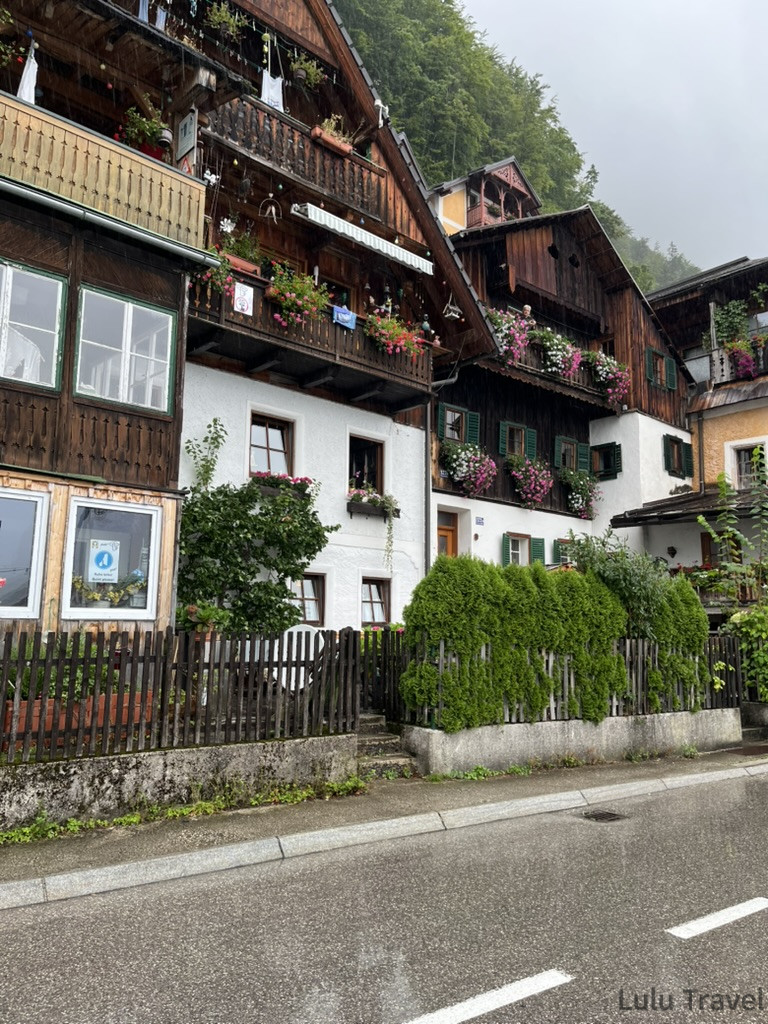
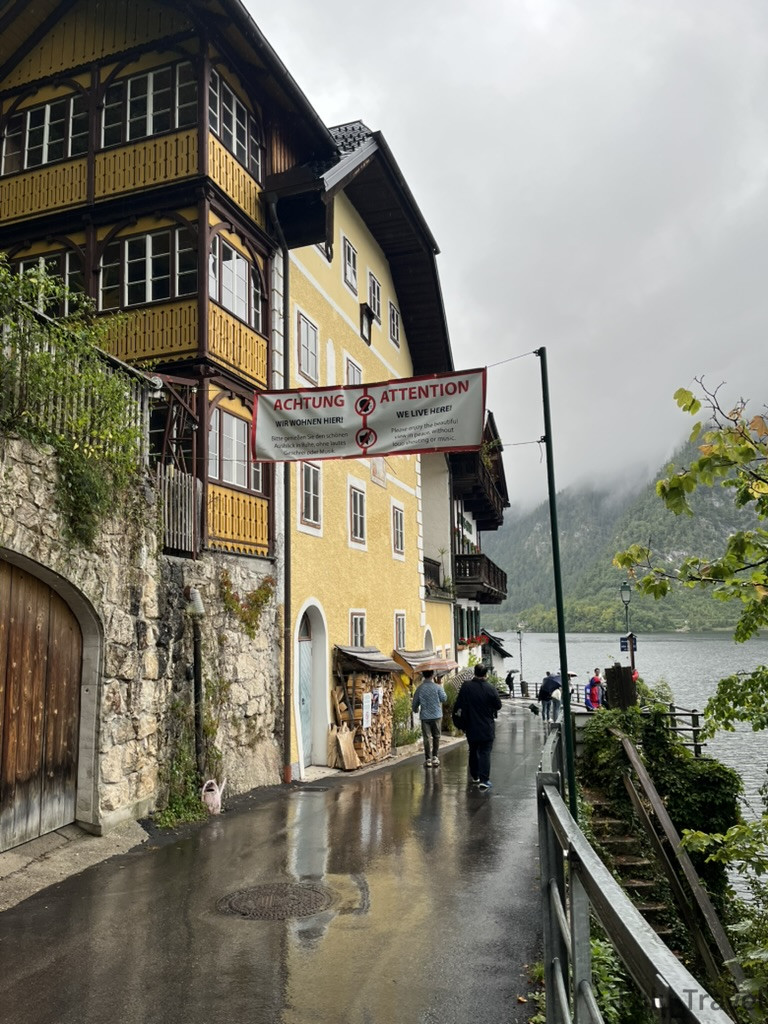
Walking from the market square toward the lake, there are many good angles along the way. Near the shore, a yellow building has a bright red banner in English and German: “ACHTUNG ATTENTION — WE LIVE HERE.” It’s the residents’ response to overtourism, asking visitors not to pose loudly for photos or play music outside their homes. The banner’s very existence is a concentrated image of the real crisis Hallstatt has faced in recent years from surging visitor numbers.
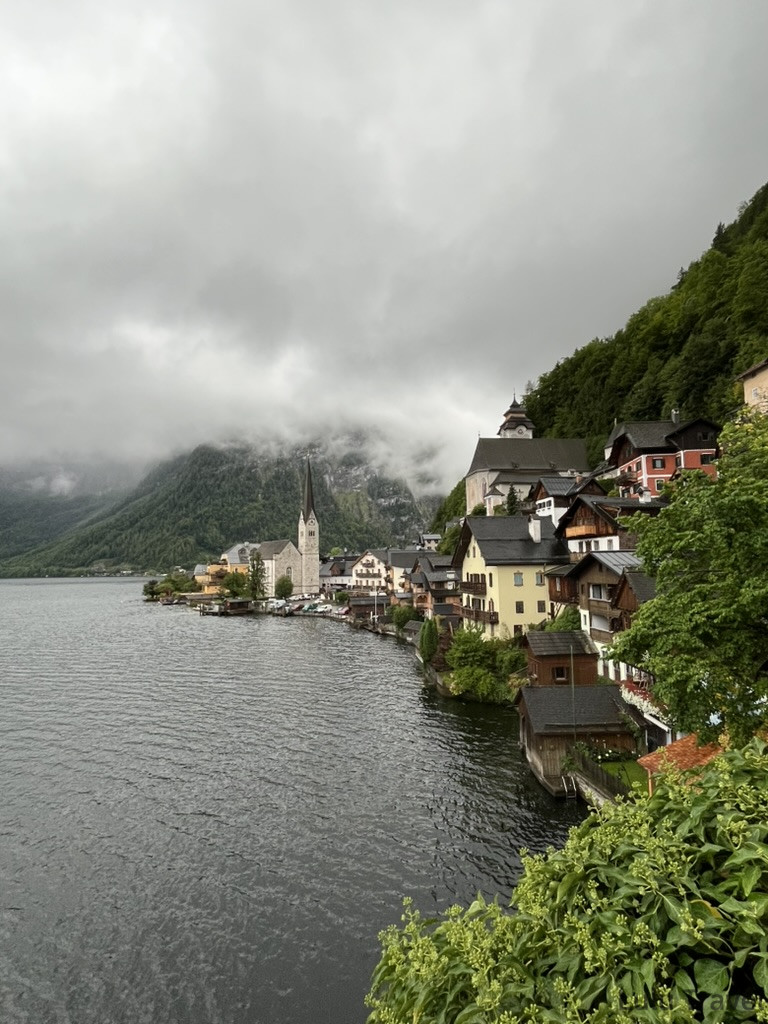
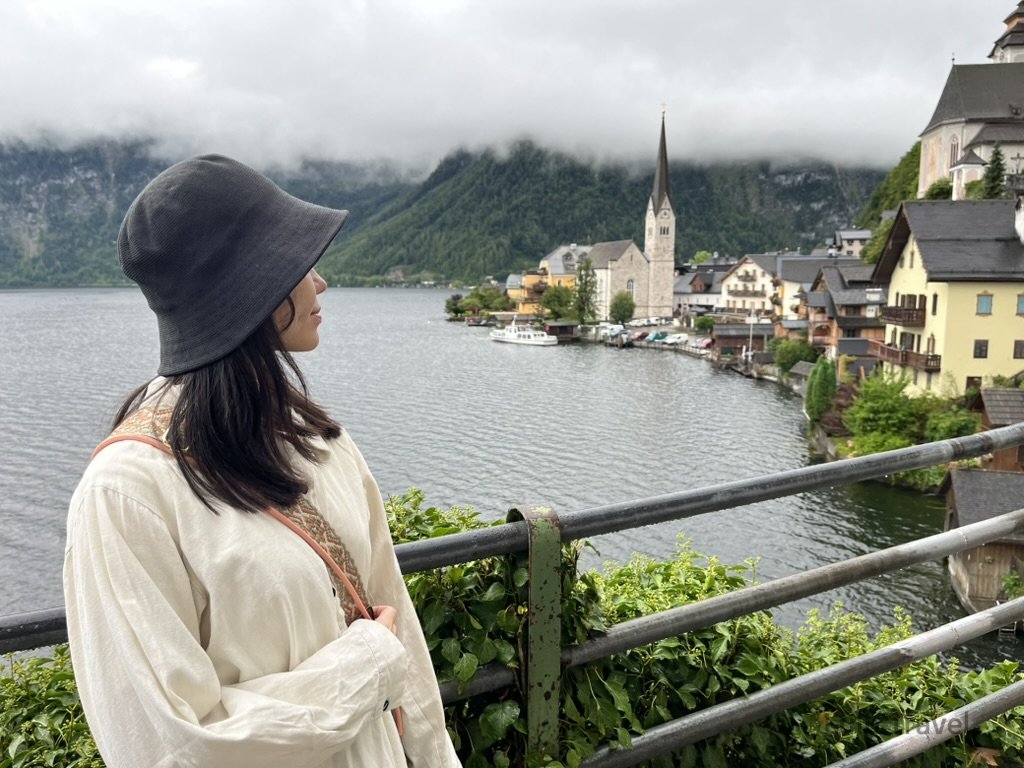
Walking a little further, you reach the so-called “postcard angle” — a spot by the lake where you can frame the church spire, colourful buildings and the water all at once. The clouds stripped Hallstatt of its sunny-day clarity but added a misty, otherworldly softness; they obscured the layering of the scene but couldn’t hide the place’s innate quality. We didn’t meet the wooden boards blocking the view that some have reported — we simply joined the crowd of photographers and quietly completed the main purpose of the trip.
05What to Do with 2.5 Hours in Hallstatt
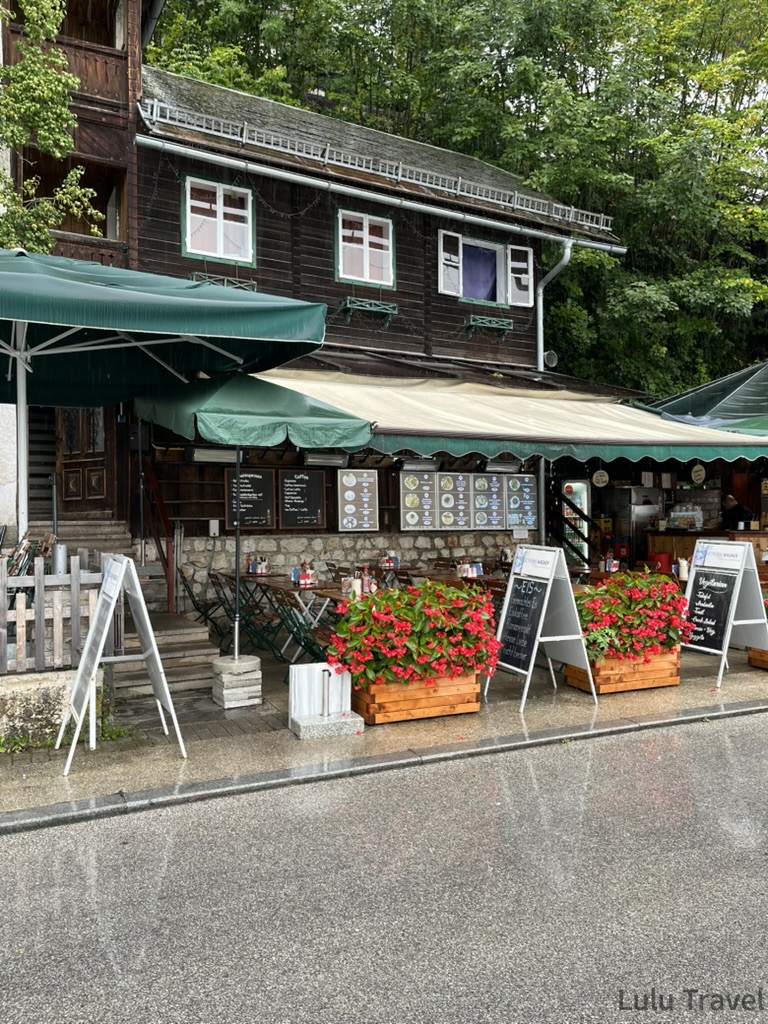
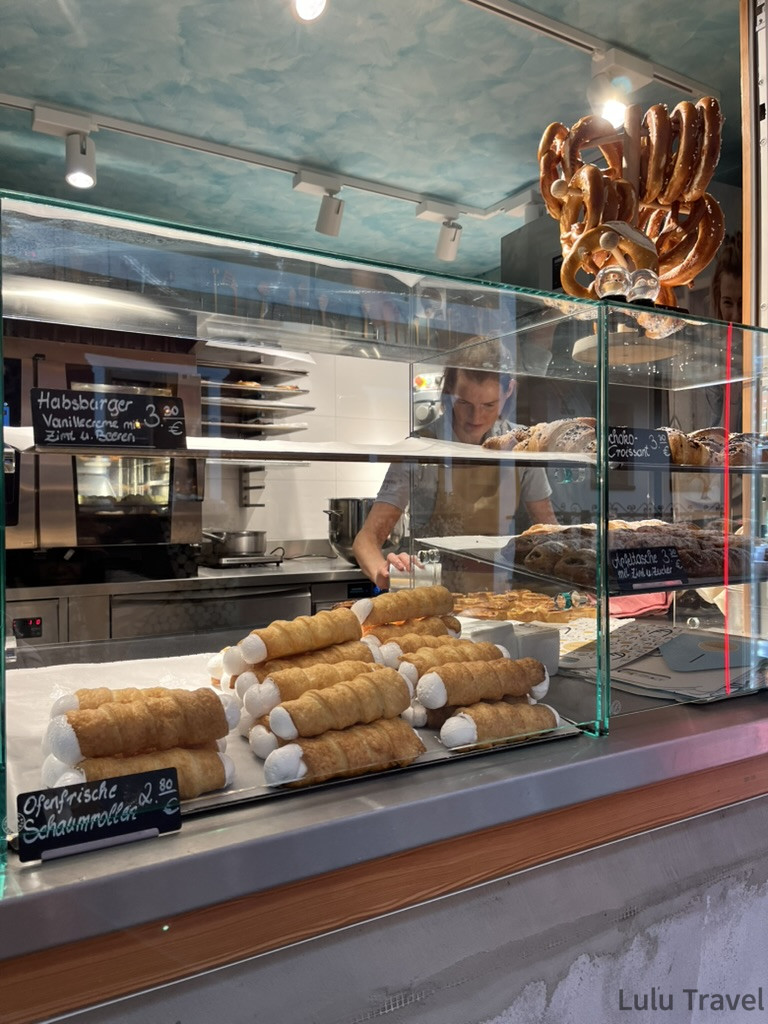
Two and a half hours of free time — plenty to do, and once done it’s about time to get back on the bus. Austrian Schaumrollen (cream rolls) are one of Hallstatt’s worthwhile snacks: crisp, croissant-like pastry twisted into a tube and piped full of cream, visible from across the room in bakery cases, with plenty of other traditional Austrian pastries alongside.
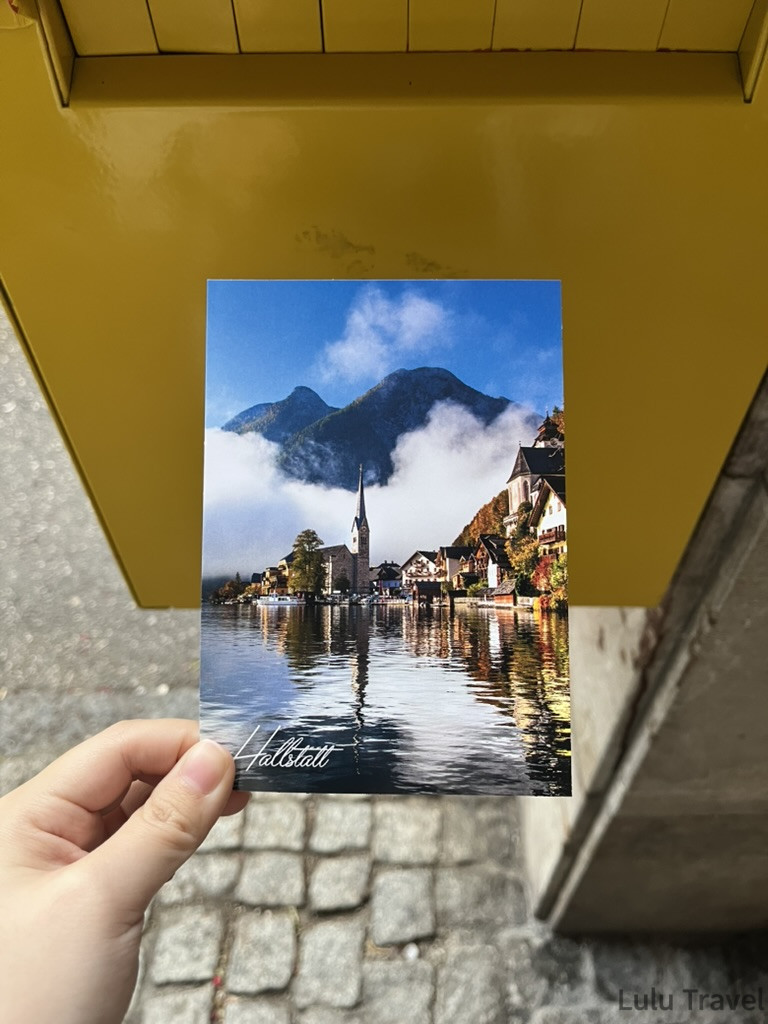
Posting a postcard is my favourite small ritual on every trip — buy one printed with the Hallstatt lake, have it stamped with an Austrian postmark and send it off; it takes about two weeks to reach Taiwan, and getting it after you’re home hits differently than it would in the moment.
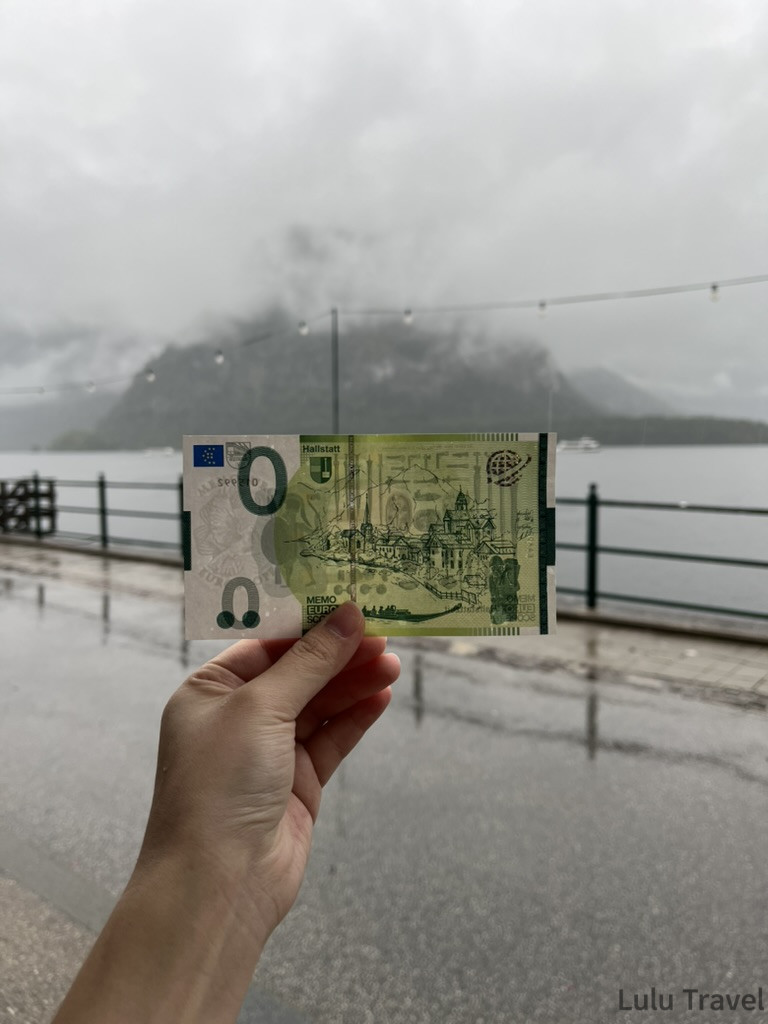
Zero-euro commemorative notes are well worth collecting — printed with Hallstatt imagery and, because they’re made by a professional European banknote printer, carrying a watermark and unique serial number, formatted exactly like real euro notes but with a face value of zero; a popular souvenir in European tourist towns in recent years. The salt mine and the cable-car sky walk are common add-ons, but each needs at least an hour — with only 2.5 hours free you can realistically do only one, or possibly neither. This time I chose neither, keeping the time for the streets and photos.
Zero-euro commemorative notes can be bought at local gift shops or from vending machines near the sights, with coins or by card.
06Hallstatt rainy day travel : My Score
All in all, I give it 60 out of 100. Hallstatt is beautiful — rain can’t hide the structural beauty of a town built against a mountain beside a lake — but it gets only the lowest passing score because of the weather, the time, and the exhaustion of the round-trip commute.
Two and a half hours sounds like enough — walk the main streets, take photos, eat a Schaumrolle, browse the gift shops — and it almost exactly is. But spending over three hours in transit for those 2.5 hours, plus rush-hour delays, is hard to call a fully worthwhile trade. If I planned again, I’d consider staying one night in Hallstatt — early-morning light and evening quiet are its two best times, and a day trip misses both.
07Read This Before Leaving Salzburg
Salzburg is the most convenient base for Hallstatt, and it’s worth two days there to fold in Salzburg’s own sights — the old town, Hohensalzburg Fortress and Hellbrunn Palace are all worth your time. The full Salzburg guide is here: Salzburg Travel Guide — 5 Highlights and Why It’s More Than a Mozart Stopover.
FAQFrequently Asked Questions
Is a Hallstatt day trip from Salzburg worth it?
Worth going, but set your expectations first. I gave it 60 out of 100 — not because the place isn’t beautiful, but because the time-and-energy exchange rate doesn’t feel fully justified: 2.5 hours of free time costs over 3 hours of transit, and weather has an enormous impact. If you really want to feel Hallstatt at dawn and dusk, one night’s stay is far better value than a day trip.
Does Hallstatt have to be visited on a sunny day? Will you regret going when it’s overcast?
You won’t outright regret an overcast day, but the experience is noticeably different and may diverge from what you imagined. The clear lake reflection in postcards needs sunny light; overcast Hallstatt has a misty softness, with wet cobblestones and building colours appearing more even under diffused light. Check the weather beforehand — if several rainy days are forecast, rearranging your other itinerary days is a rational choice.
Are the Hallstatt salt mine and the cable-car sky walk worth fitting in?
Each takes at least an hour, so with only 2.5 hours free you can realistically do only one — and maybe neither. The salt mine is central to Hallstatt’s history and worth the trip for anyone interested in the salt trade; the cable car gives a wider view, but visibility is low in bad weather, cutting its value. This time I chose neither, keeping the time for walking and photography — which felt like a reasonable trade-off.
What souvenirs are worth buying in Hallstatt?
Zero-euro commemorative notes have become a popular collectible — printed with Hallstatt imagery, formatted exactly like real euro notes but with a face value of zero, light, packable and well-designed. Sending a postcard from the local post office is a fixed ritual for many visitors — stamped with an Austrian postmark and mailed home, it feels more meaningful once you’re back than in the moment.