01No Crowds, No Early Alarms: A Relaxed Day in Kurashiki
Okayama rarely tops the list for first-time visitors to Japan; it lacks the urban density of Tokyo and the well-trodden tourist circuits of Kyoto. Yet this day trip to Kurashiki, planned specifically to avoid the crowds, turned out to be the most relaxing day of my recent travels. For anyone who wants to get to know Okayama properly, I recommend the “Okayama Have Fun Pass,” which includes a pass for the Kurashiki Bikan Historical Quarter.
02Why Kurashiki Day Trip from okayama Instead of Somewhere More Famous?
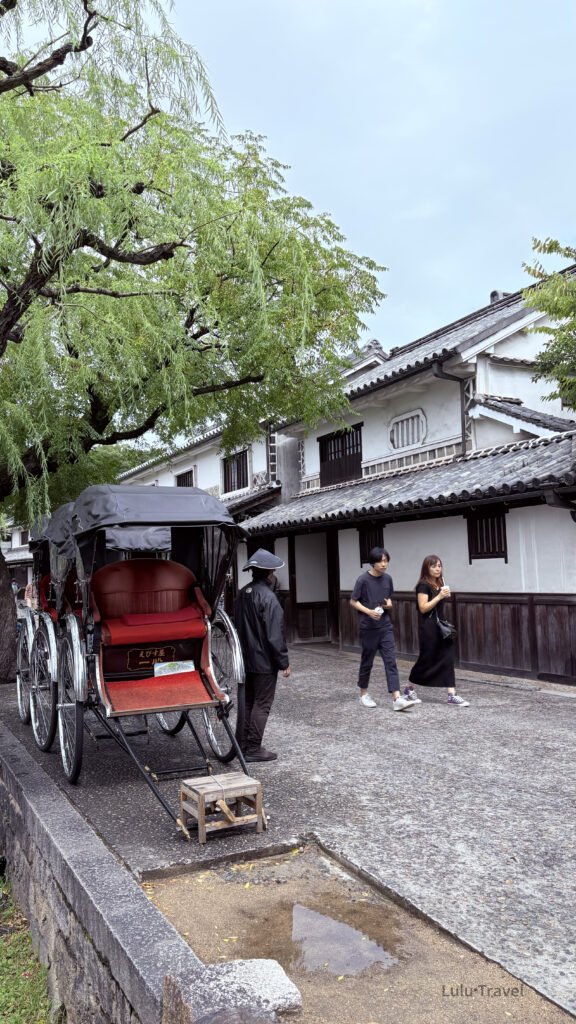
The premise for this trip was clear from the start: no rushing to hot spots, no early alarms, no packed schedules. The Bikan Historical Quarter preserves the streetscape of the Edo period — white-walled storehouses, a canal, low-rise buildings. It’s the kind of place that rewards walking slowly rather than ticking boxes.
When the Bikan Quarter became shogunate territory (tenryō) in the early Edo period of the 17th century, a magistrate’s office was established here, and Kurashiki flourished as a distribution hub for southern Bitchū Province. White-walled residences and storehouses were built between the Kurashiki Canal and Mt. Tsurugata, and the townscape from that era survived largely intact into the 20th century.
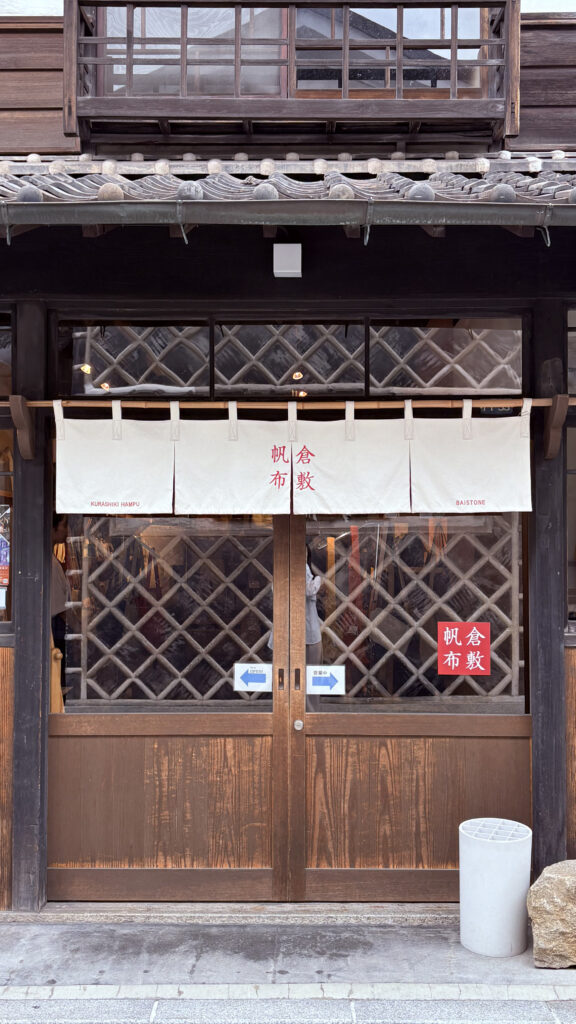
03What It Actually Felt Like Walking Through Kurashiki
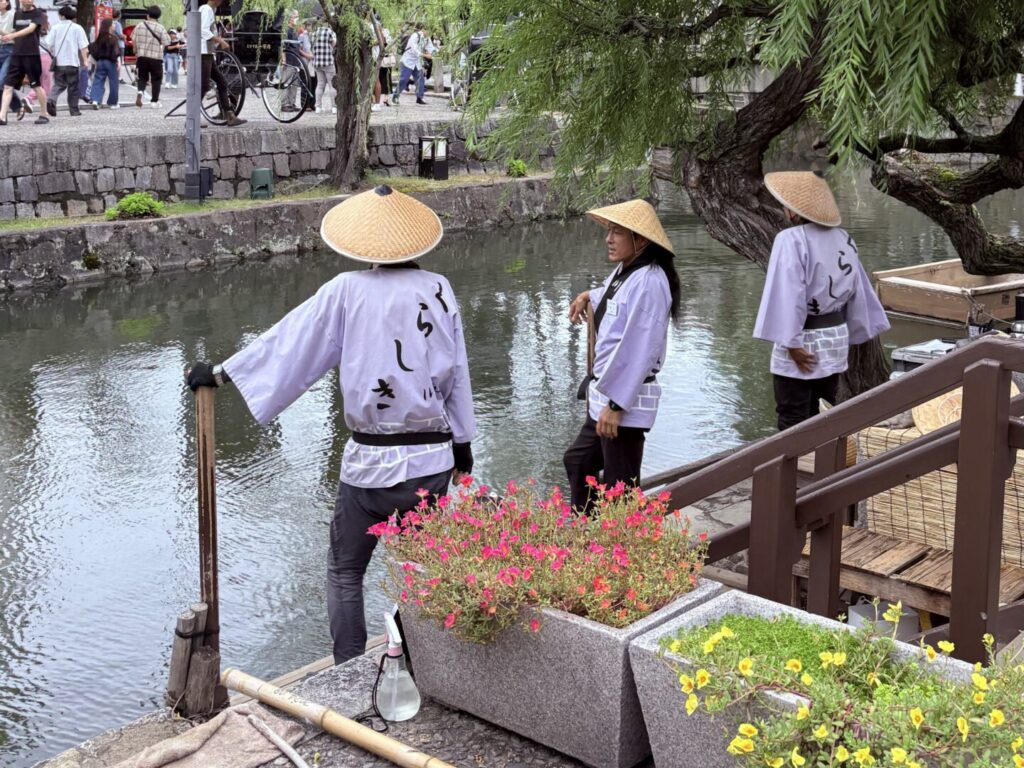
No early reservations, no rushing. We arrived close to midday, already expecting to have missed something — but there were still boats on the canal, the hull decorated with wisteria for some event, willows trailing over both banks. The whole scene was very still.
Walking into the streets, the shops didn’t press for attention. We ate peach soft serve while watching a rickshaw cross the bridge, and the day felt slower than usual. Even without completing a single item on any list, it didn’t feel like a wasted visit.
On top of Mt. Tsurugata, Achi Shrine is home to Japan’s largest ancient “Akebono wisteria.” During the bloom, from late April to early May, crowds come to see it and to buy the famous, beautiful “hana-matoi” amulet.
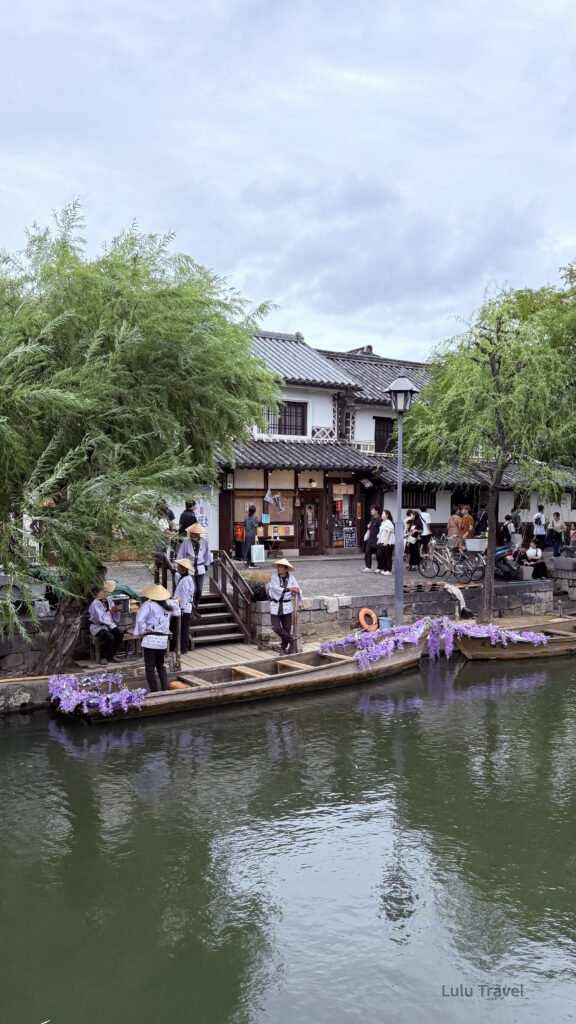
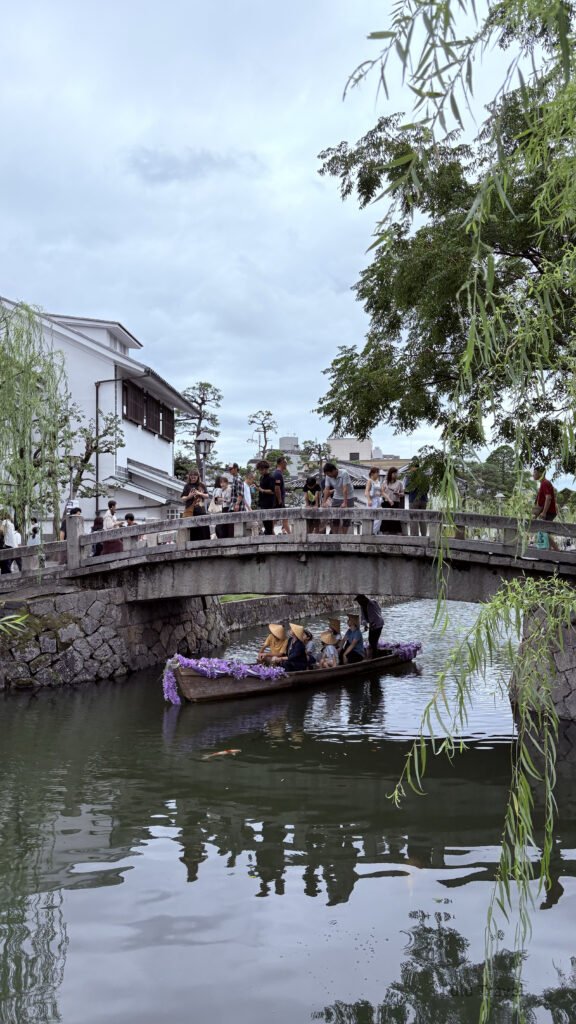
04Why Kurashiki Is Worth the Visit If You Care About Design
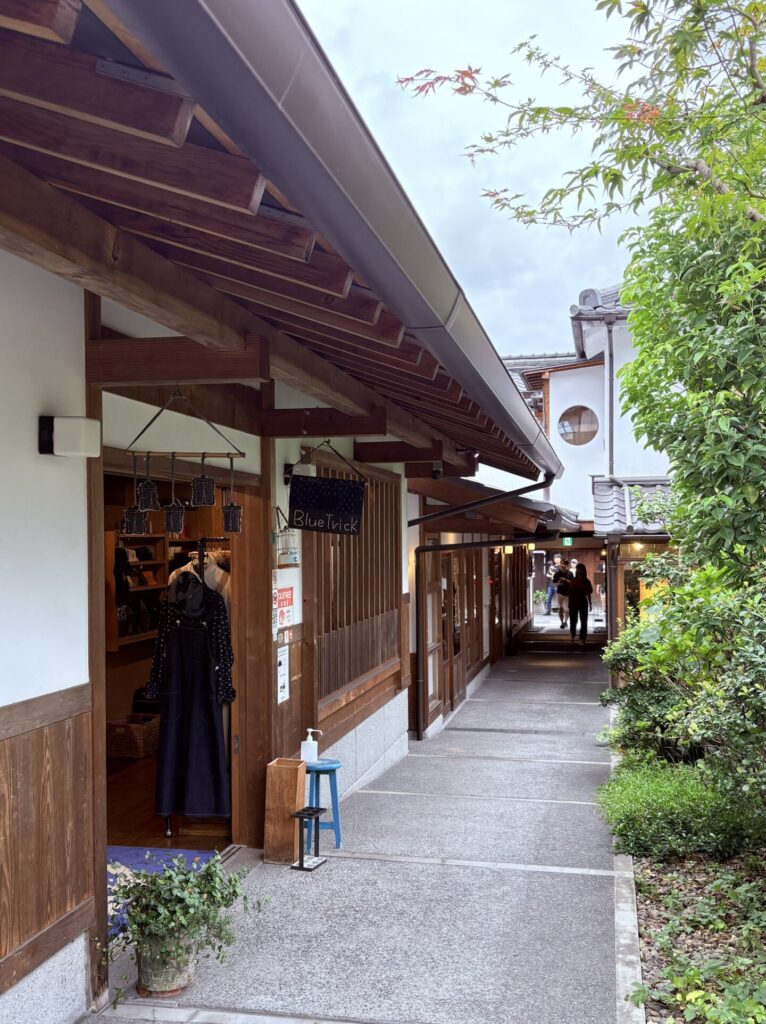
What’s interesting about Kurashiki isn’t any single attraction — it’s the overall atmosphere. Buildings are low, streets have breathing room, shops aren’t in a hurry to sell anything. The space is used naturally, not engineered for photos. For anyone interested in design, this place is worth the trip; it quietly demonstrates something: choosing what not to change is itself a design decision.
The revitalisation of the Bikan Quarter centres on preserving the Edo-to-Shōwa townhouses and white-walled storehouses, combining local regeneration, distinctive shops and cultural experiences — a successful transformation into a tourism hub that blends history and the present.
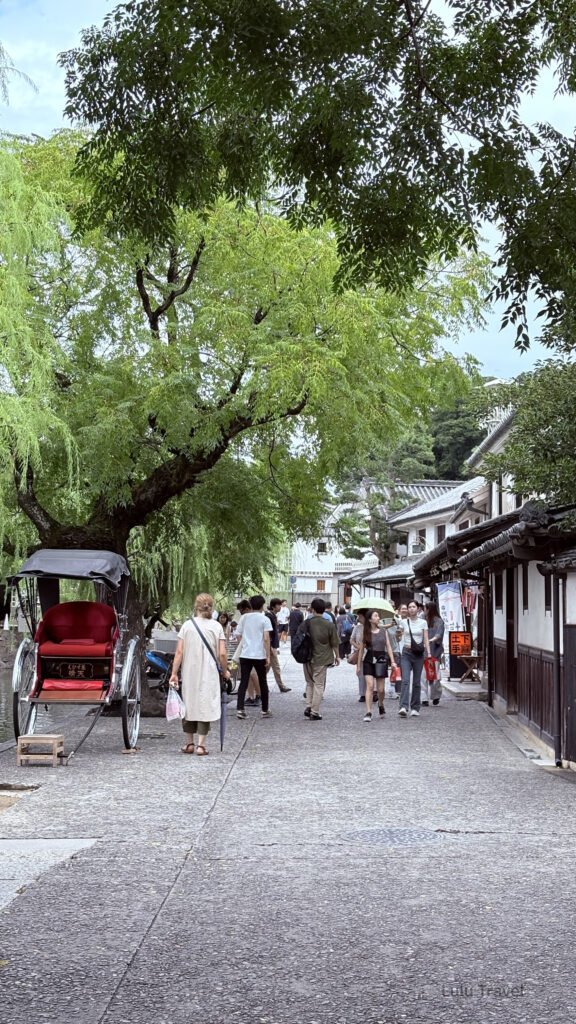
05Pacing Suggestions (Half-Day or Full Day)
If, like me, you want to keep the pressure low: sleep in, head into town mid-morning, walk the canal in the afternoon, and leave before the evening crowds arrive. The Okayama Castle and Kōrakuen Garden I had originally planned ended up becoming reasons to come back rather than things I regretted missing.
Okayama Kōrakuen was begun in 1687 and completed in 1700; it was renamed to its current name and designated a Special Place of Scenic Beauty in 1884. Together with Kenrokuen in Kanazawa and Kairakuen in Mito, it is one of Japan’s three great gardens.
06A Note: Don’t Rush to Buy Souvenirs Here
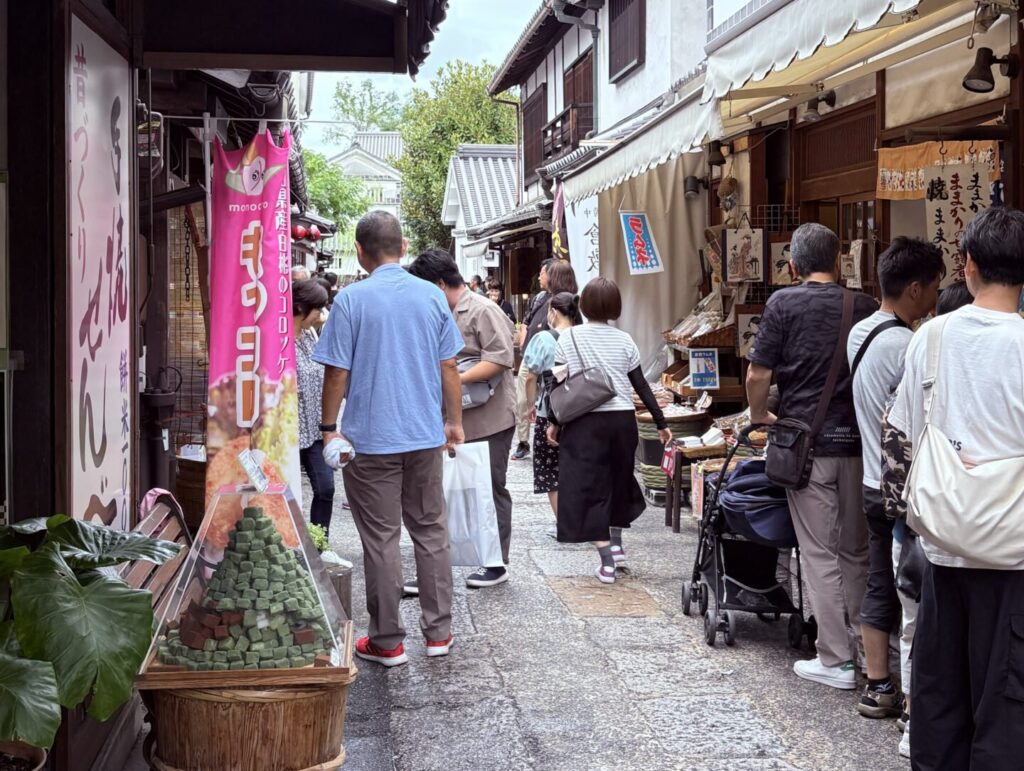
Almost everything sold in the Bikan Quarter is also available at Okayama Station, often at more reasonable prices. If you’re short on bag space, leave Kurashiki for the walking and save the shopping for the station.
Recommended Okayama souvenirs include: Kōeidō’s kibi-dango (Momotarō dumplings), Shimizu white-peach jelly or pudding, and Ōte manjū.
ENDClosing Thoughts
Kurashiki isn’t the kind of place that makes you gasp. But on the way home you notice that you didn’t check your phone all afternoon. If you’re an introvert, or just need a day where nothing is chasing you, Kurashiki fits.
Read more: more Japan travel articles.
FAQFrequently Asked Questions
How much time do you need in the Bikan Historical Quarter? Is half a day enough?
Half a day is more than enough. Arriving mid-afternoon, walking the canal area slowly and leaving by evening takes roughly three to four hours to cover the main streets and canal. If you want to add the Ohara Museum of Art, set aside an extra two hours. Save Okayama Castle and Kōrakuen Garden for another trip — don’t try to fit them all in the same day.
Does the Kurashiki canal boat require advance booking?
No advance booking needed, but it’s worth heading to the Kurashiki-kan tourist information office to reserve a spot as soon as you arrive, to avoid it filling up. The boat runs along the Kurashiki Canal and gives the most direct view of the white-walled storehouse streetscape from water level. In spring the boats are sometimes decorated for seasonal events — wisteria was on the hull when we visited, which made the scene noticeably more atmospheric.
How far is Kurashiki from Okayama Station? How do you get there?
The JR Sanyo Line from Okayama Station to Kurashiki Station takes about 15 to 20 minutes, with frequent trains — the easiest half-day or day trip from Okayama. It’s about a 10-minute walk from Kurashiki Station to the Bikan Quarter. A JR Pass is valid on this route, so no extra ticket needed, and souvenirs are better bought at Okayama Station on the way back — same items, much less pressure.
Who is Kurashiki good for? Who won’t enjoy it?
Good for travellers who don’t need a packed schedule, who respond to street atmosphere and old architecture, or who want one quiet day inside a high-density Japan itinerary. Not well suited to a “fill every hour” style — because the heart of the Bikan Quarter is essentially one canal and a few surrounding streets. Force a full itinerary here and the best thing about it, the quiet, disappears.
What’s the best season to visit Kurashiki? Are the crowds manageable?
Spring has the most complete visual combination — willows, canal boats and seasonal decorations — and autumn also has a good atmosphere. Crowds tend to peak on weekend afternoons; weekdays or weekend mornings should be noticeably quieter. Arriving close to midday on this visit, the crowds were much thinner than expected — the quarter is small enough that even with tourists around it doesn’t feel as packed as popular Kyoto spots.