01A City with More Layers Than You’d Expect
Two and a half hours west of Vienna by train, you reach Salzburg. Many treat it as a base for a Hallstatt day trip, staying a night or two and moving on after the old town. But give it a little more time and Salzburg offers far more than a transit node: vast Baroque cathedral squares, a medieval fortress overlooking the whole city, a palace garden that blooms quietly even in the rain, and an outdoor mechanical puppet theatre you won’t forget once you’ve seen it move.
This post records two days of sights in Salzburg, and ends with the Hallstatt day-trip arrangement. If you’re interested in my whole Europe trip, start here: Traveling Europe with Elderly Family — Planning Logic and Honest Reflections.
02The Old Town — Walking Into Baroque Daily Life
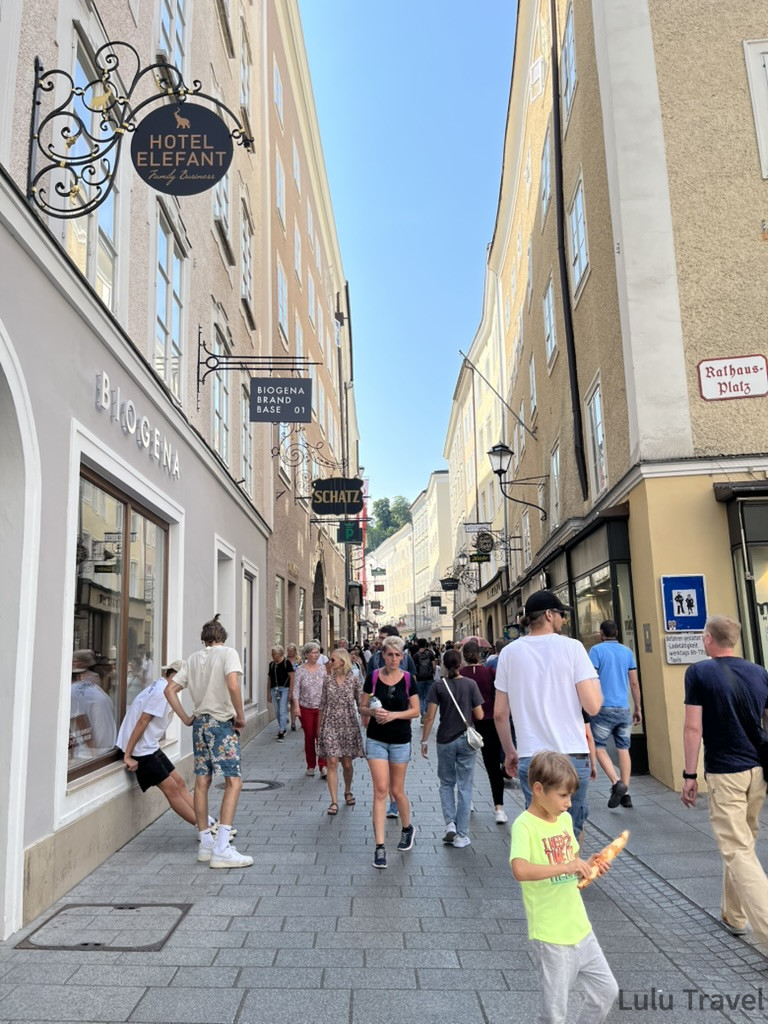
Salzburg’s Old Town is a UNESCO World Heritage Site, entirely walkable — about 20 minutes on foot from the station, or a few bus stops. We bought a 48-hour city transport card, which covers public transport for free (excluding the S-Bahn city rail). The liveliest street is Getreidegasse — every shop has a different hand-forged wrought-iron sign, from pharmacies to cafés, and just reading the signs as you walk is a pleasure in itself; Mozart’s birthplace is on this street too, marked with a commemorative plaque, so don’t miss it.
What I actually booked
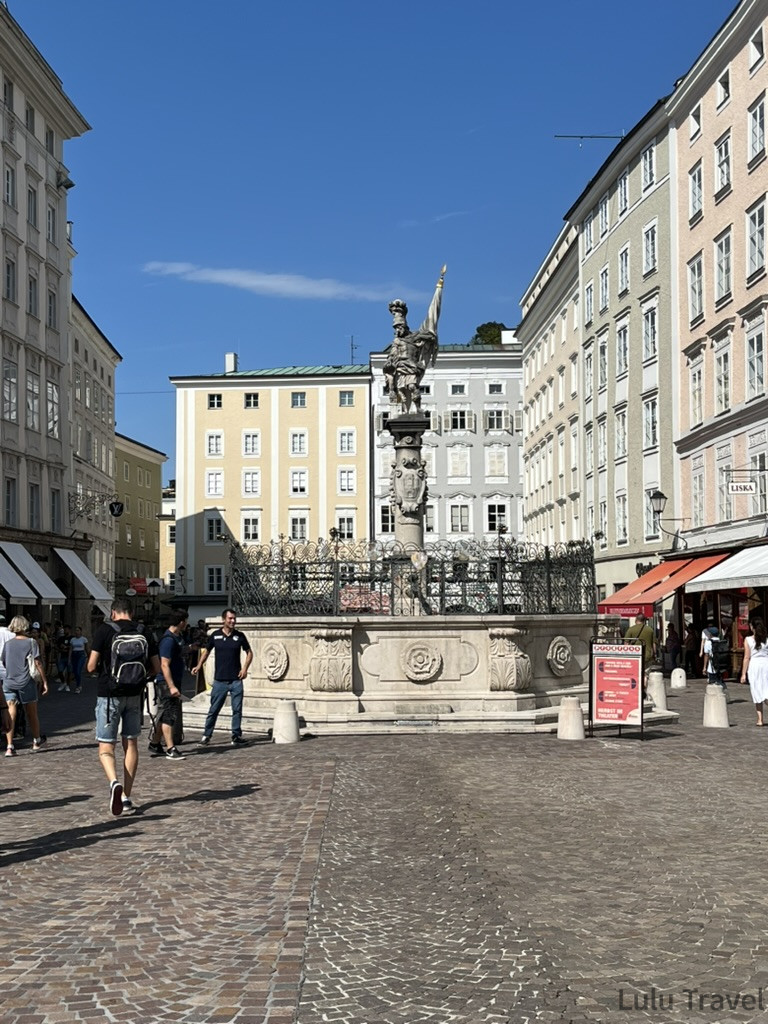
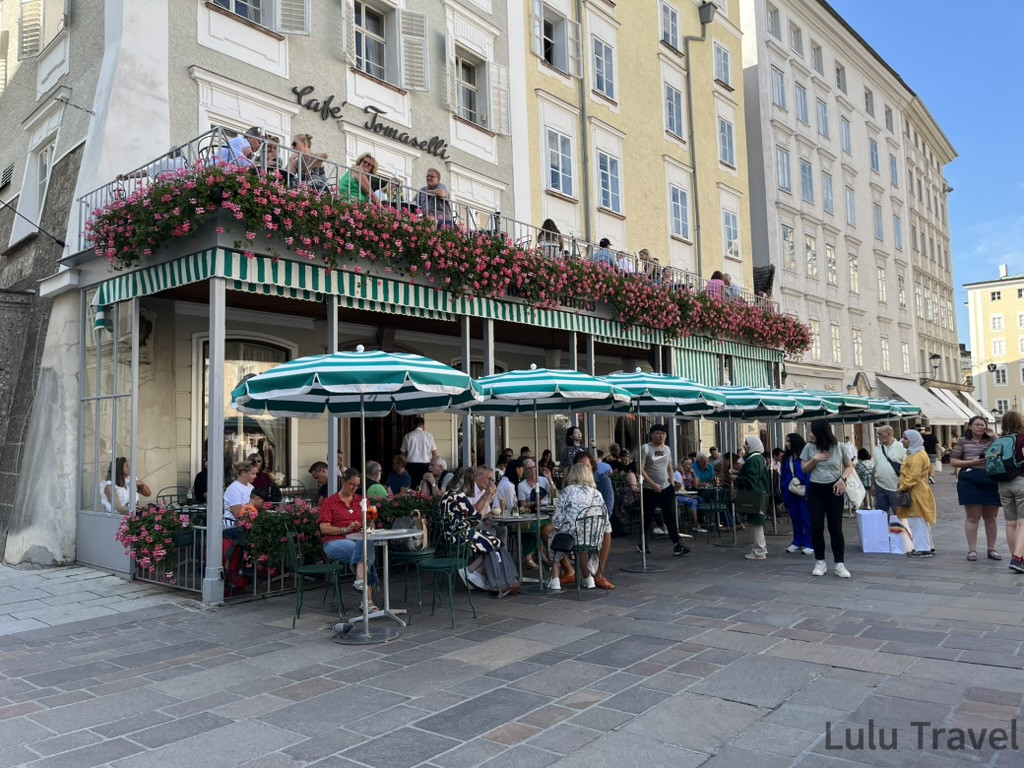
The Alter Markt is the core of the Old Town, ringed by historic buildings with a Baroque sculptural fountain at its centre. Beside it, Café Tomaselli is one of Salzburg’s oldest cafés — its green-and-white striped awnings and the pink flowers on the second-floor balcony are hard to miss, and on a fine day the outdoor seats are almost all full.
The legendary composer Mozart is said to have been a regular here, often stopping for coffee or almond syrup.
03Salzburg Cathedral — Worth Going Inside
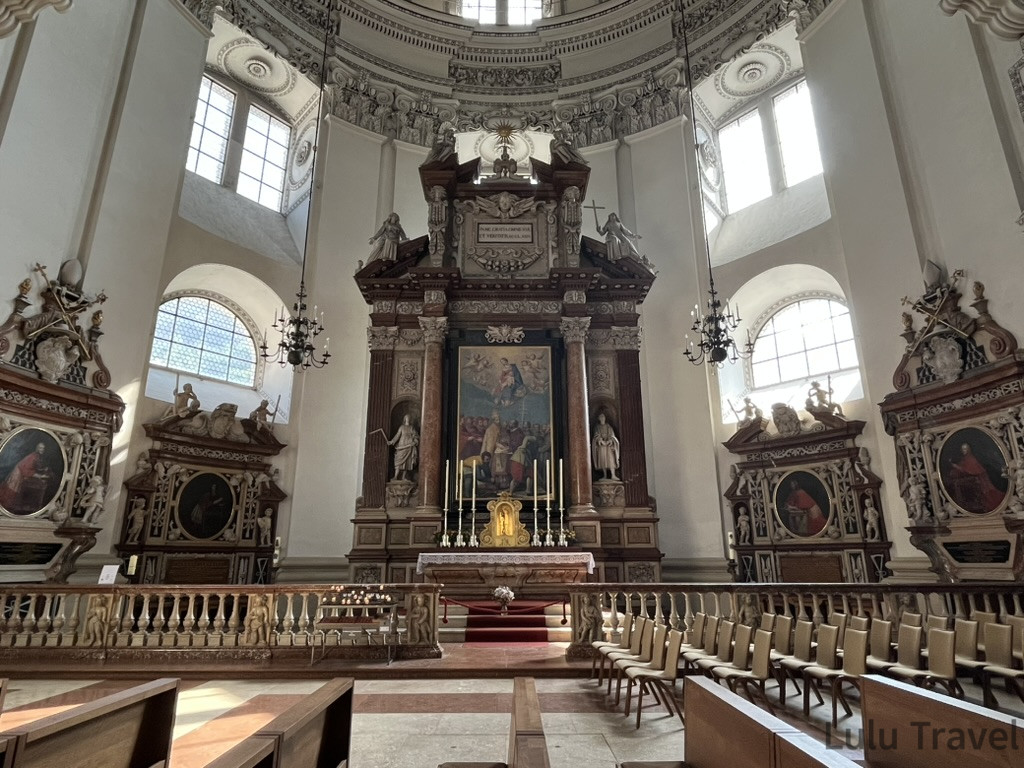
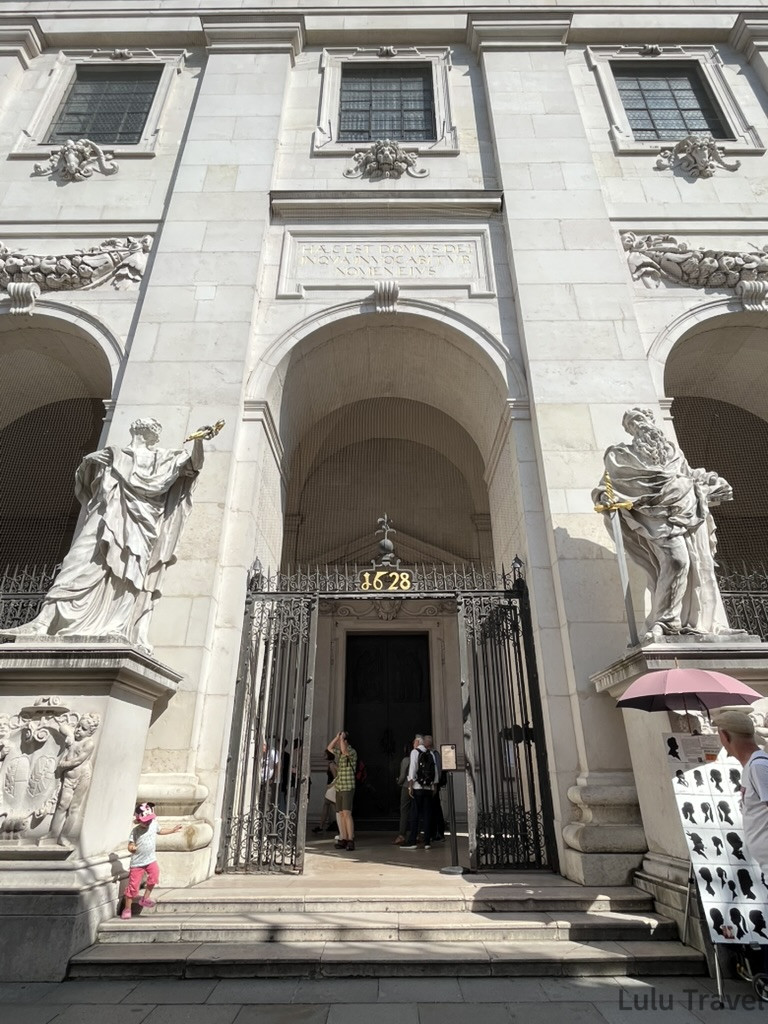
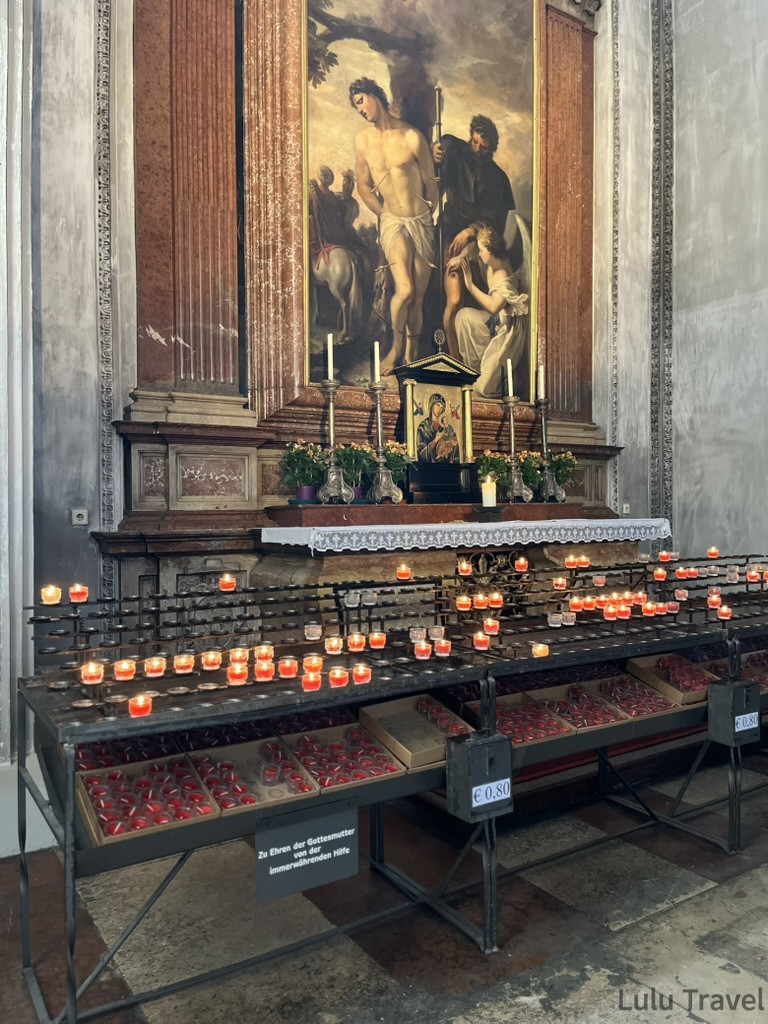
The Salzburg Cathedral stands beside the Old Town’s central square; the three years above the main doors — 774, 1628 and 1959 — mark its founding, its rebuilding, and its post-war restoration and expansion. Inside, the dome, frescoes and altar are impressive in scale; a side aisle has a prayer area with candles, rows of small red flames glowing in the dim, solemn space.
Just off Kapitelplatz stands a large public artwork often photographed in recent years — a giant gilded sphere topped by a bronze man in an ordinary suit, expression blank, the cathedral’s green dome behind him; the contrast under a blue sky is striking.
It’s part of the Salzburg Foundation’s “Walk of Modern Art,” which brings contemporary art into the streets of the historic old town.
04Hohensalzburg Fortress — Overlooking the City from the Summit
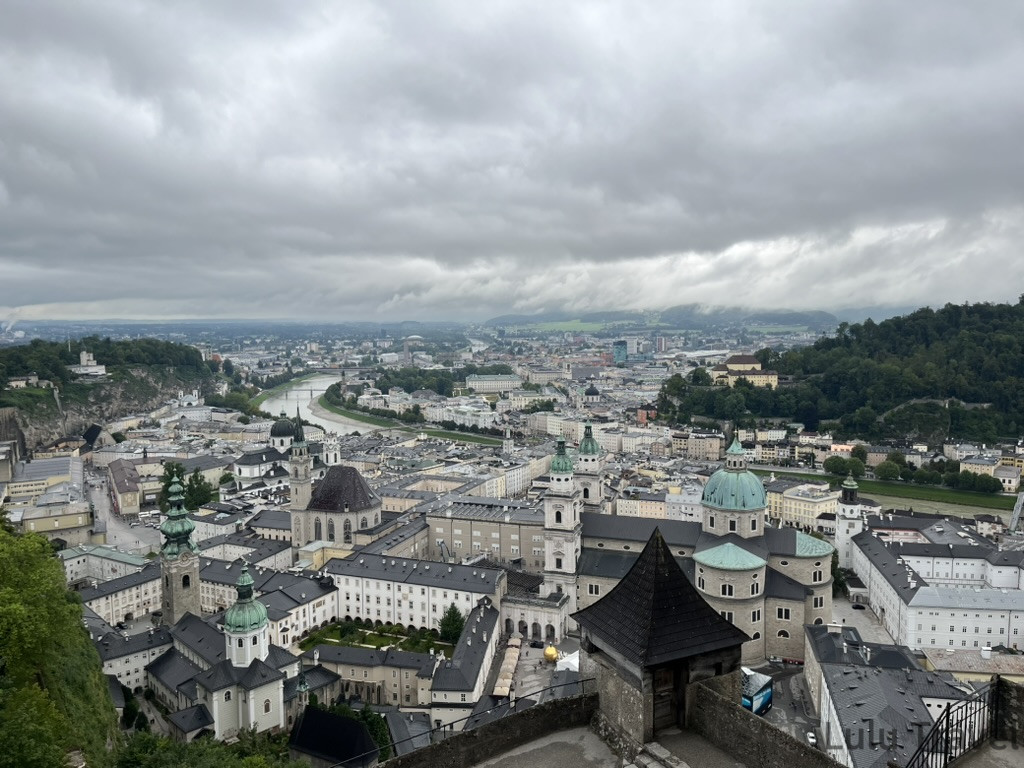
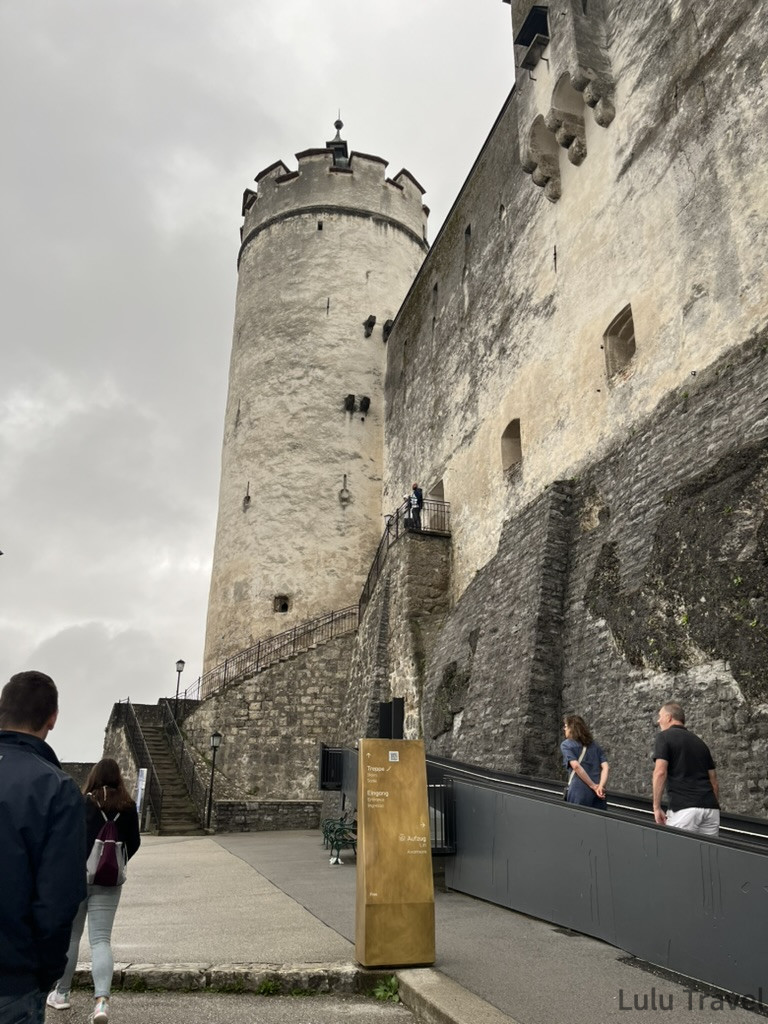
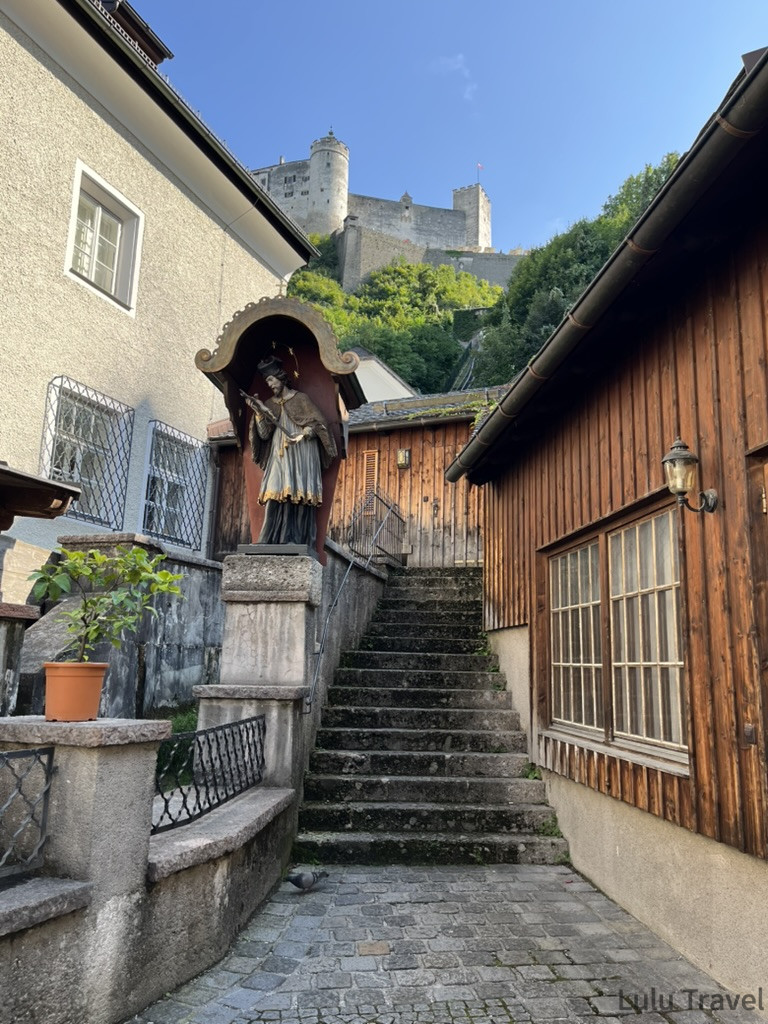
The Hohensalzburg Fortress (Festung Hohensalzburg) is one of Europe’s best-preserved medieval castles, visible from almost anywhere in the Old Town as it crowns the hill. There are two ways up: climb the stone steps, or take the Festungsbahn funicular (about a one-minute ride) — passing through a rock tunnel and emerging into daylight at the summit has a satisfying sense of ceremony. What impresses most is the view from the ramparts: the Old Town rooftops, the curve of the Salzach River and the distant mountains all laid out at once. The day I visited was overcast, the cloud cover giving the city a grey-blue, oil-painting weight.
A basic combo ticket for the return funicular plus the fortress museum is about €14; the Salzburg Card includes one free ride.
05Victorian Costume Photography — A Step Back in Time
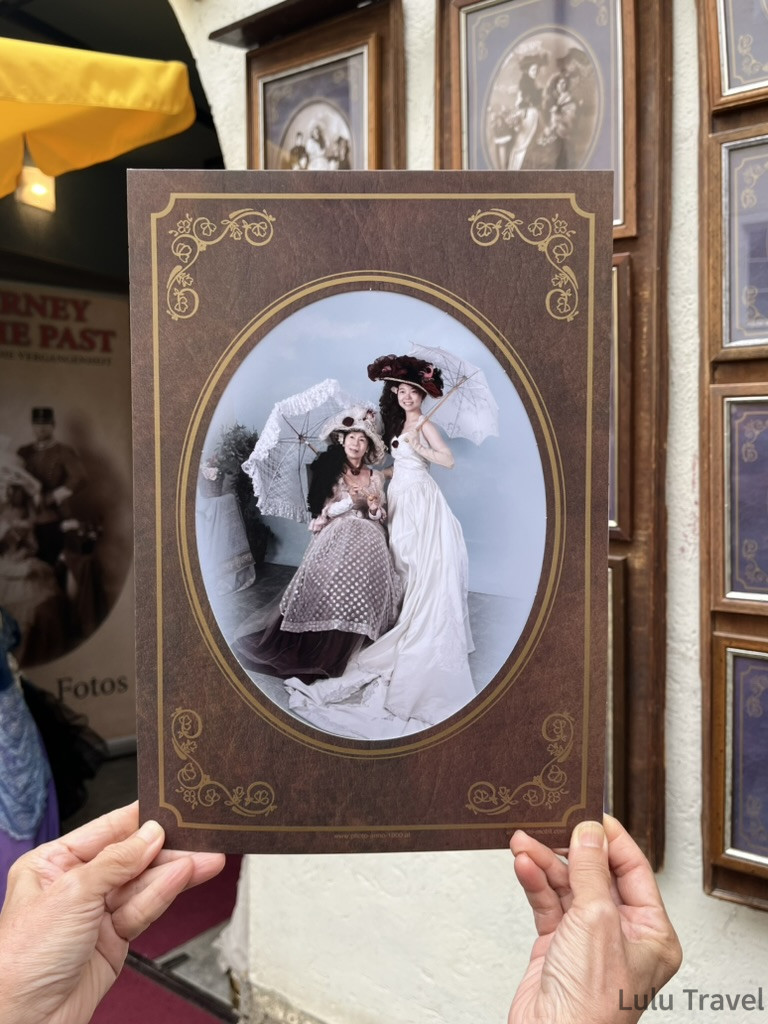
After taking the funicular down from the fortress, there’s a Victorian-era costume photography studio, Photo Anno 1900, where you can hire gowns, hats and parasols and be photographed against a lit backdrop in an antique, film-style look. The prints come mounted on thick gold-bordered card — like stepping out of an old photograph. We were dressed like porcelain dolls in full petticoat gowns, fitted with wigs and headpieces and handed lace parasols, and moments later were posing in front of the backdrop. For anyone who likes unusual experiences it’s worth working in — and it’s a lovely thing to do with elderly family.
Photo Anno 1900
- AddressAt the Festungsbahn cable-car exit
- Hours 12:00 – 17:00
- Websitefoto-mobil.com
- Price €35 for two people, two prints
06Mirabell Gardens — Rain Has Its Own Atmosphere
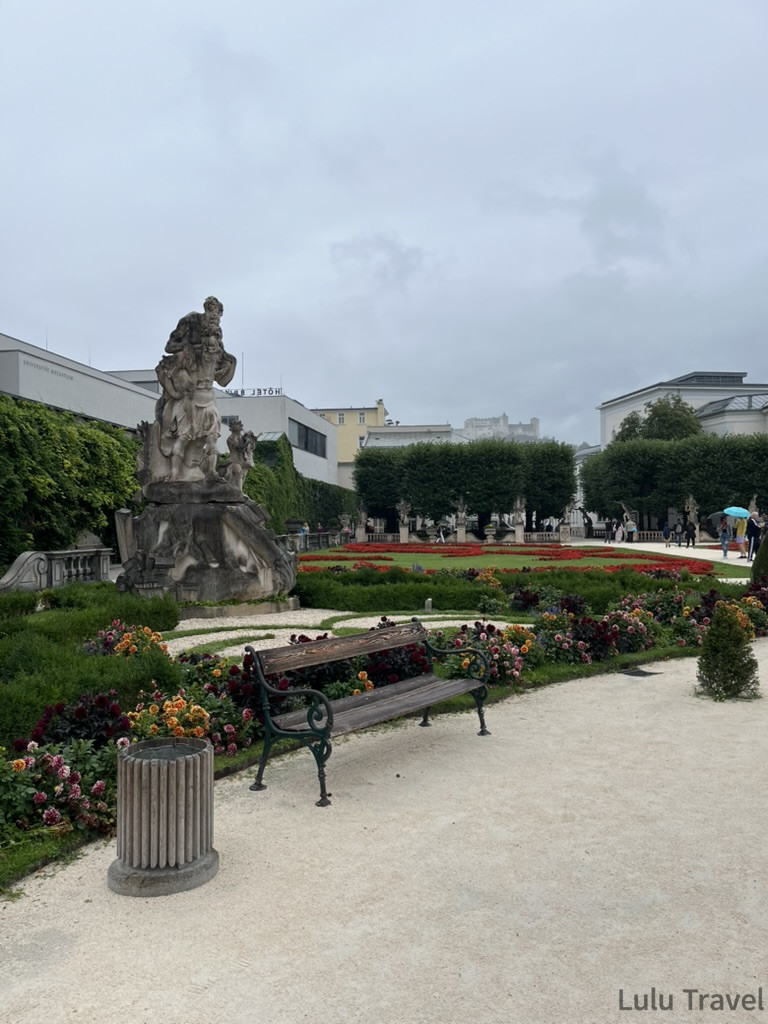
Mirabell Gardens (Mirabellgarten) is across the Salzach from the Old Town, about 15 minutes on foot. This is where the Do-Re-Mi scene from The Sound of Music was filmed; the geometrically symmetrical flowerbeds, fountain and sculptures are very photogenic. It was raining when I visited, with far fewer tourists than on a clear day, and the garden had a rare quiet — red and amber-yellow flowers in the beds, a few wooden benches by the sculptures. Even in the rain it had its own atmosphere.
07Hellbrunn Palace — The Most Surprising Attraction in Salzburg
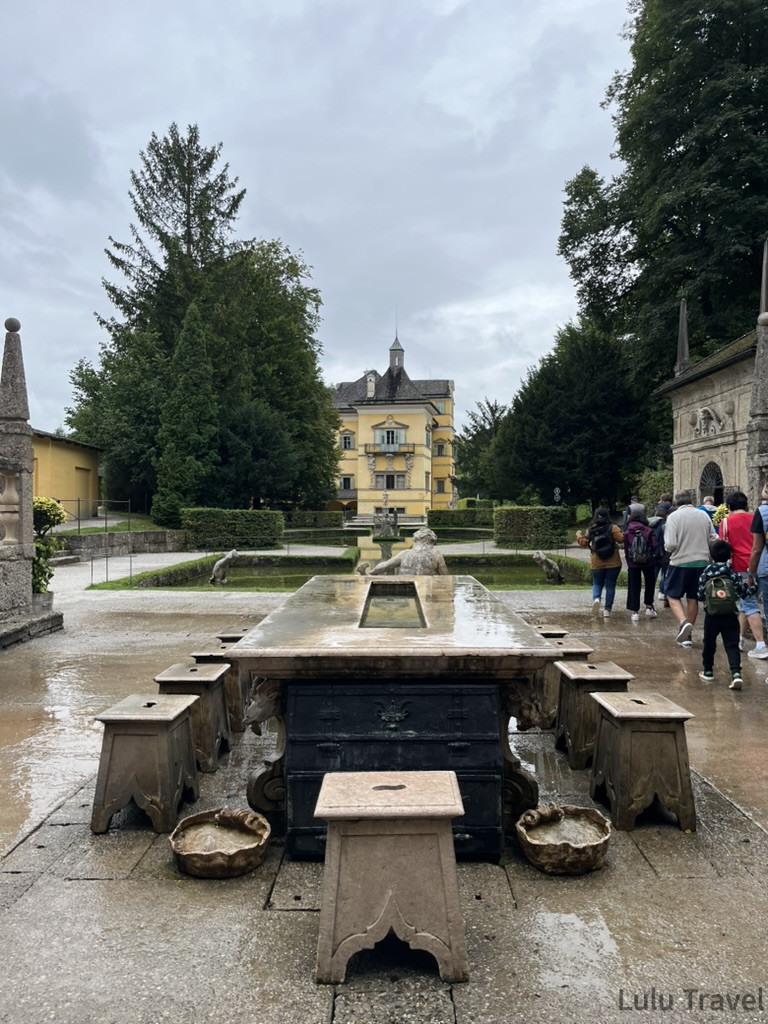
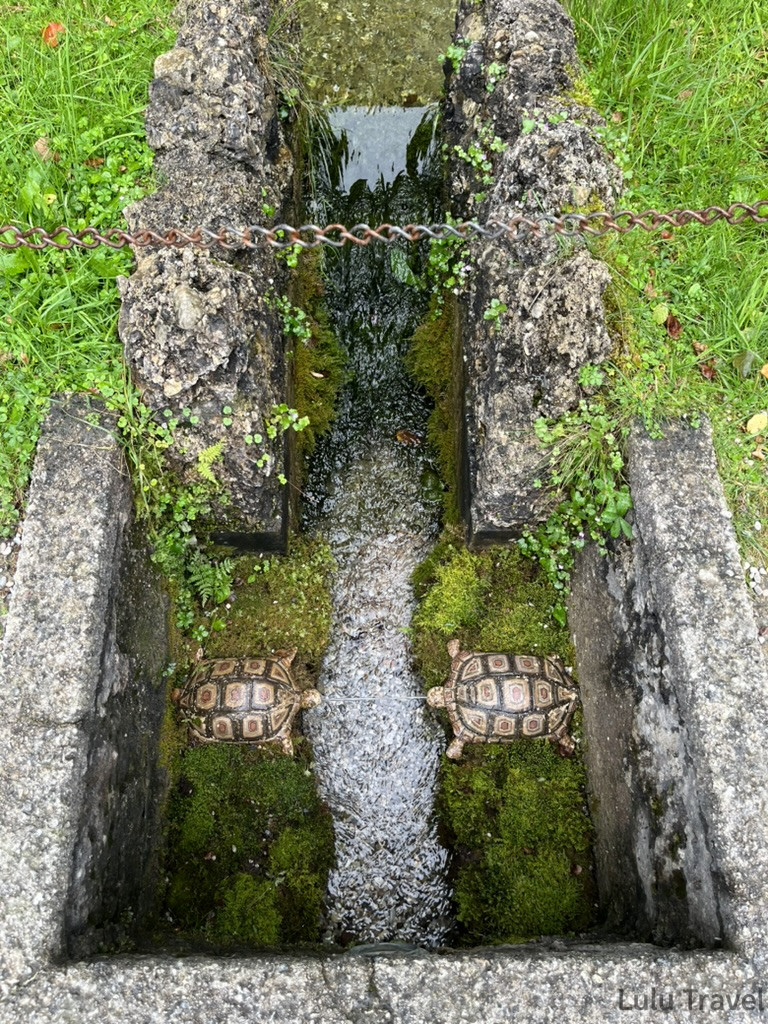
The Schloss Hellbrunn is a 17th-century palace on Salzburg’s outskirts, about 20 minutes by city bus 25 to the gate. Many don’t know it, but almost everyone who goes calls it one of Salzburg’s most interesting sights. The Water Garden (Wasserspiele) behind the palace hides all kinds of water jets — beneath stone tables, chairs and bridge gaps, water can suddenly shoot out; originally the Prince-Archbishop’s pranks on his guests, and still working four hundred years later. A guide leads you through each mechanism over about an hour, explaining the logic — and everyone gets caught out sooner or later, so in warm weather be ready to get a little wet, because that’s exactly the fun, and one of the few visits where you laugh and learn history at once.
The trick fountains run daily from late March to 1 November; the grounds close in winter.
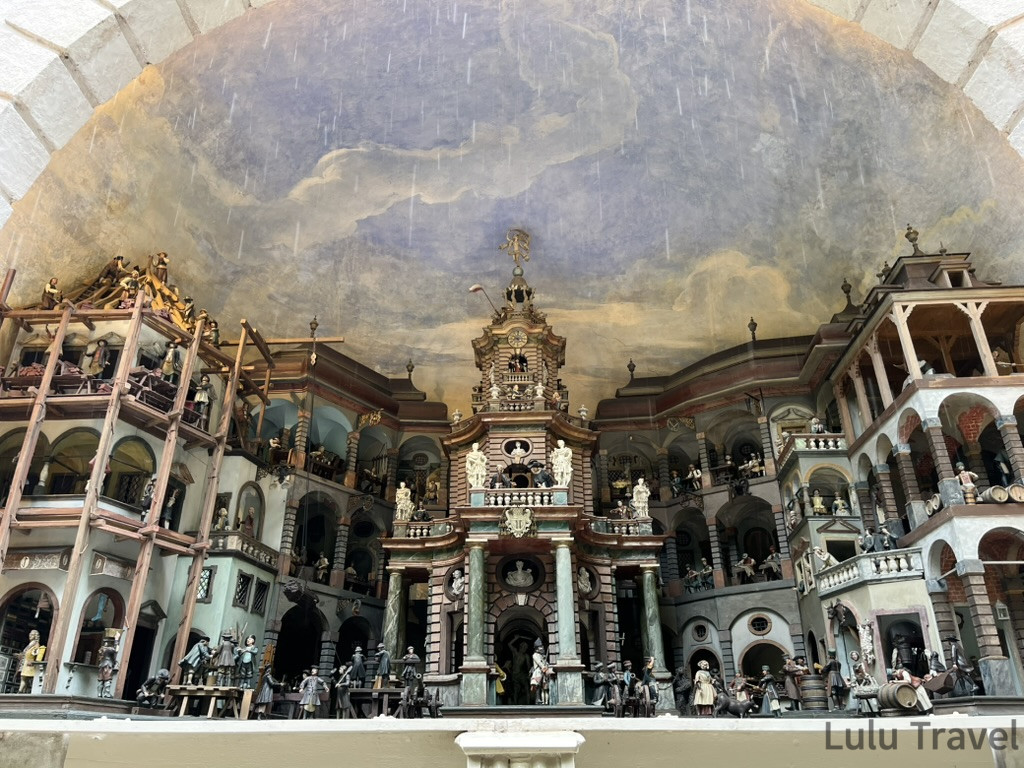
The Mechanical Theatre was the most unexpected thing I found in Salzburg — a large Baroque architectural model populated by hundreds of wooden figures depicting 18th-century city life (craftsmen, merchants, carriages, soldiers), all driven in sync by a single hydraulic mechanism. Built in the 1750s and kept in a semi-open outdoor space, it can be seen in rain too. The density of figures and detail is such that several minutes in front of it isn’t enough to take it all in.
Hellbrunn was never designed as a residence but as a pure pleasure villa built by Prince-Archbishop Markus Sittikus von Hohenems — for banquets, music, conversation and, above all, pranks. So the palace has no bedrooms: guests came by day and returned to the city before nightfall.
08Mozartkugel — The Salzburg Souvenir to Buy
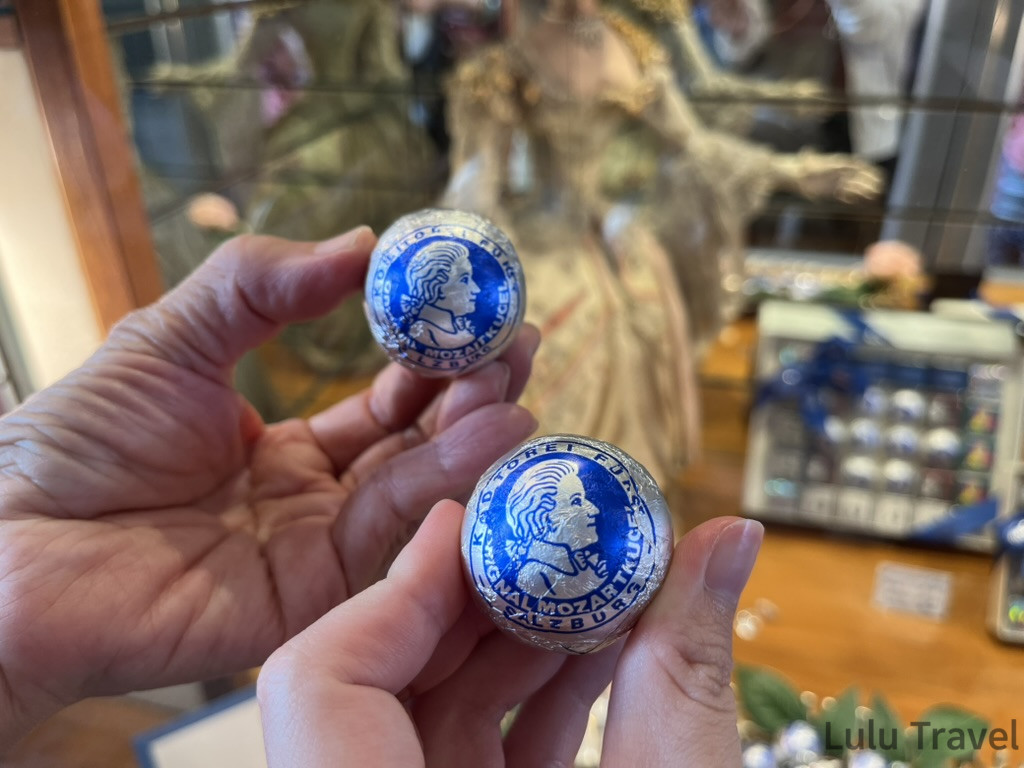
A visit to Salzburg isn’t complete without a Mozartkugel. It was invented in 1890 by Salzburg confectioner Paul Fürst, but because he never patented it, countless mass-produced imitations appeared. The original has distinctive silver-and-blue packaging with Mozart’s profile, filled with pistachio marzipan and dark chocolate, and can still be bought at Café Konditorei Fürst — Salzburg’s most iconic souvenir, though each is not cheap and the chocolate melts easily, so think twice about carrying them back to Taiwan.
09Getting from Salzburg to Hallstatt
Salzburg is the most convenient starting point for Hallstatt — there are shared day tours from the city, about 1.5 hours each way. Hallstatt accommodation is expensive and needs booking well ahead, so a same-day return from Salzburg is what most people choose. My actual experience: Hallstatt Day Trip — Honest Notes from a Rainy Day Trip out of Salzburg.
FAQFrequently Asked Questions
How many days should I spend in Salzburg? Is it worth more than a transit stop?
Two days is a comfortable length — using it only as a transit stop is genuinely a waste. The Old Town, the fortress, Mirabell Gardens and Hellbrunn Palace each need half a day to a full day. If you only have one day, the Old Town and fortress are the core; the rest can be added based on energy.
Is the Salzburg city card worth buying?
Depends on how dense your itinerary is. The 48-hour card covers public transport and some attraction entry; if you’re seriously hitting the sights over two days it usually works out cheaper than buying individual tickets. The fortress funicular and Hellbrunn Palace are both included — combined, those two alone come close to the card price, making the public transport effectively free on top.
Does Hellbrunn’s Water Garden require a guide? Can I understand it on my own?
Yes, a guide is required — and it genuinely matters. The water mechanisms are spread throughout the garden, and without a guide you’d have no way of knowing where they are or the logic behind each design. The whole point is following the guide, hearing the explanation and then getting sprayed — that interactive element simply isn’t there if you wander through alone. The guide is included in the ticket at no extra charge.
Which version of the Mozartkugel is worth buying?
There’s a clear taste difference between the original Fürst version and the mass-market variety. The Fürst version has a higher proportion of pistachio marzipan and a thinner chocolate shell — the flavours are more distinct and layered; the mass-market version is sweeter and more uniform throughout.