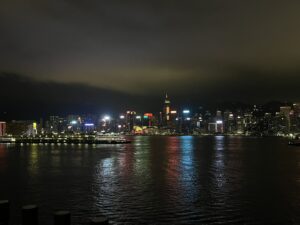
A Boston day trip is an impulse — and also a way to break up the back half of a longer trip. Before I even decided to go to New York, Boston was a strong candidate on my list.
It’s often called the “Little Europe of America,” with a friendlier street scale than Manhattan, the cultural feel of a college town, and Harvard and MIT right nearby — the kind of city that sounds interesting just to think about.
Although the trip stayed focused on exploring New York, by day six or seven the novelty was fading fast. Lying in our hostel beds, my companion and I opened our phones and, two days out, impulsively booked a Boston day trip (more on this trip: New York Solo Travel — Costs, Transit, Accommodation and What to Watch Out For). This post is the full account: where we went, how it felt, and what you should know before committing to a day trip from New York.
01New York to Boston: What to Understand First
Before getting into the itinerary, one reality needs stating clearly: the one-way trip from New York to Boston takes four hours — by bus in rush hour, even longer.
Those four hours are the number that defines the whole day trip. Subtract the eight-hour round trip plus rest and meals, and you’re left with roughly five to six hours in Boston. The more you pack in, the less time at each stop.
Our day trip was arranged through a travel agency, departing New York with three guides aboard, each handling one or two languages. By the end I couldn’t help admiring how fast they switched between English, Japanese and Spanish — their vocal efficiency was roughly three times a normal person’s.
02Where We Actually Went in Boston
Harvard University Campus
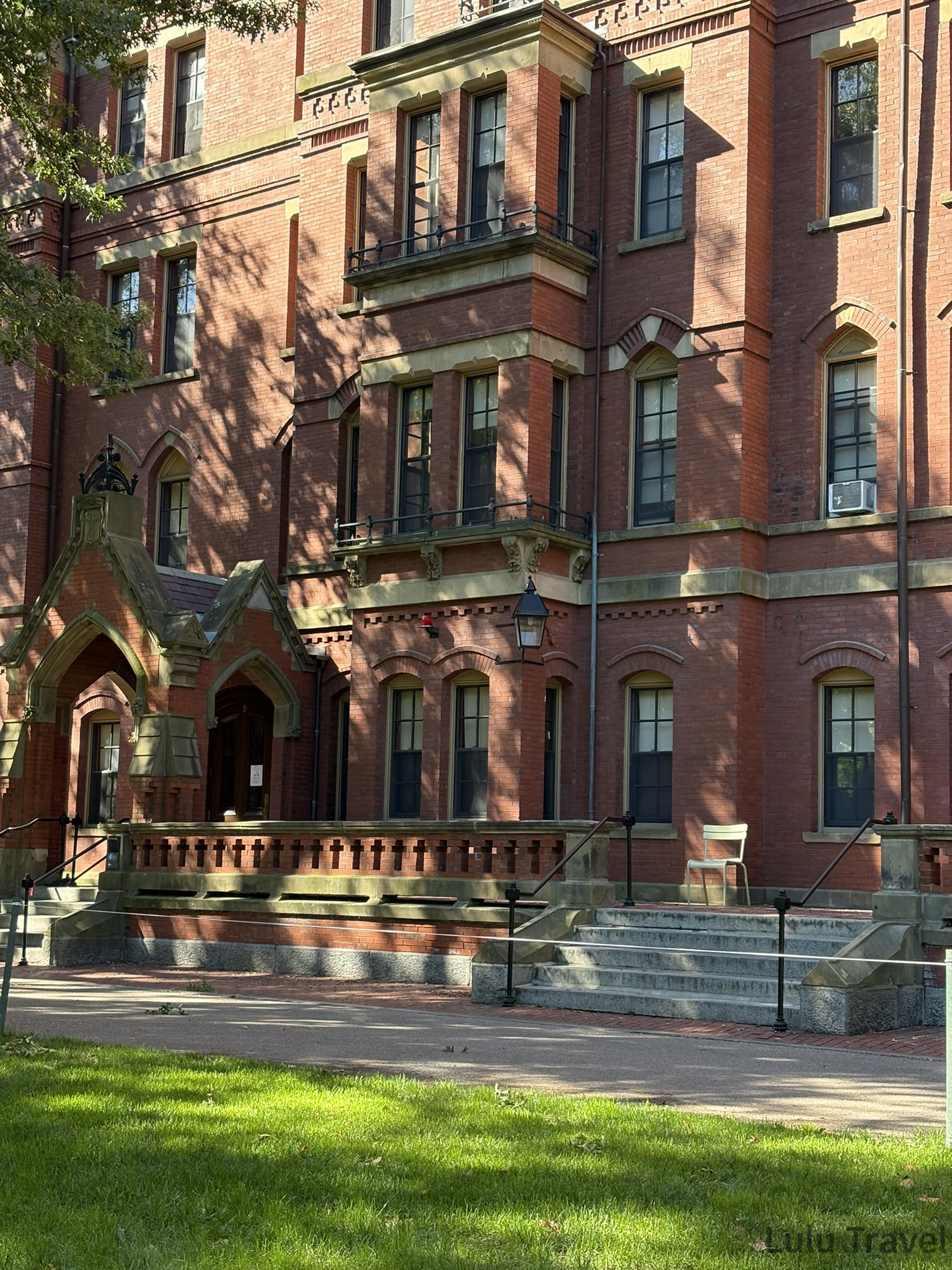
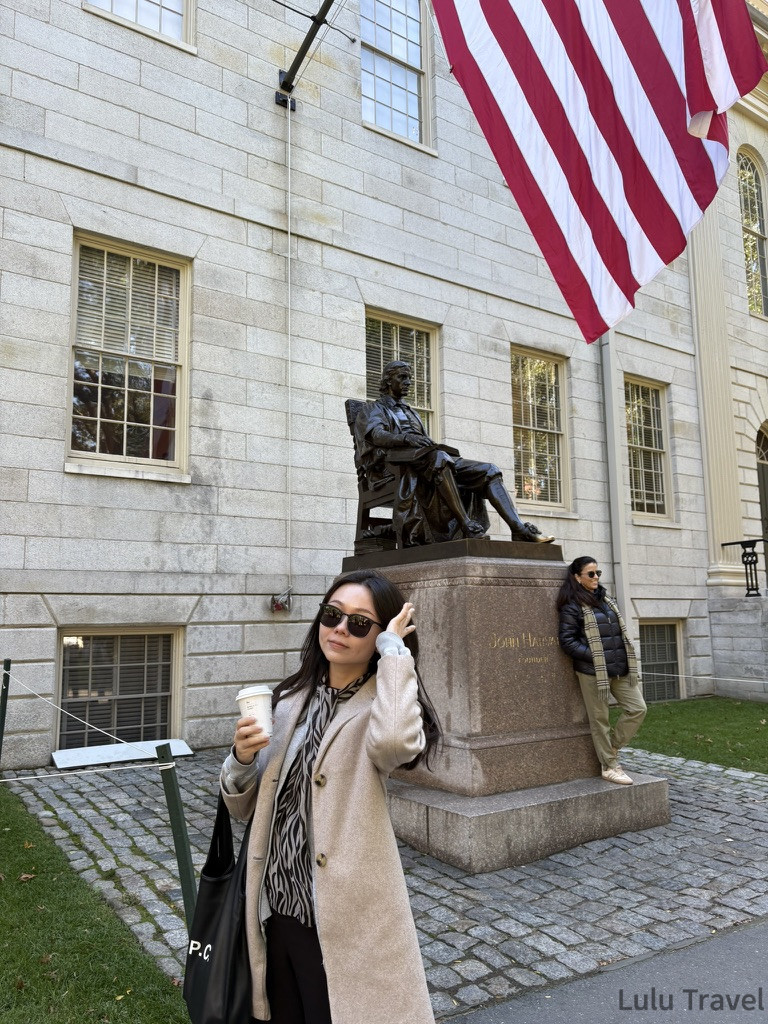
The coach first drove into Cambridge, where we spent about 40 minutes on Harvard’s campus. Red-brick buildings, green lawns, students walking past — the grounds are open, and anyone can stroll through freely.
Honestly, walking around Harvard doesn’t feel that different from walking around NTU or NCCU — a spacious campus with buildings that carry a sense of age. But the fact of “being at Harvard” still stirs something hard to name: a place many of us saw on magazine covers and in textbook photos growing up, now real underfoot.
We passed MIT by coach — no stop.
Harvard and MIT ended up neighbours because MIT moved from central Boston to Cambridge, across the Charles River, in 1916; the two once planned to merge and so bought land in Harvard’s Cambridge. The merger was later blocked by the courts, but the two have been side-by-side academic powerhouses ever since.
Boston Public Library — Bates Hall
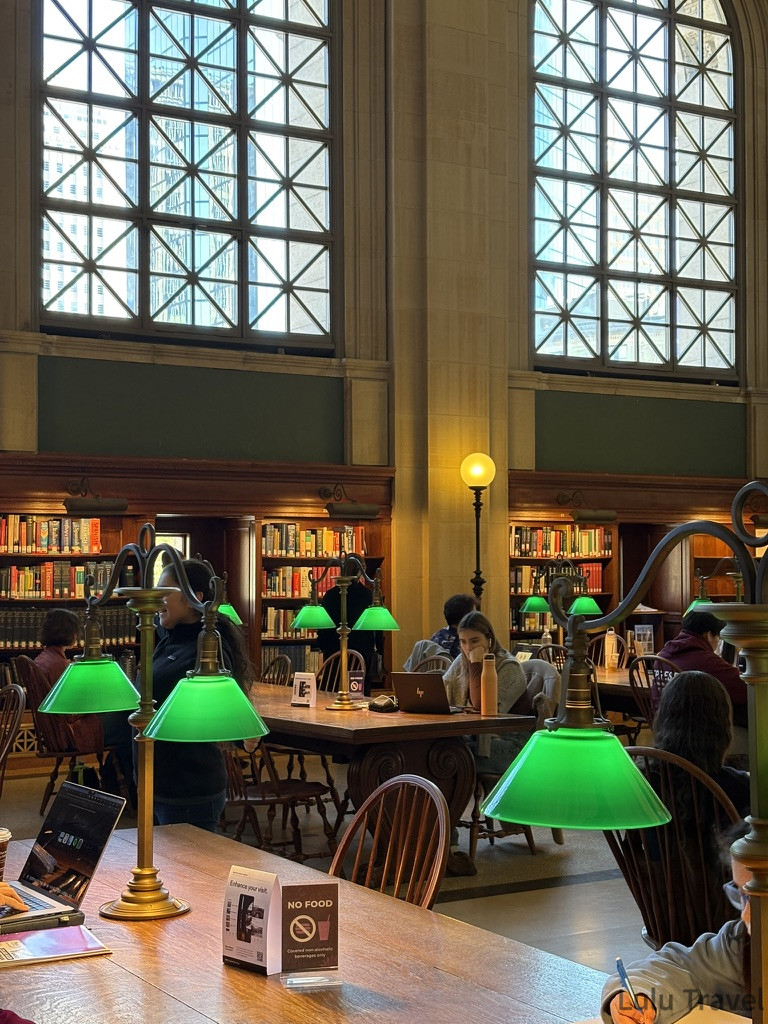
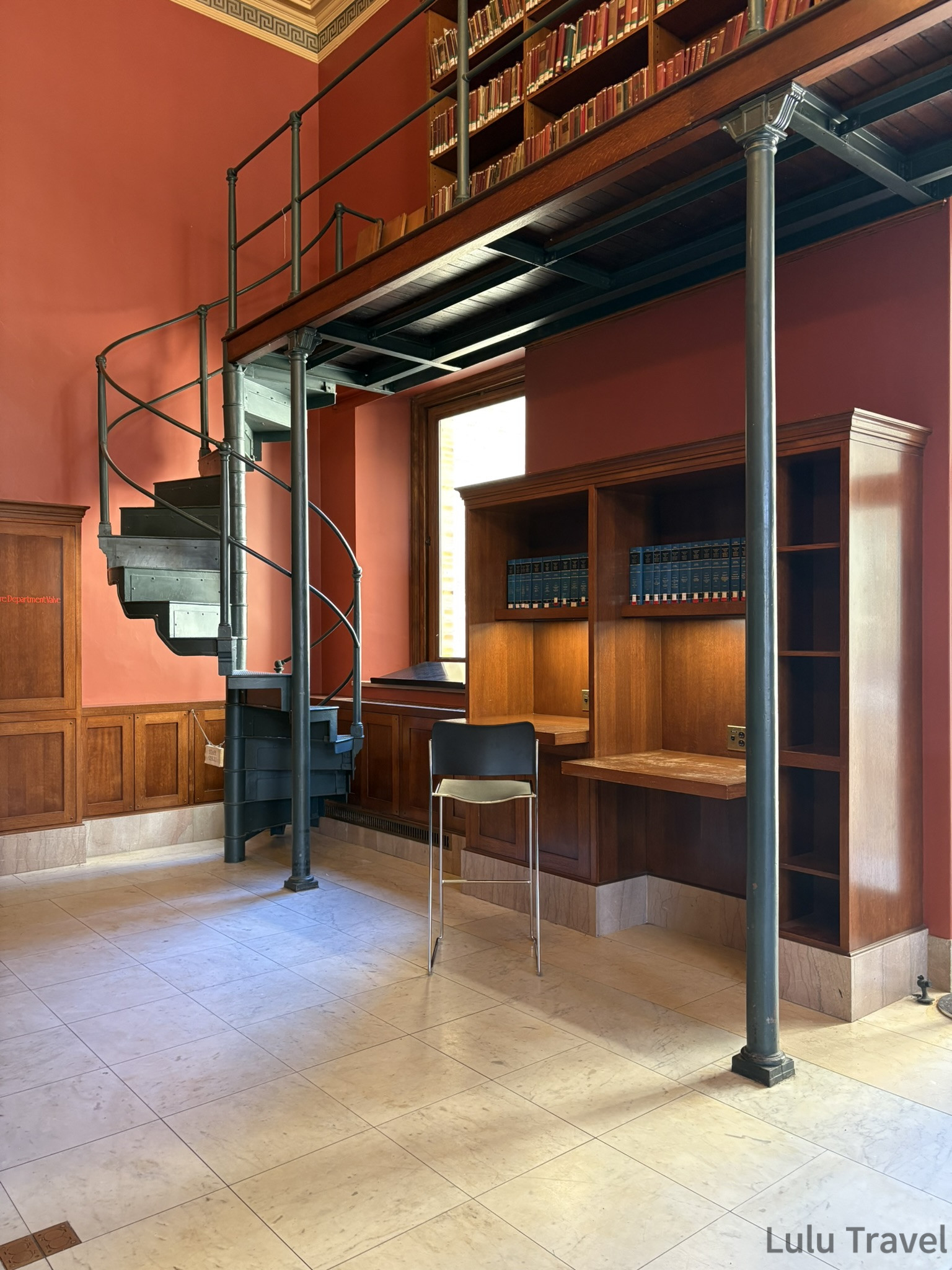
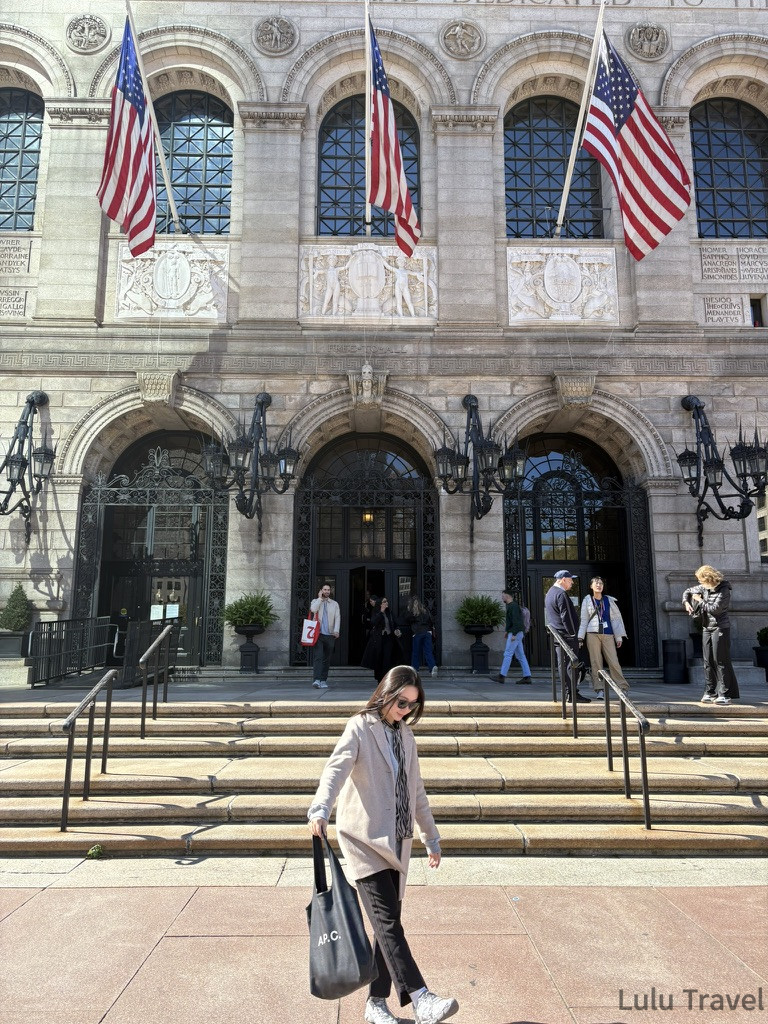
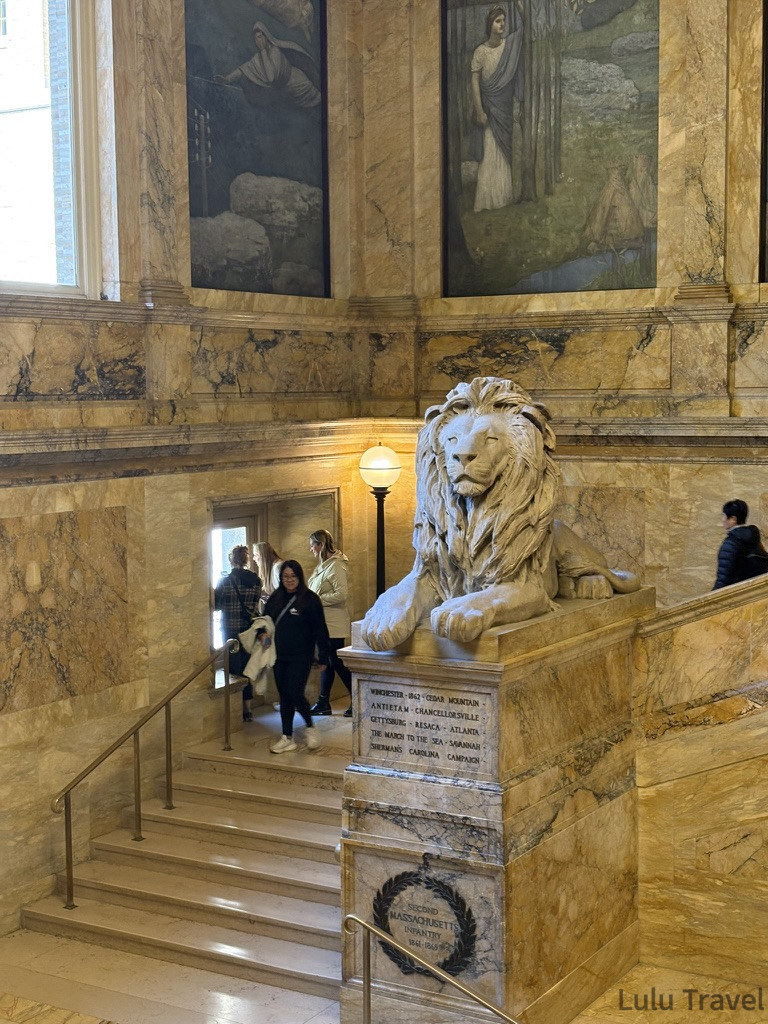
This was the single most memorable stop of the whole trip, no contest. Bates Hall, the main reading room of the Boston Public Library, has a soaring vaulted ceiling, long wooden reading tables paired with brass lamps, and light angling in through tall windows — a quiet, almost sacred quality. For anyone drawn to books, old architecture or spatial design, spending an hour here is completely reasonable.
Wikipedia notes that Boston Public Library was the first publicly supported municipal library in the US — the first large library open to the public, and the first to let ordinary citizens borrow books and materials to take home.
Freedom Trail
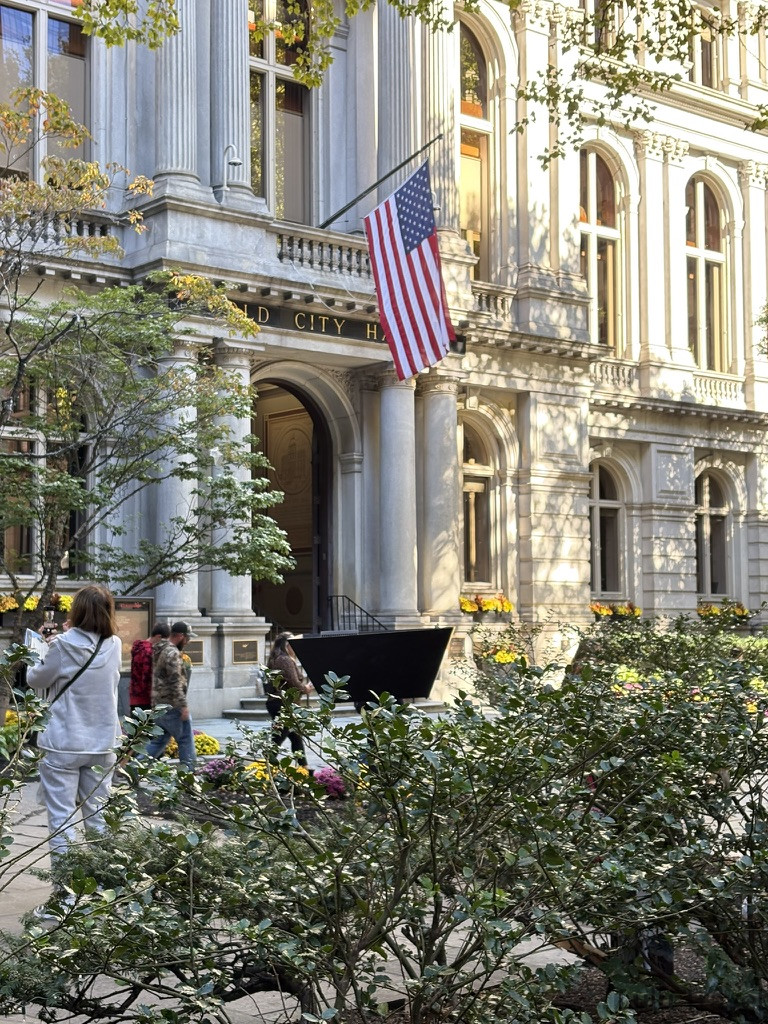
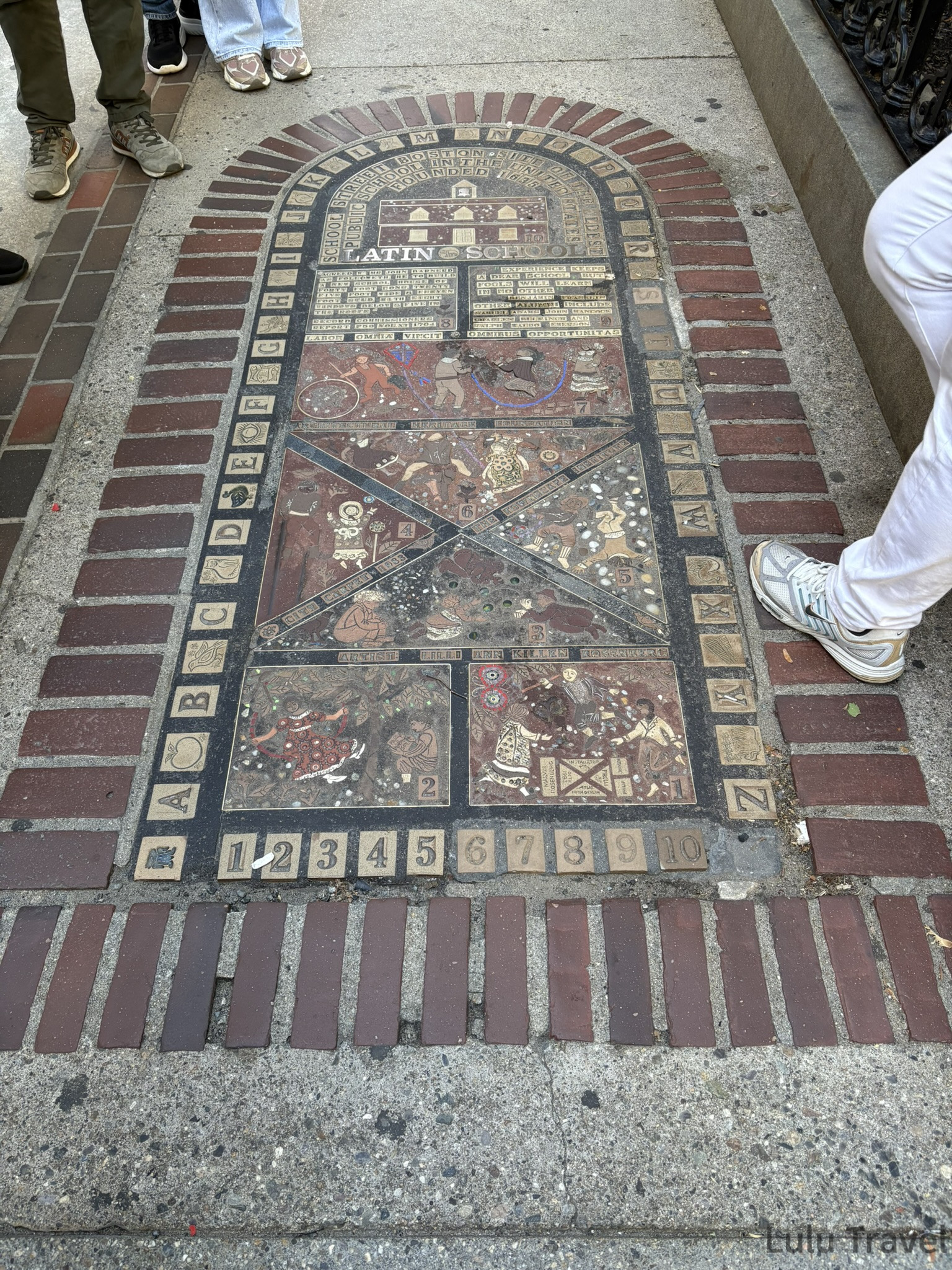
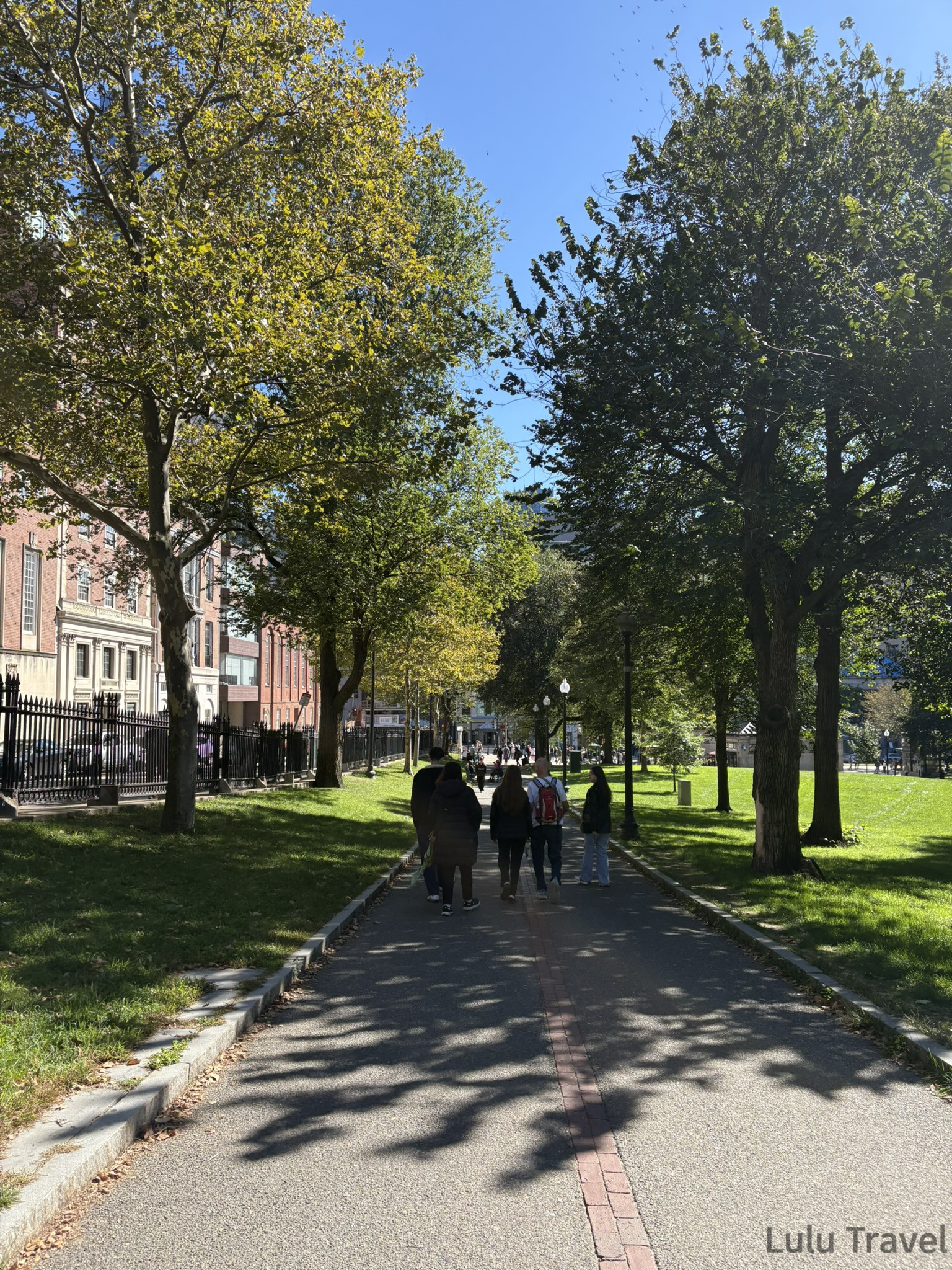
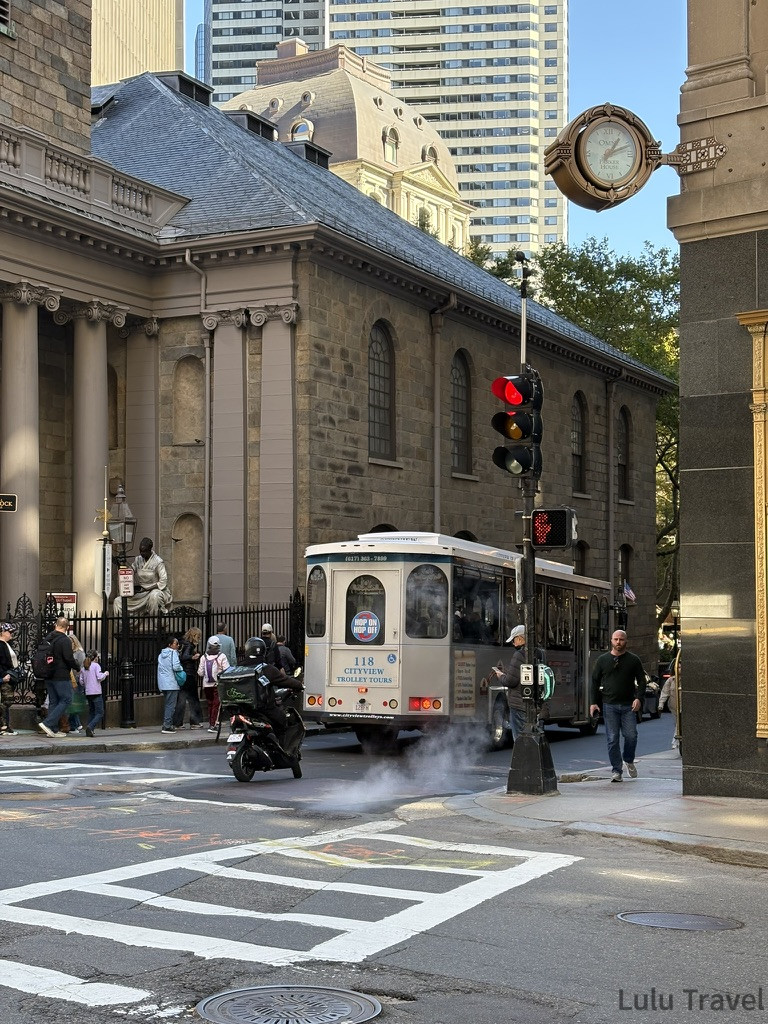
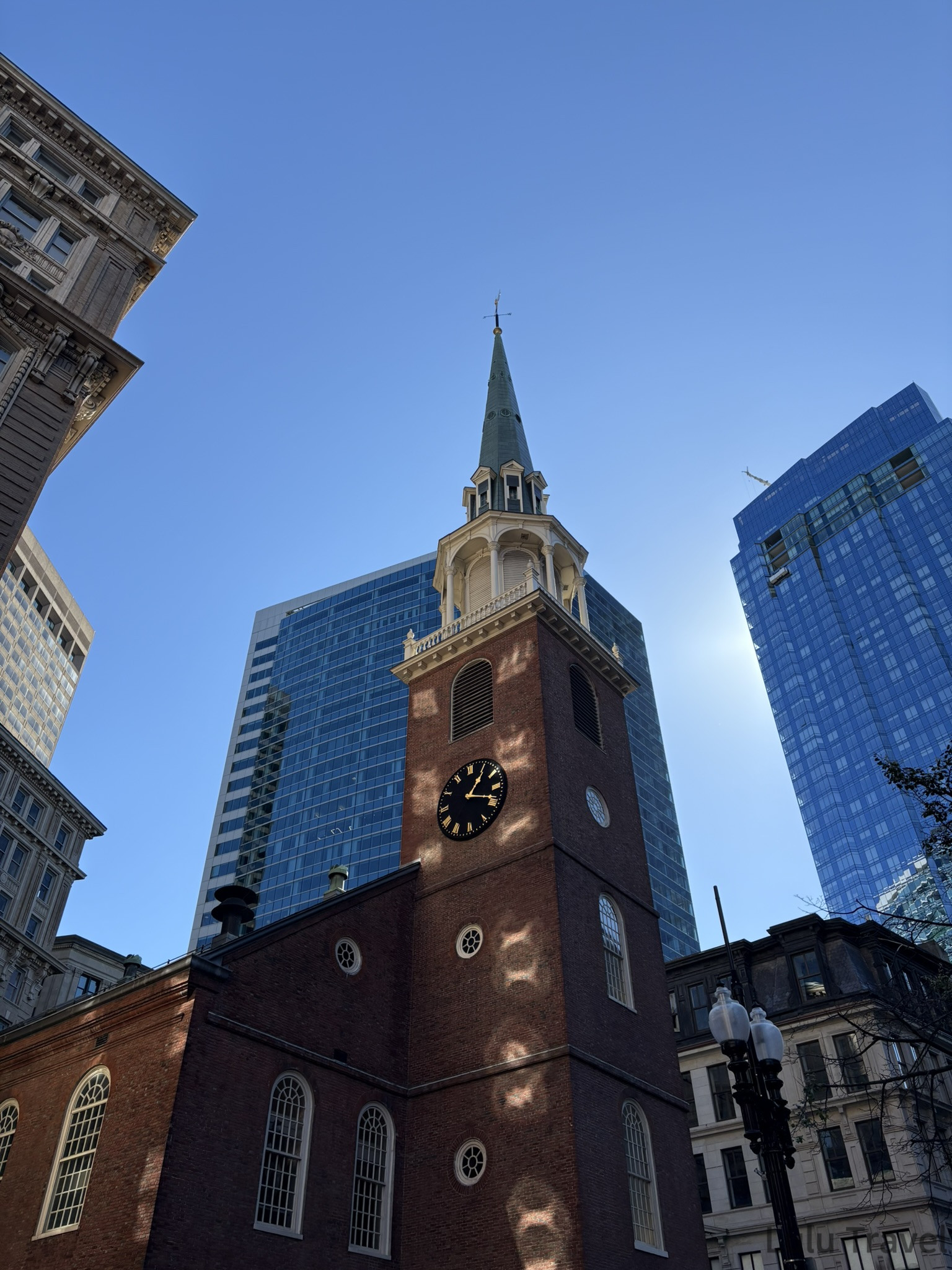
We followed a guide along a short stretch of the Freedom Trail — the red line marked on the ground linking 16 sites tied to the founding of the US, including the Old State House and Faneuil Hall. Walking it in full takes two to three hours; the day trip only let us cover the first few stops, a quick glance — more “now I know where it is.” If you want to understand the history properly, a self-paced tour like this is the fuller way to see it:
For a deeper walk, consider
Quincy Market — Boston Lobster
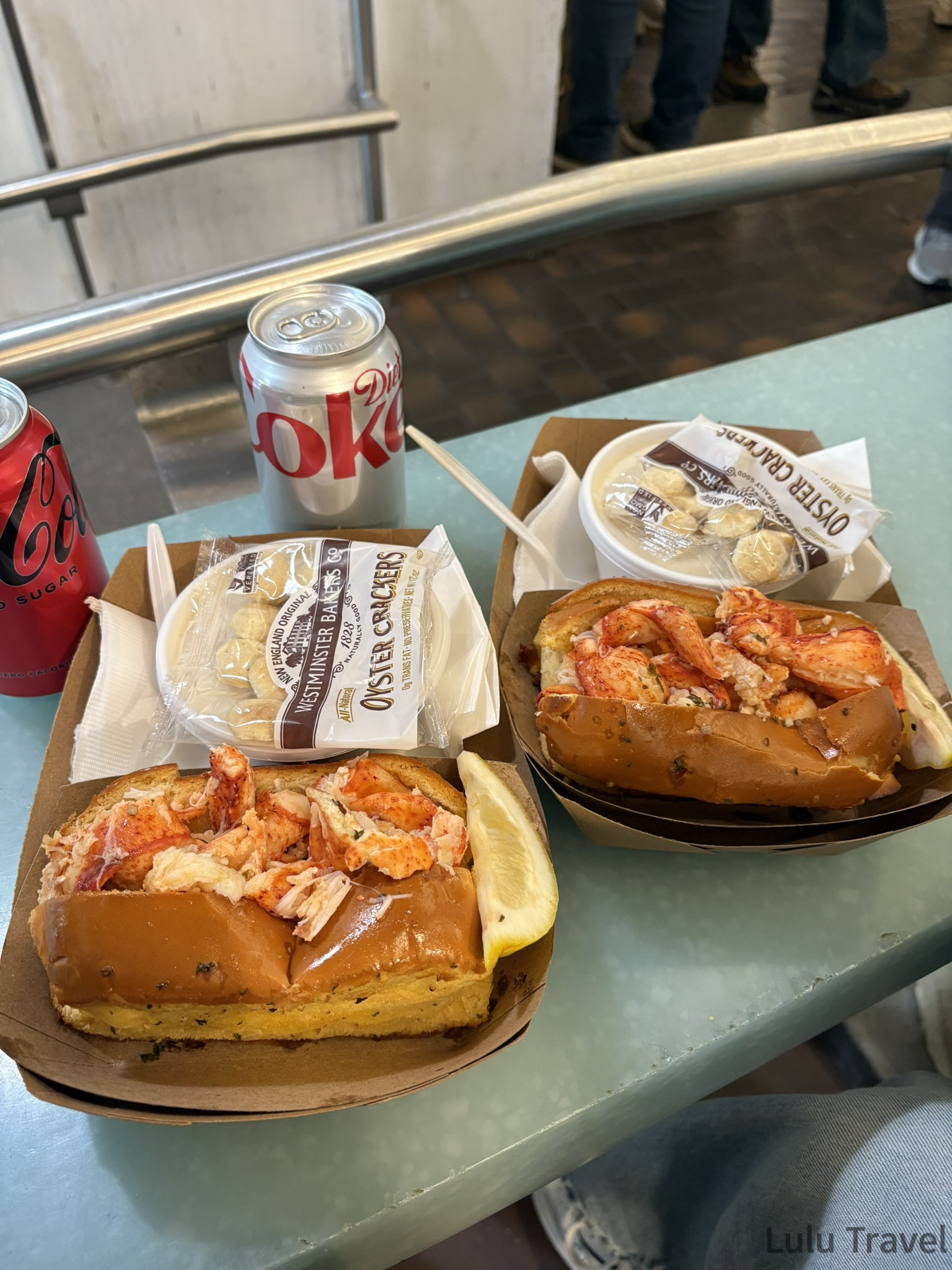
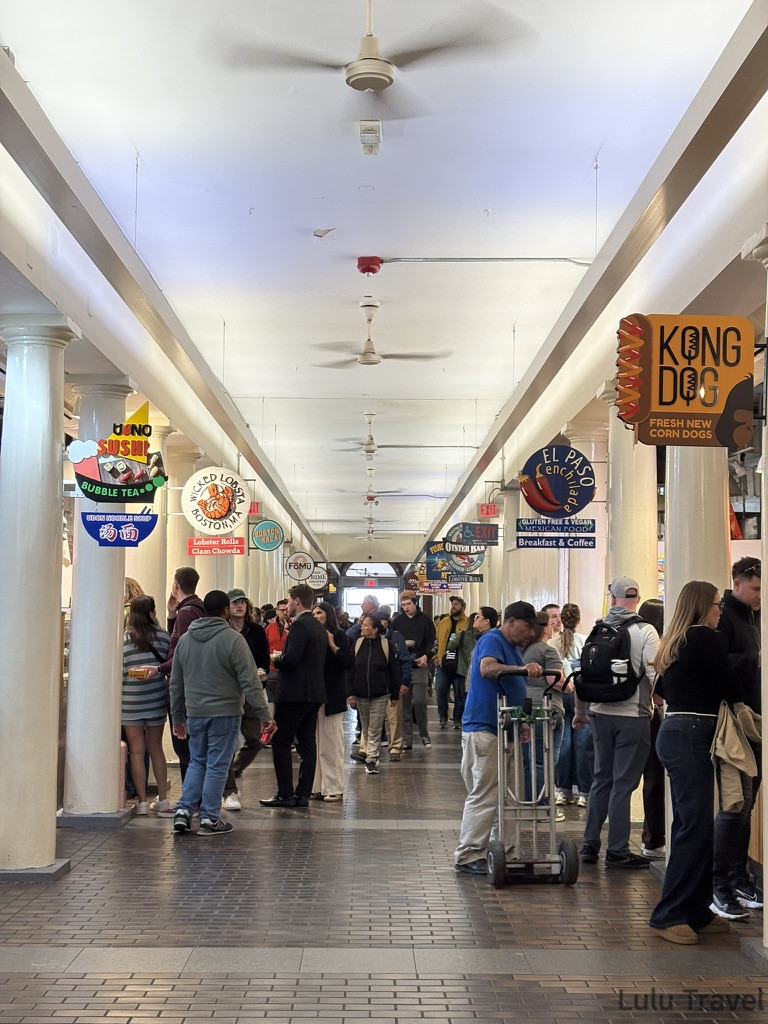
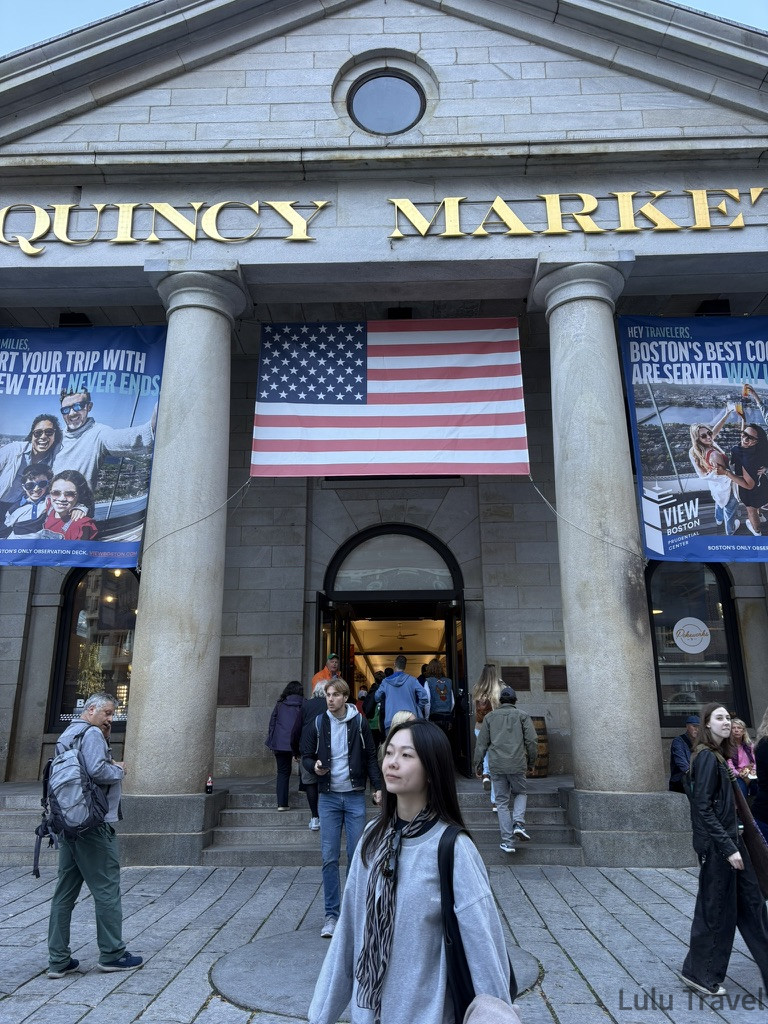
Lunch was at Quincy Market. It’s lively — stalls indoors and out, the mingled smells of seafood, chowder and sandwiches giving off real port-city energy. We had a lobster-and-chowder set: genuinely fresh, generous portions — but the day trip’s pace left no chance to sit and savour it. If Boston lobster is what you’ve been looking forward to, find a proper sit-down restaurant to taste it as it deserves.
Quincy Market was one of the largest market buildings in early-19th-century America. In 1966 the whole complex was designated a National Historic Landmark and added to the National Register of Historic Places.
Boston Tea Party Ships & Museum
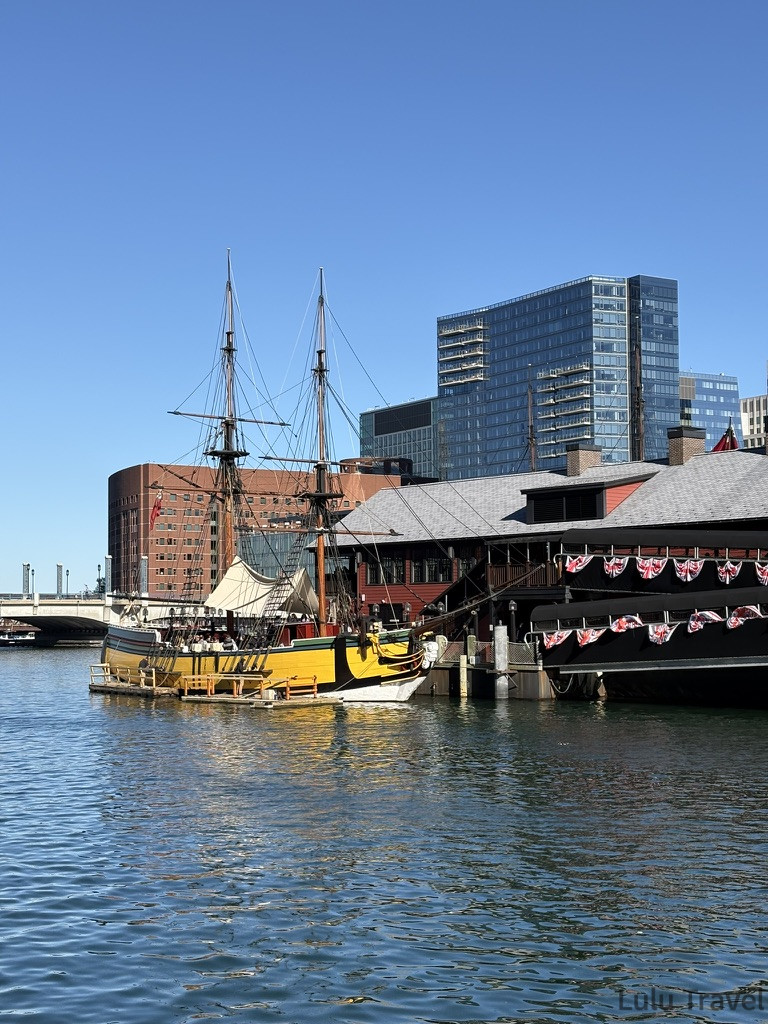
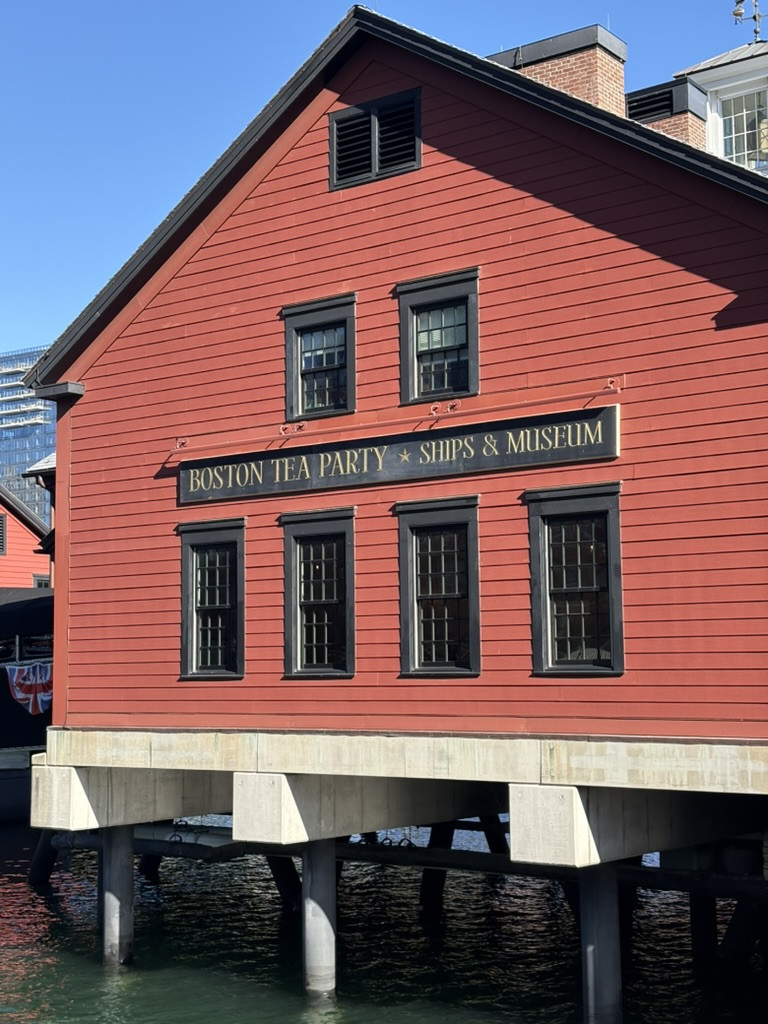
The site of the 1773 Tea Party — the most famous act of tax resistance on the eve of the American Revolution — is now a museum on the water beside a bridge. We were given more free time here than expected, but by this late point in the march I was tired and couldn’t muster much enthusiasm even for the souvenirs. For anyone genuinely into American history it’s probably worth a visit — an hour should be enough.
03The Honest Verdict: Was It Worth It?
My companion and I both concluded afterward that the itinerary was too rushed. It wasn’t the agency’s fault — one day simply isn’t enough for Boston. Each stop was about 20 to 40 minutes, yet walking Harvard’s campus and properly experiencing the library alone could easily fill half a day. The harbour views around Quincy Market and the Italian-immigrant North End were nowhere near reachable in the time we had.
If you ask me whether I’ve been to Boston, I’ll say yes — but I don’t feel like I’ve actually been to Boston.
04About the Cost
Boston Day Tour Cost
Boston Day Tour · from New York
NT$4,582 / person (excl. lobster lunch)
For the convenience of being guided without navigating yourself, the price is fair — but the time cost is another matter. Travel always works this way: every trip leaves places you didn’t walk enough, and those become the reason for the next departure. Boston, for me, is now the city still owed a proper visit. If you’re planning an East Coast itinerary and weighing whether to include Boston, I hope this honest account helps. Read more: more US travel articles.
FAQFrequently Asked Questions
Can you visit Harvard University freely? Do you need to book?
No booking required — the campus is open to anyone to walk through. The main red-brick clusters and lawns are all accessible. For a guided experience, Harvard offers free official tours, or you can buy a package that includes one. MIT isn’t far from Harvard, so if you’re interested you could plan a half-day to walk both.
Is Boston Public Library free to enter?
Yes — the main Bates Hall reading room is open for free, no ticket or library card needed. It’s one of the most worthwhile stops on the whole itinerary; the vaulted ceiling and brass lamps give the space real visual impact. Don’t just walk through — find a seat and take your time. For anyone drawn to space and architecture, an hour here is entirely reasonable.
Can you complete the entire Freedom Trail on a day trip?
The full trail takes two to three hours; a day trip from New York basically only leaves time for the first few stops. If you’re genuinely into American founding history, a self-paced audio tour beats rushing through with a group. What a day trip delivers is roughly “now I know where it is” — far from actually knowing the city.
Where’s the best place to eat Boston lobster? Is Quincy Market worth it?
The lobster set at Quincy Market is genuinely fresh with generous portions, but the day-trip pace makes it nearly impossible to sit and enjoy — it becomes eat-and-go. If Boston lobster is the highlight you’ve been anticipating, find a proper sit-down restaurant instead; that’s the only way to taste it as it should be.