This Bangkok group day tour was booked through Klook, covering Damnoen Saduak Floating Market, widely considered the most famous floating market in Thailand, and Maeklong Railway Market, known worldwide for the rare sight of a train running straight through the middle of a working produce market. The tour itself was good, but there are a few things worth checking before you book: it does not include hotel pick-up, the meeting point is at Siam Paragon, and group size can be anywhere from five to forty people. Ours turned up as a full-size coach, a completely different experience from the twelve-seater we had booked in Chiang Mai on the same trip. This post covers the cost, how the meeting point works, and what both markets are actually like.
01Three Things to Check Before You Book
Bangkok Floating Market Day Tour
Klook · Damnoen Saduak & Maeklong Railway Market · Group tour
NT$6,824 /six people total
- Per personNT$1,137
- Meeting pointSiam Paragon
- Hotel transfernot included
- Group size5–40 people
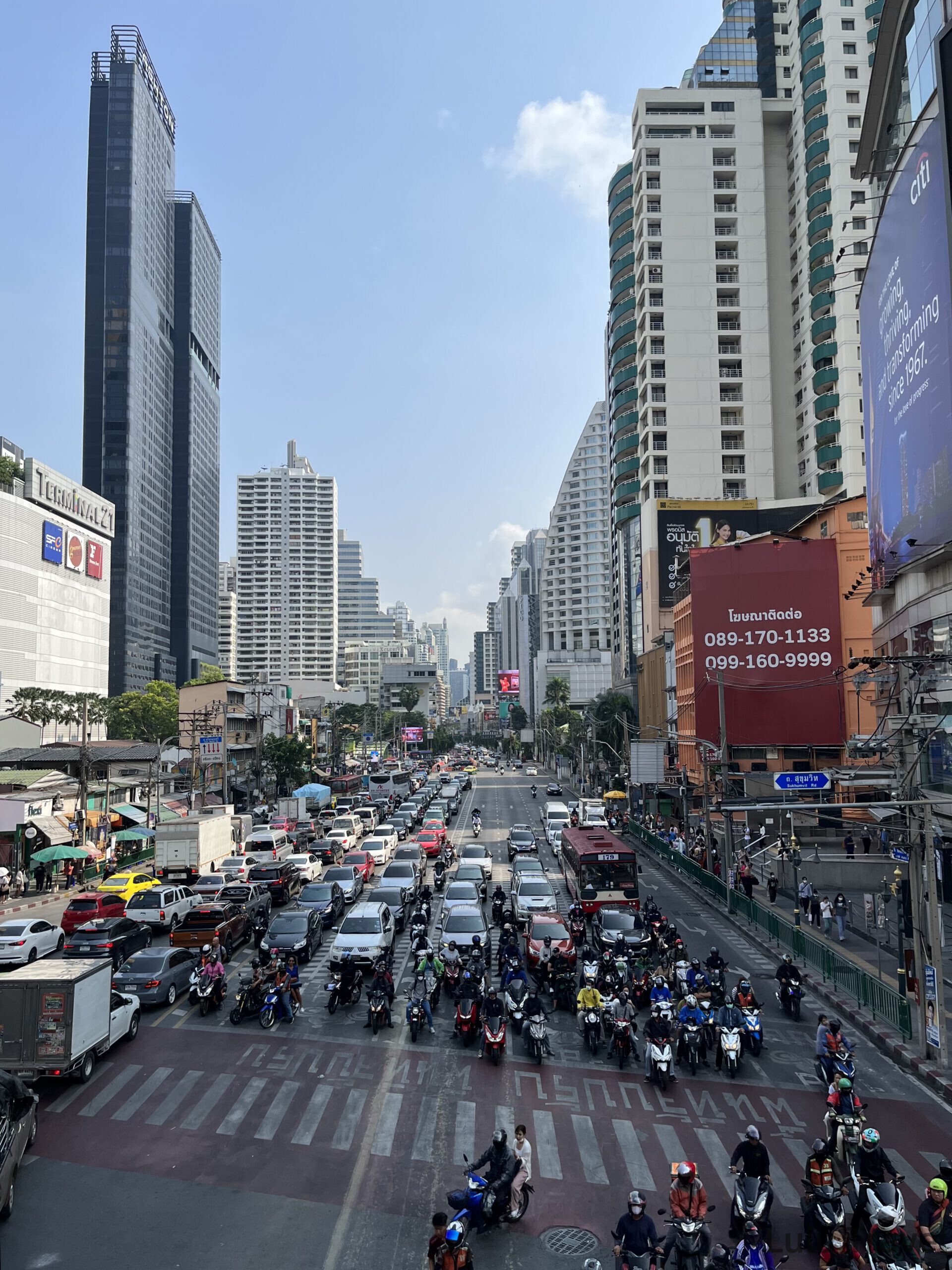
The first is that this group tour does not include hotel pick-up. Both KKday tours I booked in Chiang Mai collected us from the hotel lobby; for this one you make your own way to Siam Paragon (below Exit 5 of BTS Siam). Given Bangkok traffic, running a pick-up route around city hotels would genuinely be difficult. If you’re travelling with older family members, factor that self-transfer into the day’s energy budget, or just book a private tour instead.
We followed the route the operator recommended: take the BTS to Siam, leave by Exit 5, down the stairs, then left and left again. It isn’t complicated, and it avoids the risk of a Grab getting stuck in rush-hour traffic outside the station.
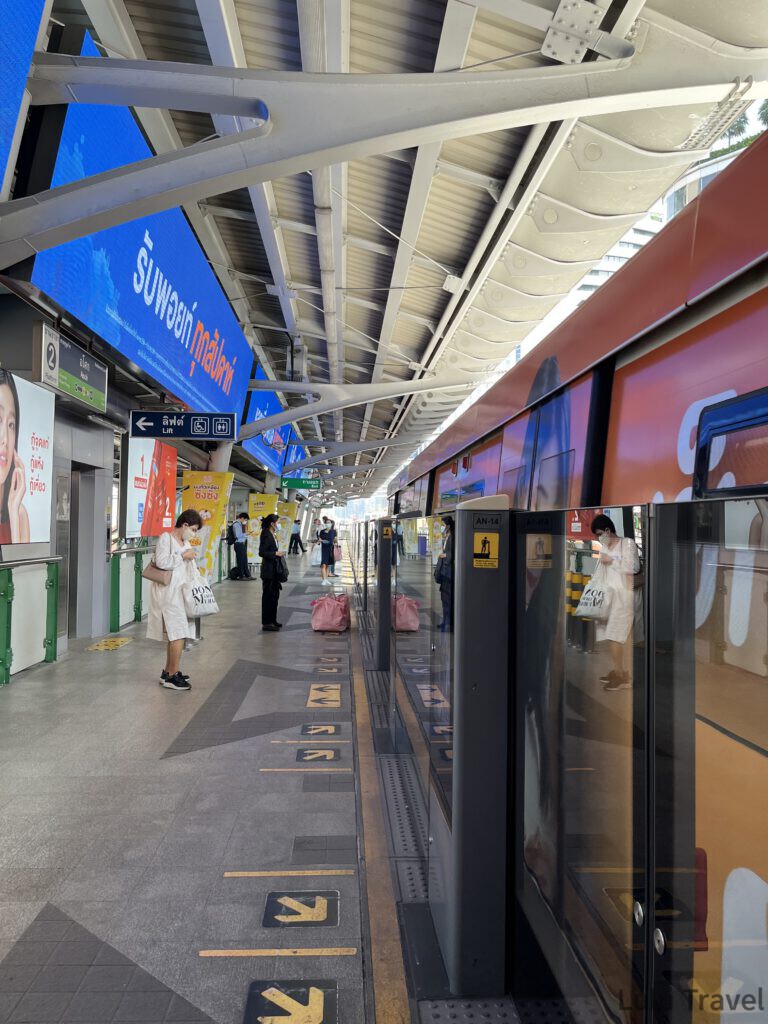
The second is that group size varies enormously. The listing says 5 to 40 people, and ours turned up as a full-size coach. With a big group, boarding, roll calls and regrouping all take longer — a completely different rhythm from the twelve-seater in Chiang Mai, and much less flexible.
The third is that the routes differ. The same listing also offers a version that includes Amphawa floating market, with an evening boat ride to see fireflies. We booked the Damnoen Saduak and Maeklong Railway Market combination, so check carefully which route you’re selecting before you book.
Check the route and meeting point before booking — ours was a forty-seat coach with no hotel transfer
02Damnoen Saduak Floating Market: The Boat Makes the Difference
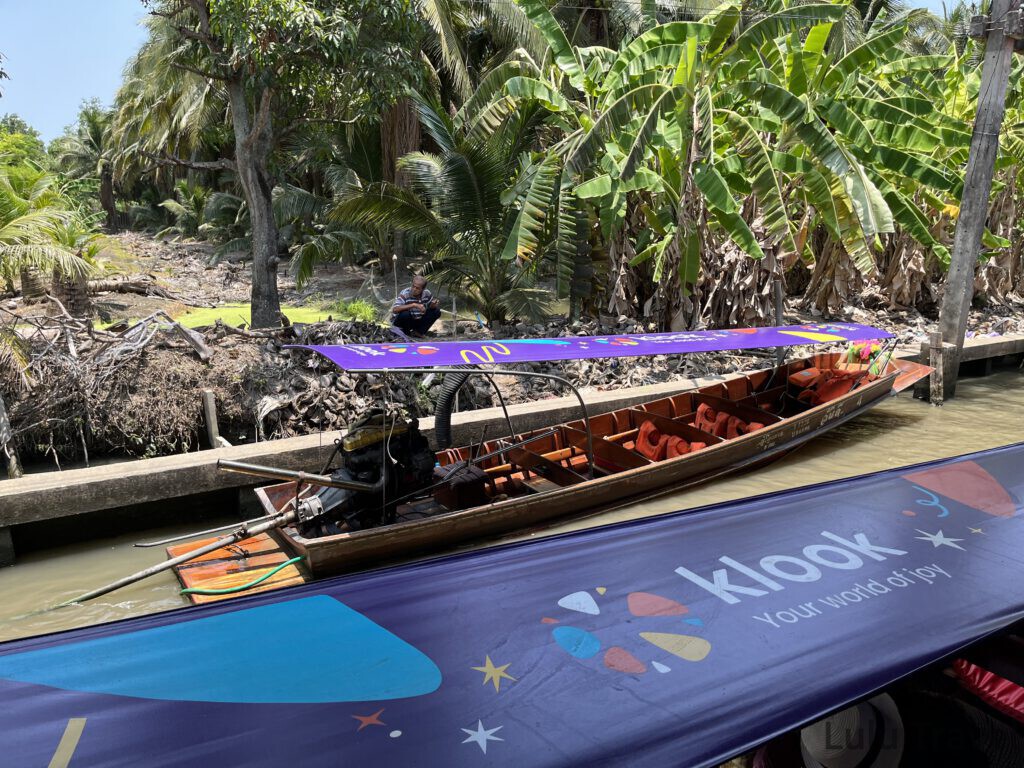
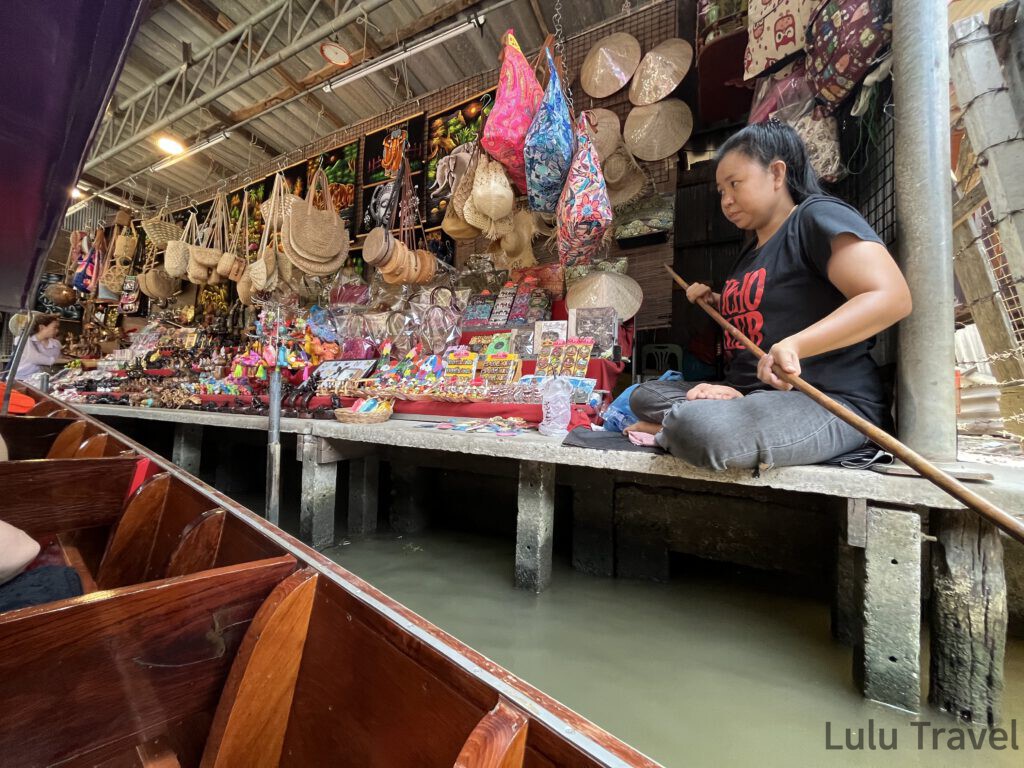
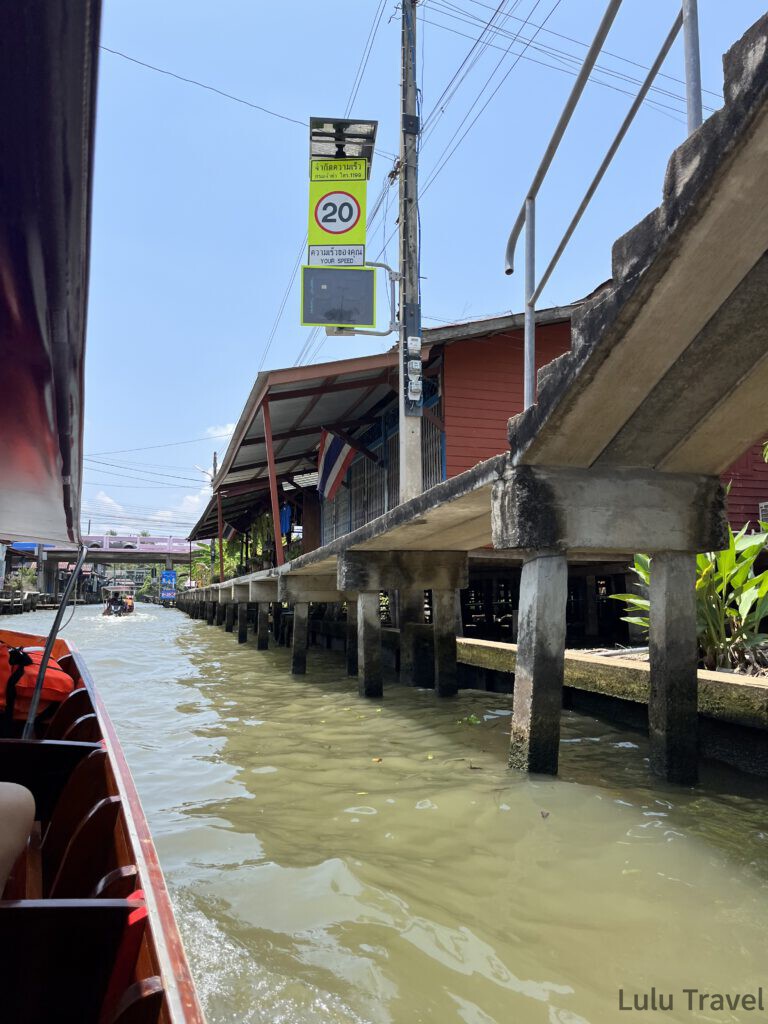
Damnoen Saduak turned out better than expected, and the reason was the boat. Klook runs its own long-tail boats, six to a boat, so our group had one to ourselves. Other independent visitors were shading themselves under large parasols; ours had a single sheet of canvas covering the whole boat. Same morning sun, very different experience.
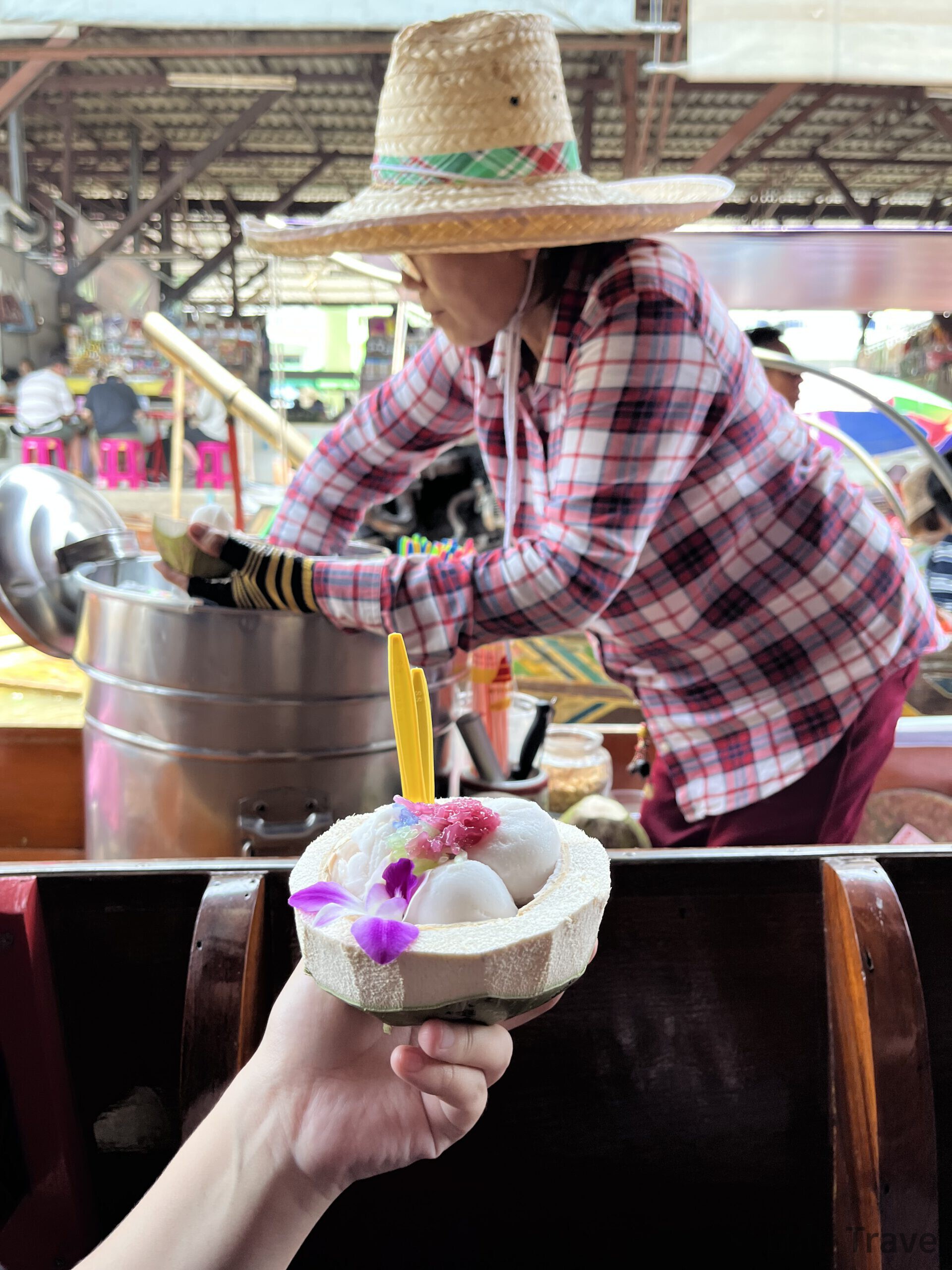
The boatman alternated between speeding along the canal (the limit on the water is 20 km/h) and weaving past the stilt houses. I got a face full of river water, and did some window shopping from an angle you don’t usually get. The best part was buying coconut ice cream from a boat vendor, which just about took the edge off the Bangkok summer. The electric boat ride runs about 30 to 45 minutes; afterwards, over lunch on land, we had boat noodles and antique coffee at a place the guide recommended, then regrouped for Maeklong Railway Market.
03Maeklong Railway Market: Watching the Train Is Free
Well fed, the whole group piled back into the coach and headed for Maeklong Railway Market, the spectacle you’ve probably seen on television. The scheduling here was good: we caught the train passing inches from the stalls twice. Each time you have to borrow a spot from a vendor and squeeze in less than thirty centimetres from the carriage, but that kind of tension isn’t something you find just anywhere.
Four trains run in and out of Maeklong station each day, which gives you eight windows to watch a train cut through the market. Trains are often late, so it’s worth being in position 20 to 30 minutes before the scheduled time to claim a spot.
Arrivals into Maeklong station: 08:30, 11:10, 14:30, 17:40.
Departures from Maeklong station: 06:20, 09:00, 11:30, 15:30.
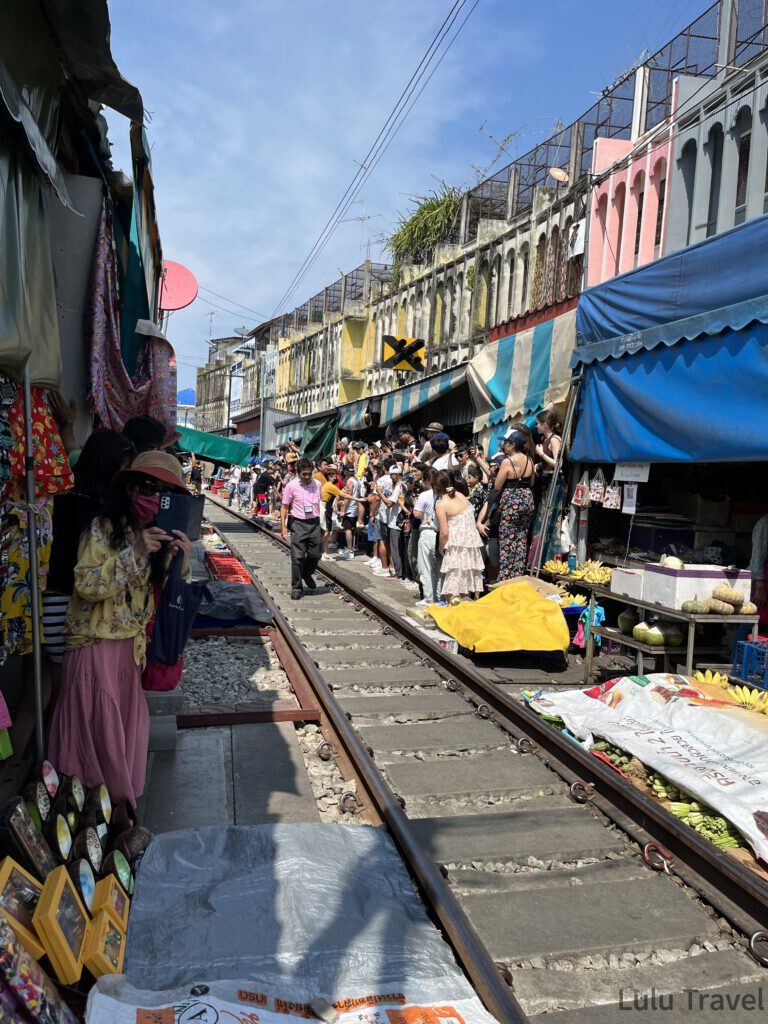
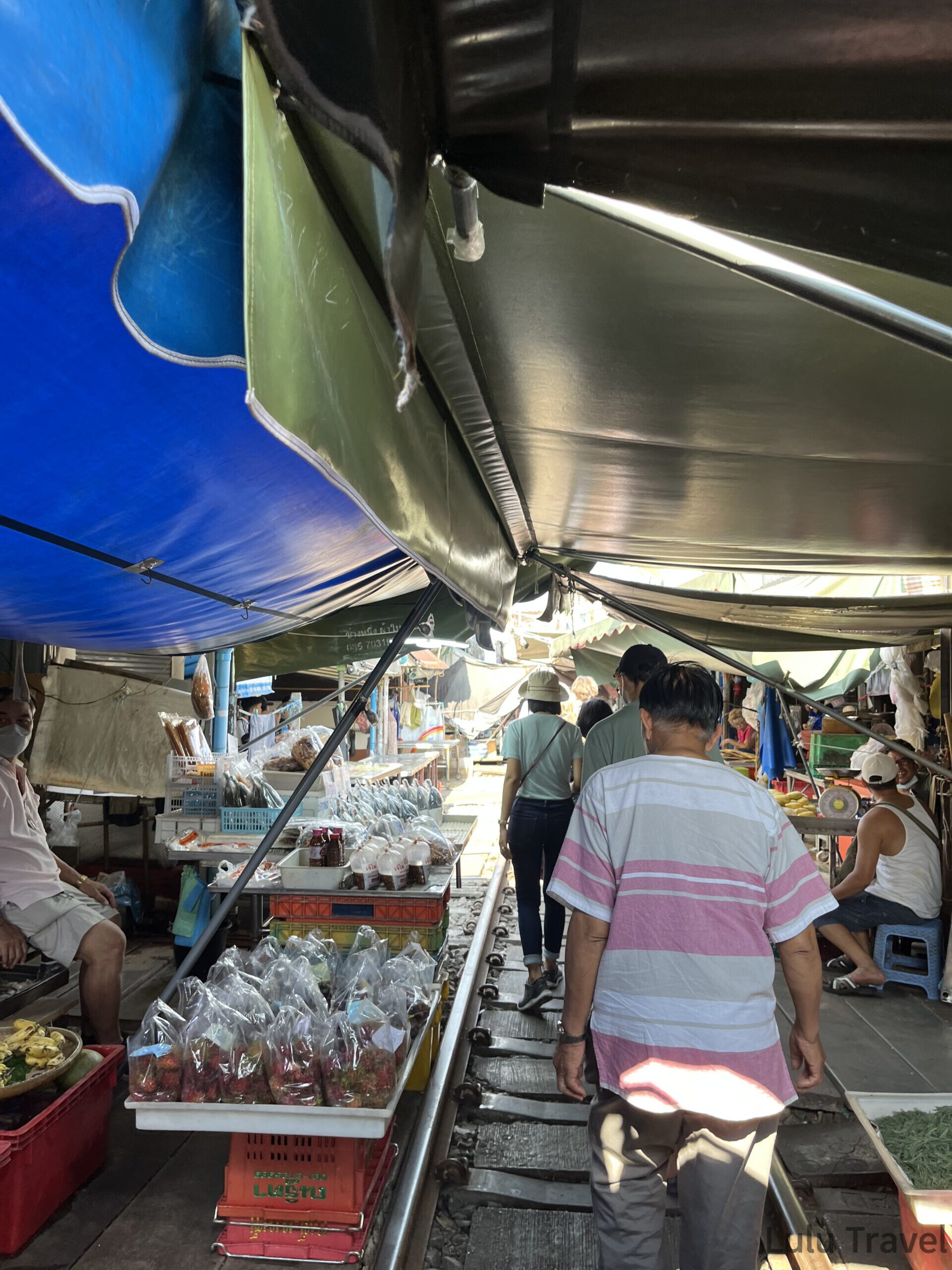
The best part is actually the vendors themselves: awnings whipped back in the seconds before the train arrives, then flipped out again the moment it has gone, the whole thing so smooth it reads as choreography. Some tours put you on the train instead, so you feel the stalls brushing past the window — a different angle on the same scene.
Maeklong Railway Market itself has no admission fee. If you already have transport, you can come on your own; what you’re buying with a tour is the transfer and an itinerary timed to land you there when a train comes through.
If you want to see how Hanoi’s train street compares with the railway market in Bangkok, this post covers it: Hanoi Travel Guide|5 Days 4 Nights: Old Quarter Highlights
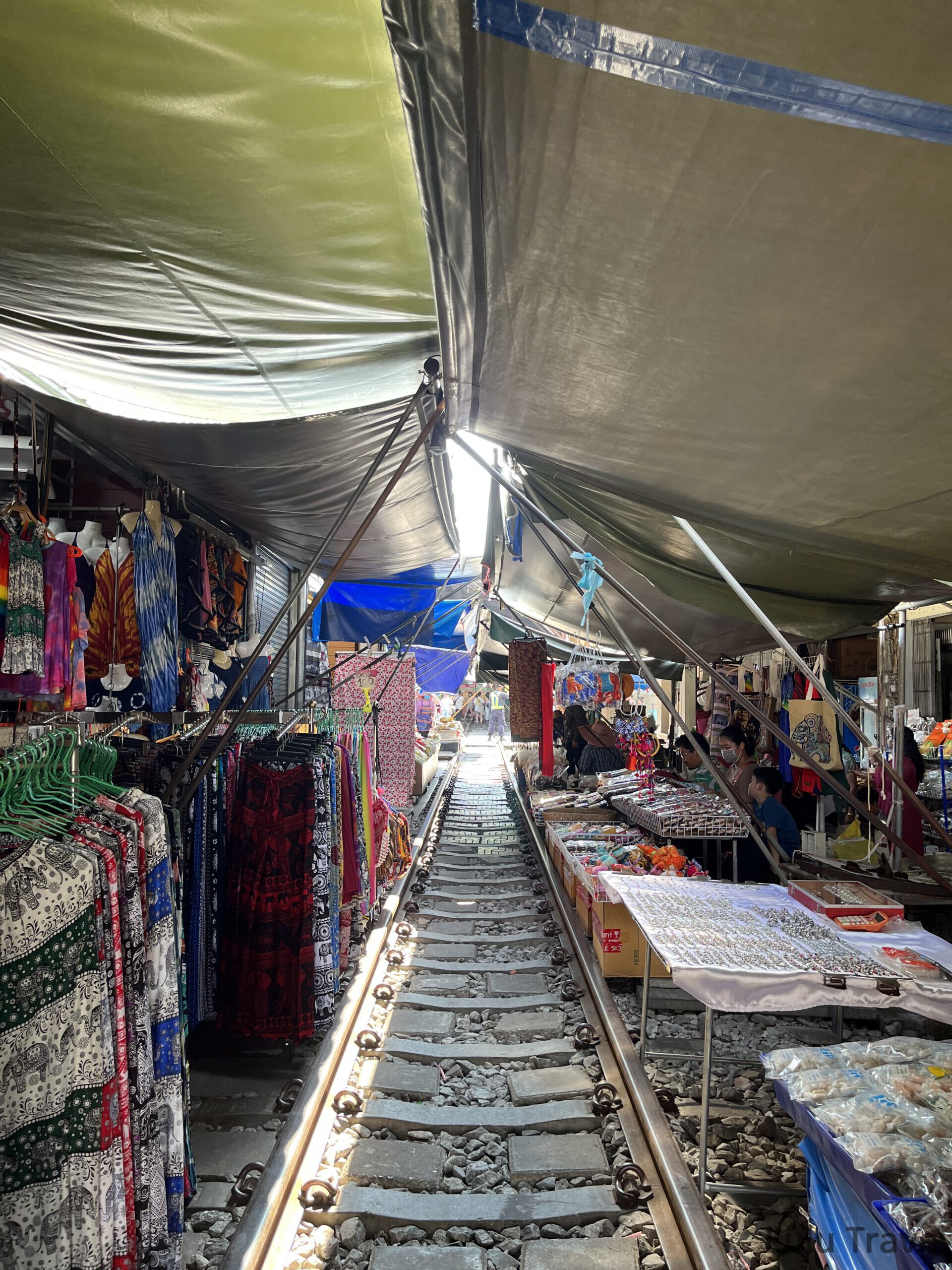
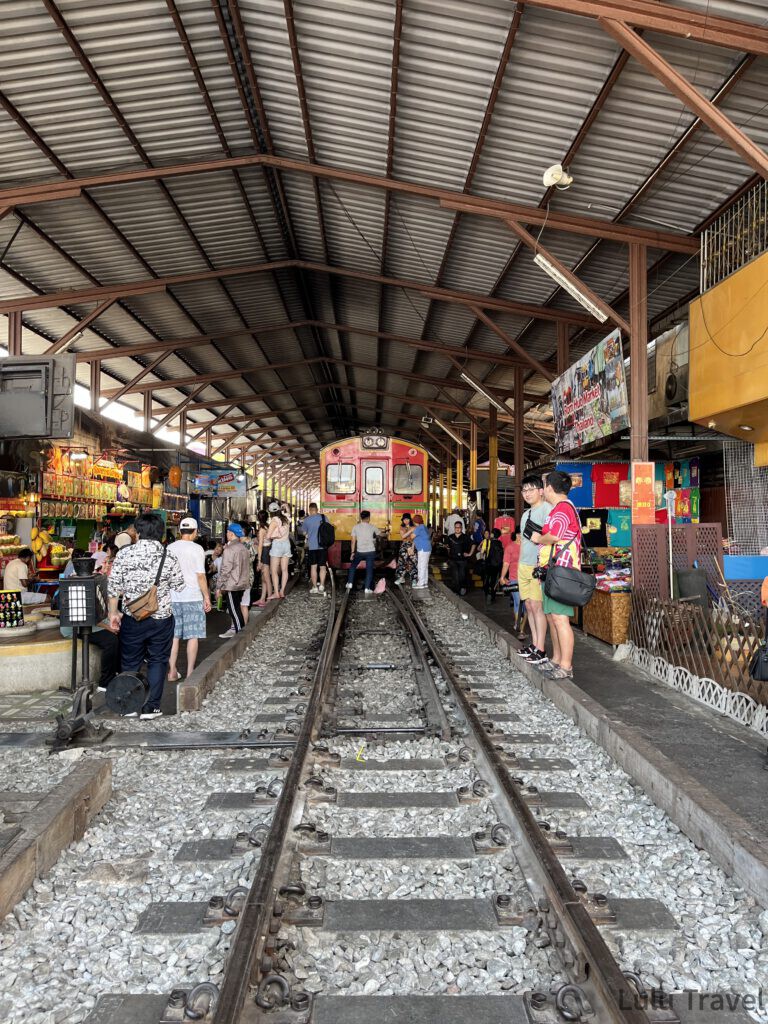
ENDAre These Two Bangkok attractions Worth It?
Both places are worth seeing in person; they’re the kind of spots that only land once you’re standing there. If you’re comparing Bangkok day tours, I’d put “meeting point” and “group size” above the list of stops. Everyone visits the same places — how you get delivered to them is where the tours actually differ.
FAQFrequently Asked Questions
Can I visit both markets on my own instead of joining a tour?
Both markets sit outside central Bangkok and some distance from each other, so the difficulty isn’t admission but transport and timing. Watching the train at Maeklong is free; the hard part is arriving when a train is due. At Damnoen Saduak you’d have to negotiate with the boat operators yourself, and you wouldn’t get the Klook set-up of six to a boat under a full canvas cover. At NT$6,824 for six of us, roughly 1,137 each to hand over a whole day of logistics, I thought it was reasonable.
Should I add Amphawa floating market?
Amphawa is the one locals tend to go to, and it only opens at weekends, Friday to Sunday. The itinerary then runs into the evening with a boat ride to see fireflies. We didn’t take that option, so I can’t give a first-hand account. Bear in mind it turns this into a full-day trip — if you’re travelling with older family members or have an early start the next day, weigh up the energy first.
How different are large and small groups? Is it worth paying more?
The difference is waiting time and flexibility. Ours was a forty-seat coach, so every stop meant regrouping, roll calls and slow boarding; the twelve-seater we took in Chiang Mai on the same trip let the guide keep an eye on everyone, and lingering an extra five minutes was actually possible. If this is your only day for it and you want a calmer pace, paying more for a small group or a private tour is a fair trade.
If you’re one of these travellers, here’s what I’d suggest
Planner types: confirm the meeting point and departure time first, and book the previous night’s hotel around Siam so you’re not rushing in the morning.
Design-minded travellers: for me the real draw at Maeklong isn’t the train but the practised way the vendors pull their awnings back at the last second — a piece of order worn smooth by daily use, worth standing through one more round just to watch, and to be nervous on their behalf.