Spending two days in Yufuin wasn’t the original plan. When we decided to go to Fukuoka a month out, we hadn’t noticed the dates landed squarely on Japan’s Golden Week — which meant the early-morning and late-evening Yufuin no Mori services were completely booked out. Rather than force it, we moved Yufuin to the day after the holiday ended and turned it into a standalone overnight. That compromise ended up being the best decision of the trip: we skipped the crowds, got a two-storey onsen apartment for NT$4,600, and could take a bus straight to the airport the next day. This post covers how we spent those two days, where we stayed and what we ate.
01Why Yufuin Deserves an Overnight
On a day trip, the Yufuin you see is the same crowd at the same hours as everyone else. Staying the night buys you two windows when nobody else is around: Yunotsubo Street after dark, with every shop shuttered, the road empty and the whole place pitch black — a completely different street from the daytime version; and Lake Kinrin at dawn, early enough to miss the tour buses entirely.
Plus three practical advantages:
- Seats are available: the Yufuin no Mori runs off-peak once the holiday ends, and there were plenty of empty seats on board.
- Rooms are cheaper: the price gap for the same room during and after the holiday is significant.
- The return leg is easier: a highway bus runs from Yufuin Station straight to Fukuoka Airport, so there’s no need to loop back through the city.
When the popular slots on a sightseeing train are sold out over a holiday, don’t squeeze yourself in — move that stop to after the holiday instead. The prices and the crowds come down together.
Yufuin was the second half of a six-day Fukuoka itinerary. The first five days — Hakata, Itoshima, Yanagawa and Dazaifu — are all in Fukuoka Itinerary | Booking Golden Week One Month Out, 6 Days and What It Cost.
02The Yufuin no Mori: Off-Peak Makes for Better Photos
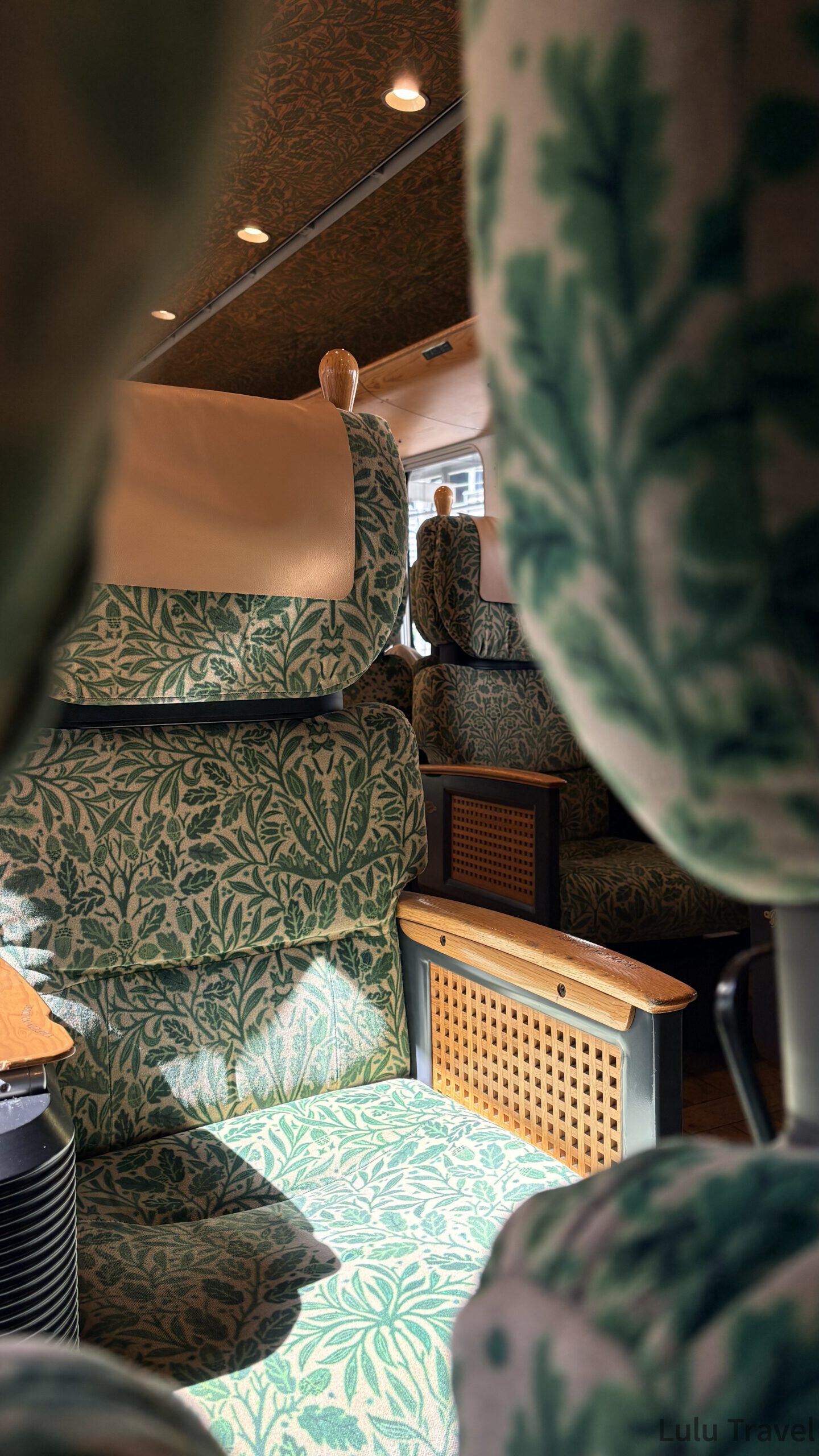
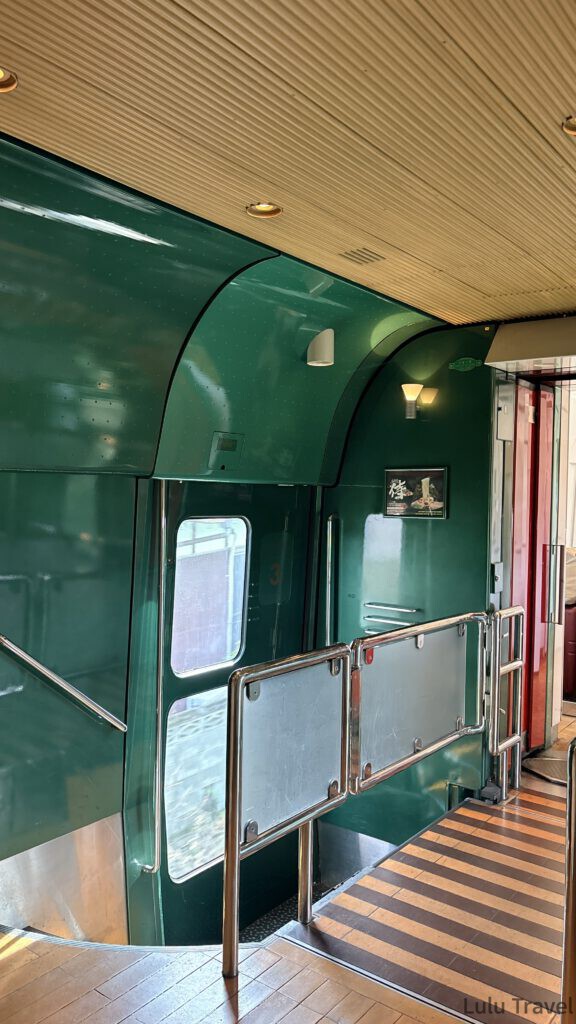
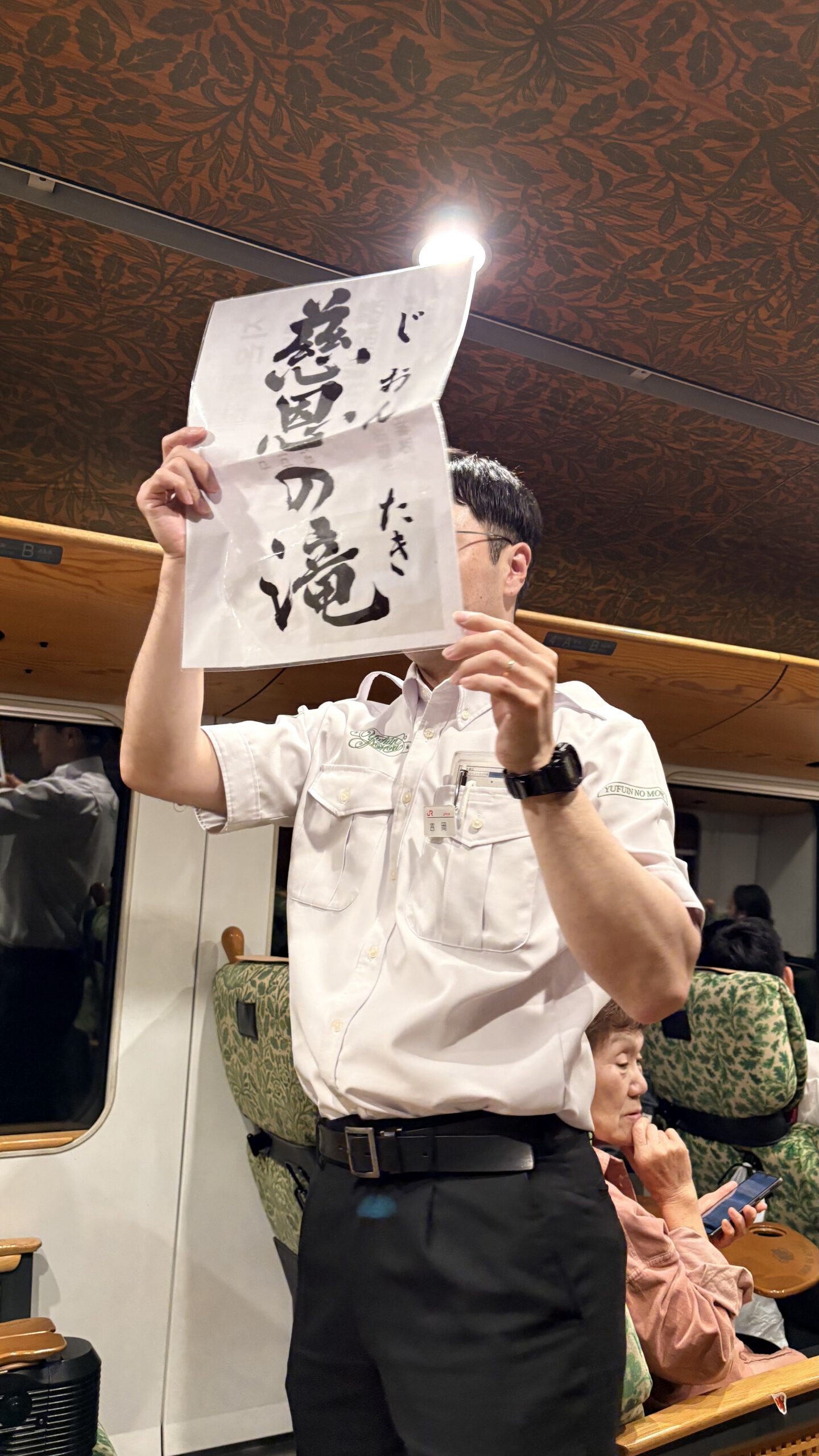
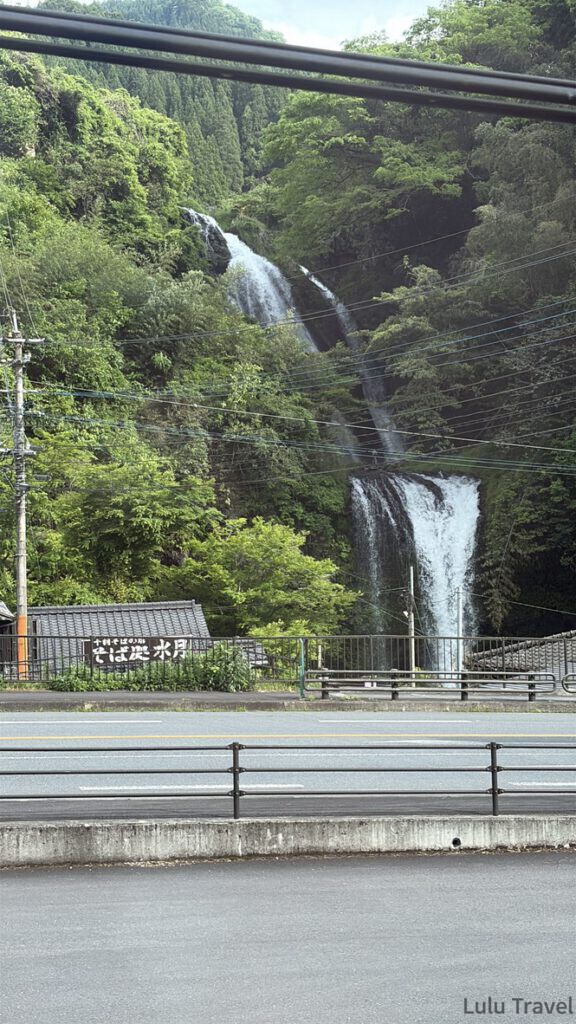
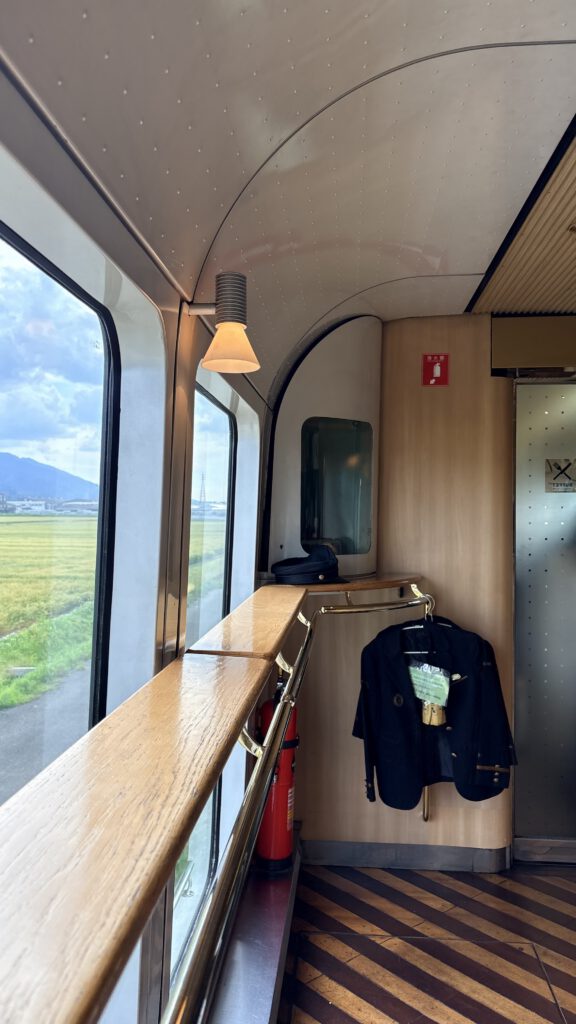
We boarded the Yufuin no Mori 5 at 14:38. Because it was an off-peak service there were still plenty of empty seats, which made it easy to move around and take photos on board. I’d booked through KKday in advance and specifically chose car four, on the Jionnotaki Falls side. That carriage is done in a forest theme — the ceiling and seats use forest tones and look different from the rest of the train. Its selling point is the fleeting view of Jionnotaki Falls along the way; the staff hold up a sign to warn you just before it appears.
We’d eaten so much at the hotel breakfast that we skipped lunch entirely, and picked up Yufuin’s well-known B-speak roll cake and a matcha ice cream from the onboard shop instead.
The B-speak flagship store is on Yunotsubo Street and closes at 17:00. If your train gets in late, or you can’t fit it into the next day, the onboard shop sells it too — though at a higher price than the store.
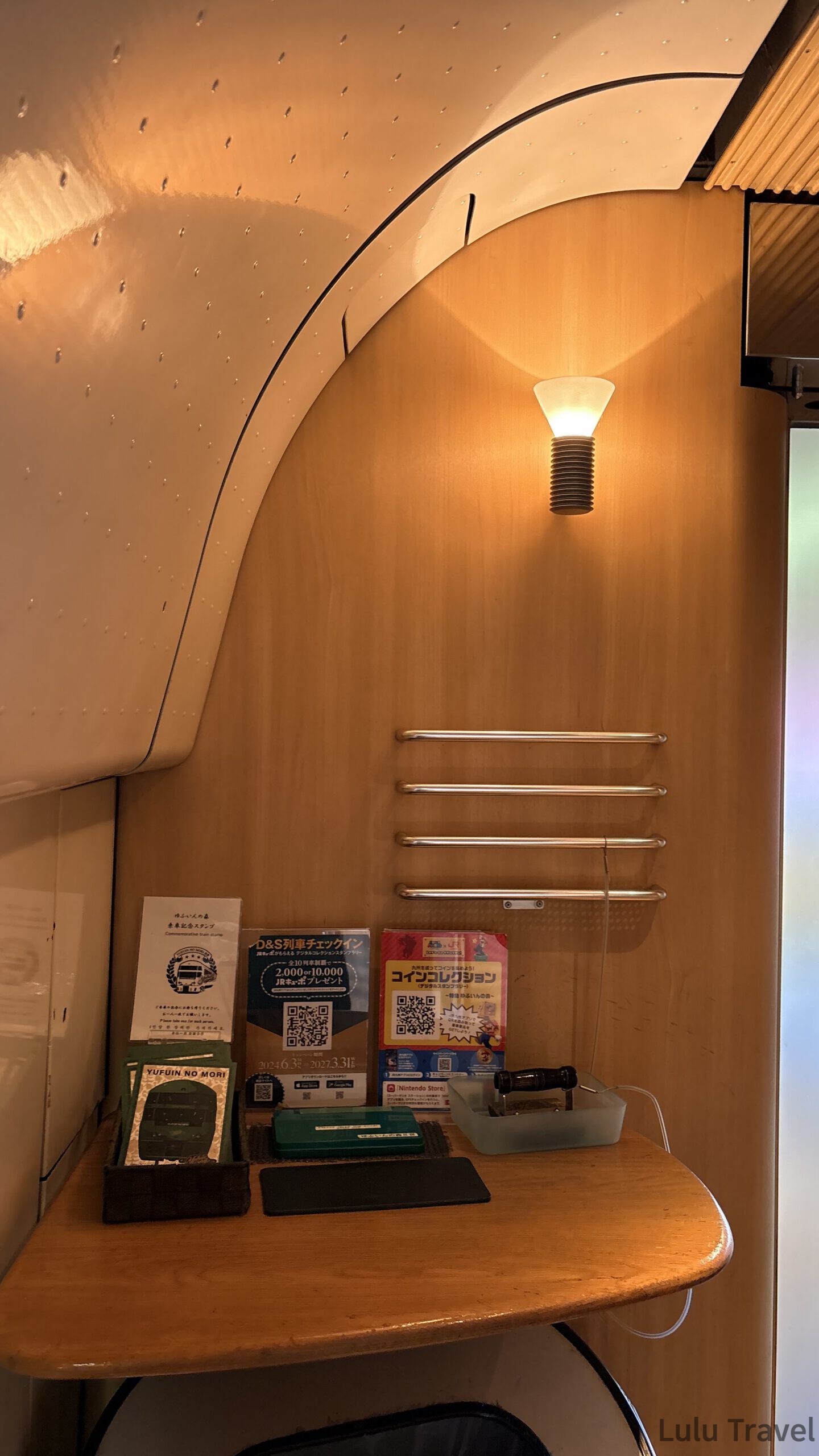
Beyond eating, drinking and resting in your seat, there’s more to do on the Yufuin no Mori than you’d expect. In the corner of the shop in car three there’s a stationmaster’s cap and jacket you can put on for photos, and car five stocks free commemorative boarding cards you can stamp and take home. The journey goes by faster than you think.
03Where We Stayed : A Two-Storey Apartment with a Bed for Everyone
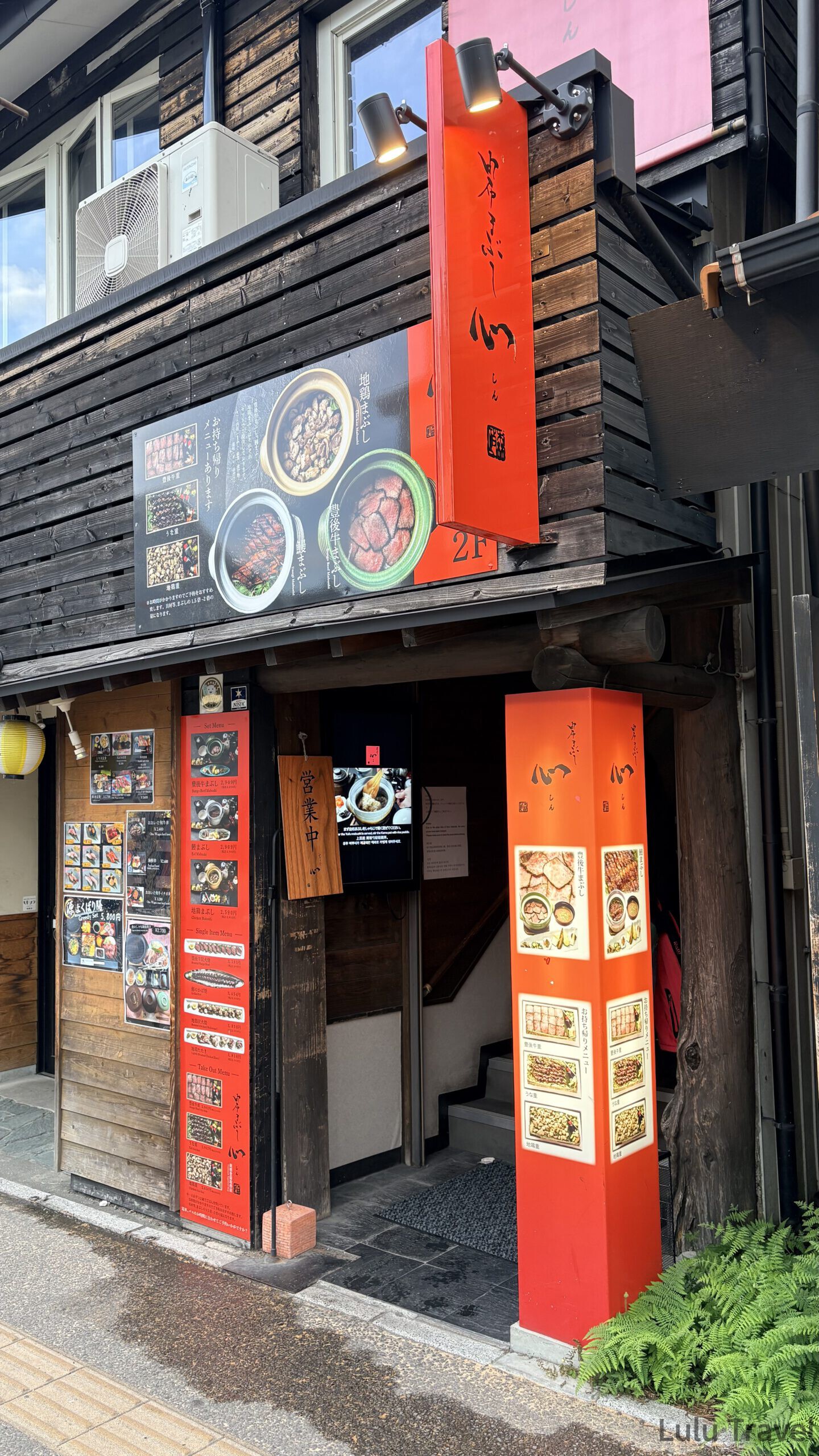
After arriving in Yufuin, I was worried the well-known Yufu Kamameshi Shin, Yufuin Station branch would be full — the Lake Kinrin branch closes earlier, so it isn’t an option in the evening. I went straight there to ask whether we could put our names down, and was told there was no need. So we headed back to drop off our luggage first.
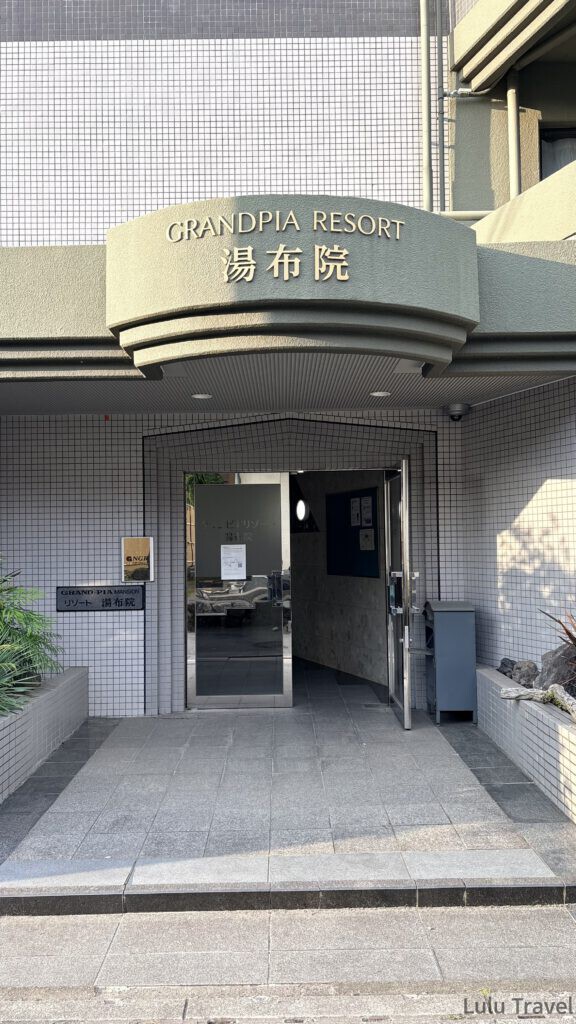
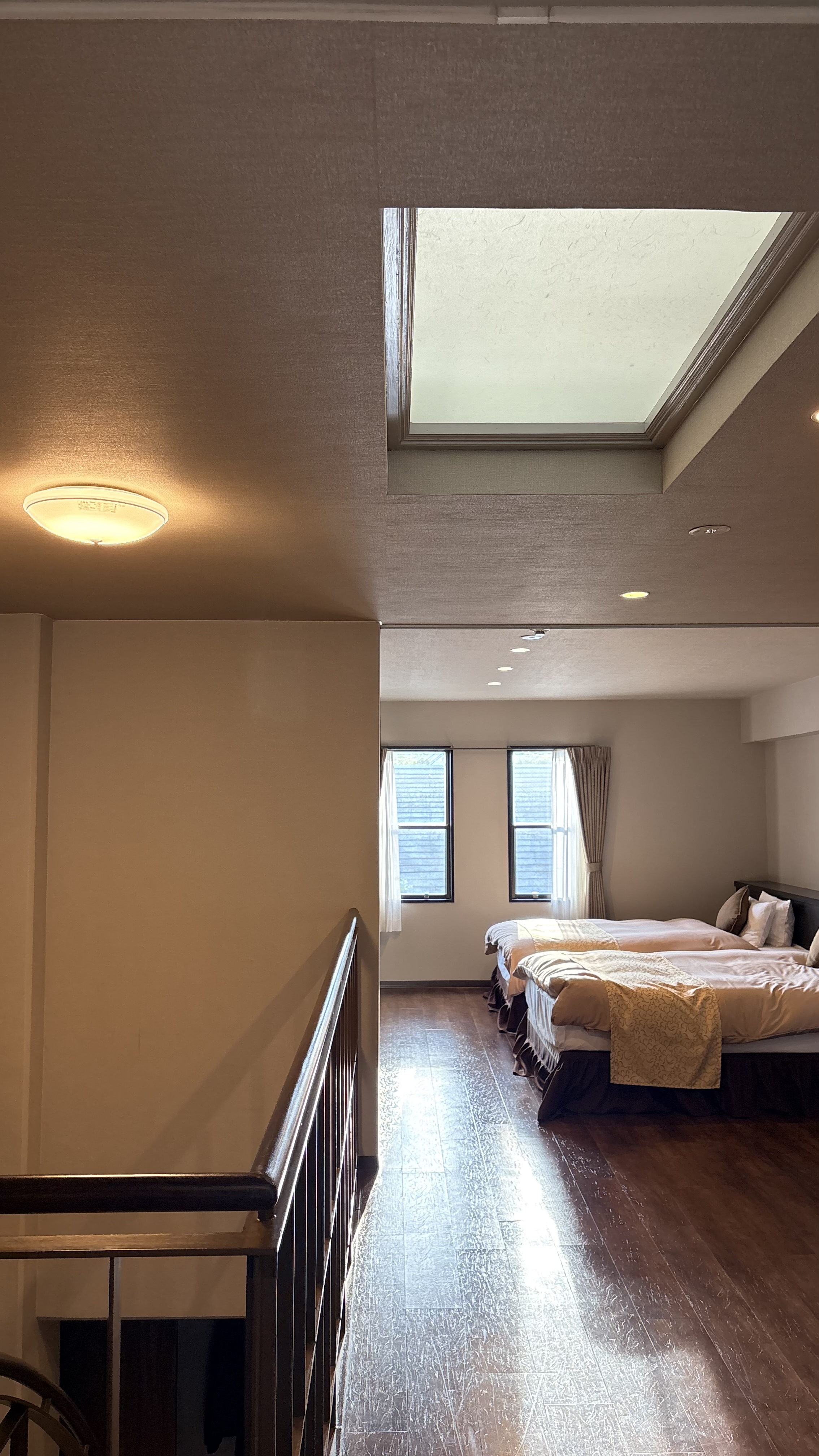
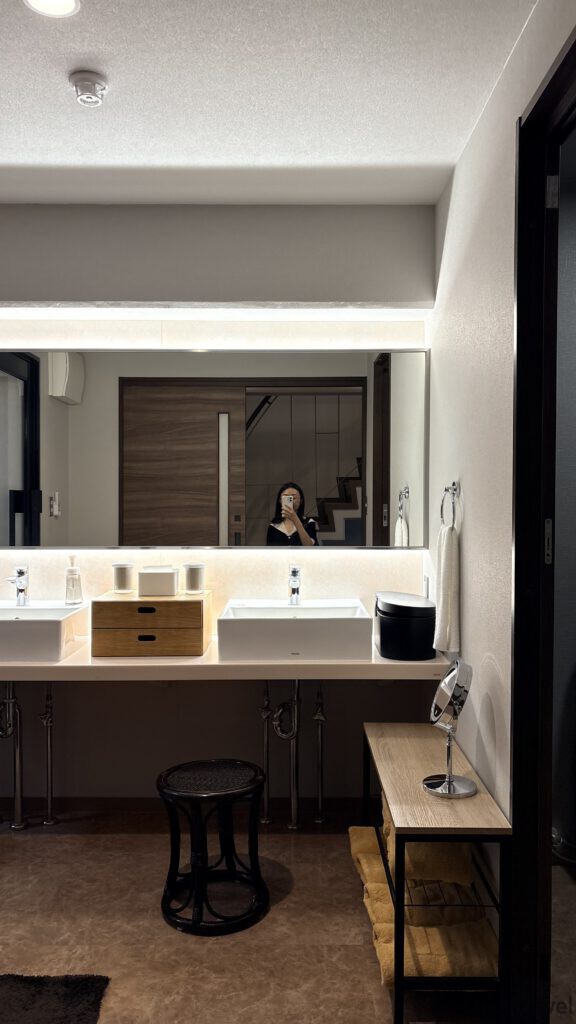
Grandpia Resort Yufuin is an apartment-style hotel, and staying there genuinely feels like moving into a local home for the night. We booked the twin apartment suite: two storeys, extremely spacious, with a large terrace visible the moment you walk in, a double vanity two people can use at once, and two living-room sofas that fold flat into beds. So the four of us managed a bed each — in Japan, where space costs a fortune.
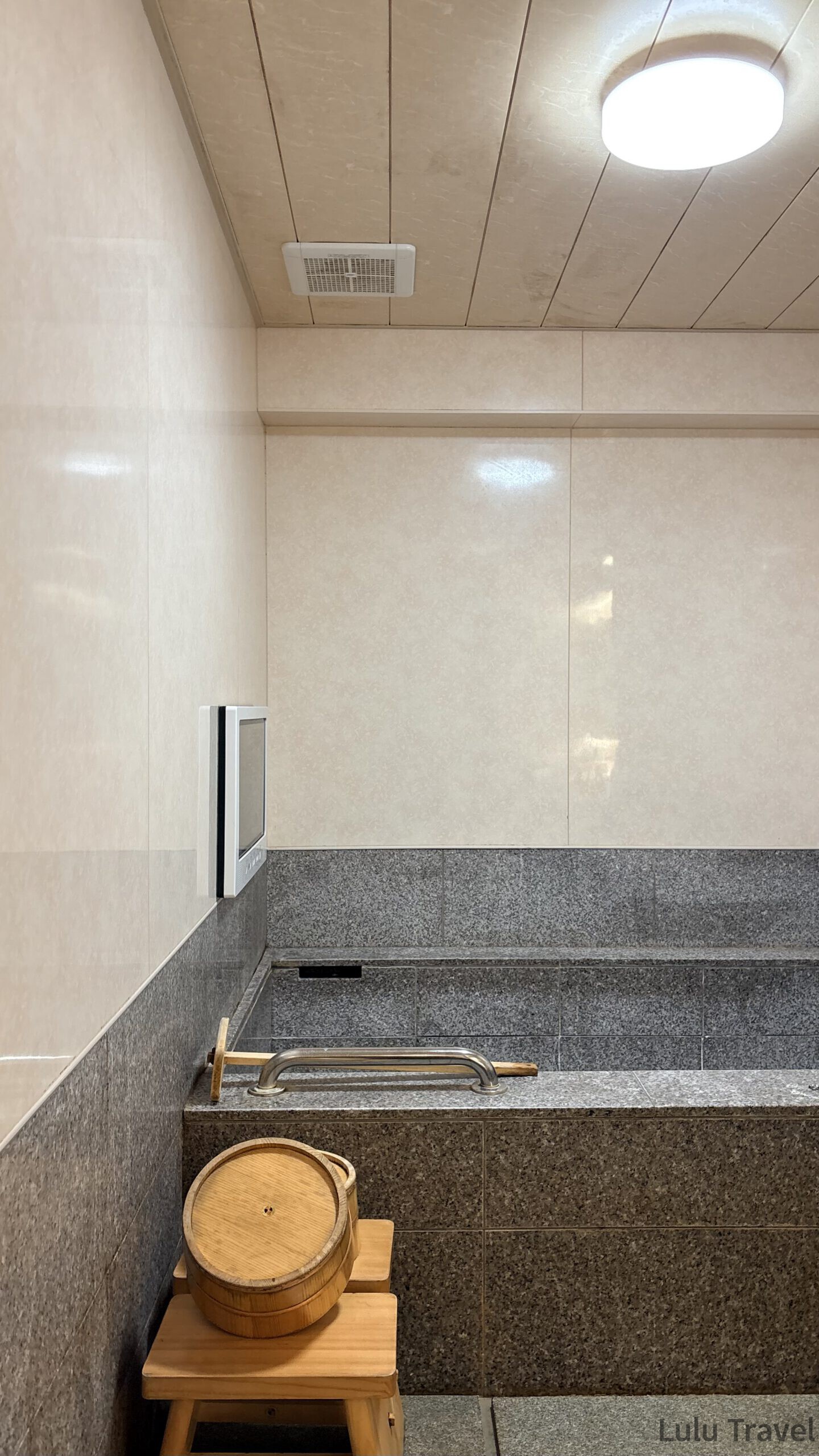
Beyond the sheer amount of space, the amenities were thoughtful too: geta and yukata, a Dyson hairdryer, capsule coffee. The fittings are worth a mention as well — there’s a television in the onsen bathroom so you can watch while you soak, large screens in both the dining room and the living room, and washlet toilets in both bathrooms. Getting a place this big and this well thought through in Japan, in a resort town no less, felt like excellent value — though our sense of value may have been skewed by the eye-watering Fukuoka city hotel rates over Golden Week.
Grandpia Resort Yufuin
Twin Apartment Suite · Two-storey unit
NT$4,600 /whole unit, per night
- Lower floor (on level 2): entryway, wardrobe, dining room, kitchen, onsen bath, toilet
- Upper floor: sleeping area, living room, second toilet
- Split four ways: roughly NT$1,150 per person
04Kamameshi Shin: Everyone Says You’ll Queue, We Didn’t
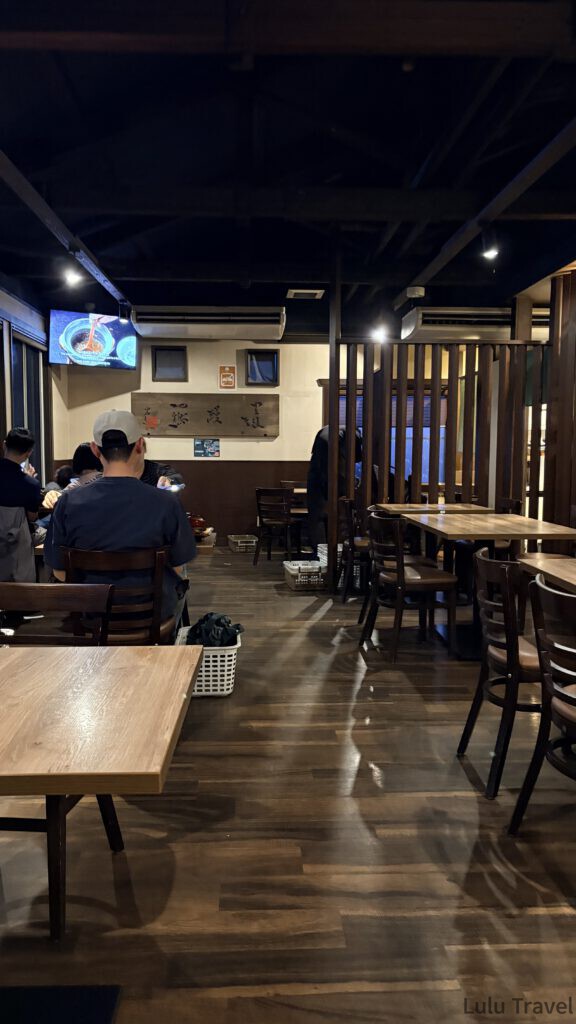
After a round of gasping at the apartment and getting settled, we walked back to Yufu Kamameshi Shin. To our surprise the dining room was nearly empty — the complete opposite of the queueing horror stories online.
Thinking about it afterwards, the reason is probably this: the only people eating here in the evening are the few who stay overnight in Yufuin at a place that doesn’t serve dinner. Everyone doing a day trip is already on the train home by then.
We ordered all three varieties of kamameshi and worked through them with a certain ceremony, following the how-to-eat video playing in the restaurant. The eel kamameshi was considerably better than the eel rice we’d had in Yanagawa.
The queues at Kamameshi Shin are a daytime problem. If you’re staying in Yufuin, the evening is actually the emptiest slot.
05Yunotsubo Street After Dark
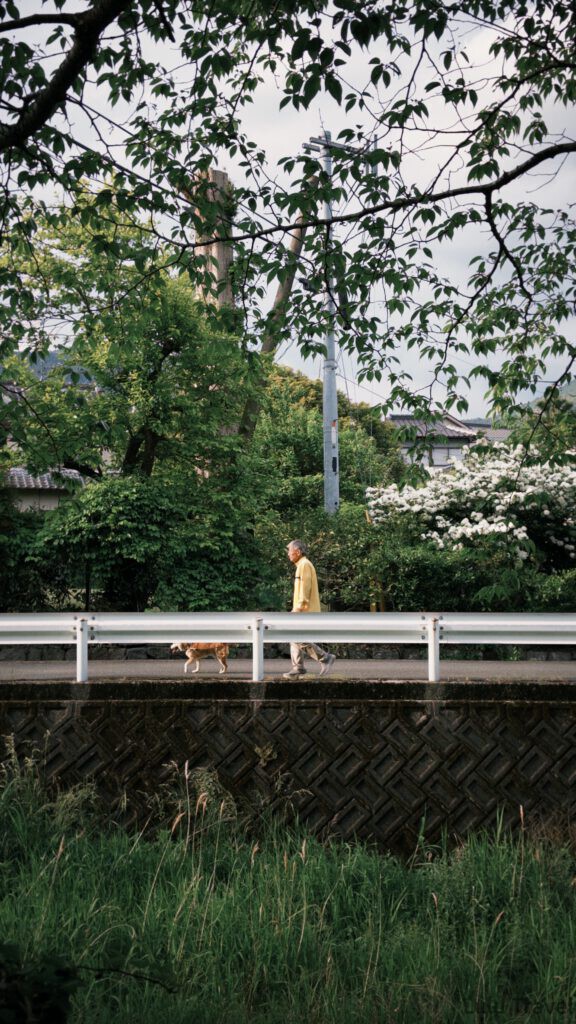
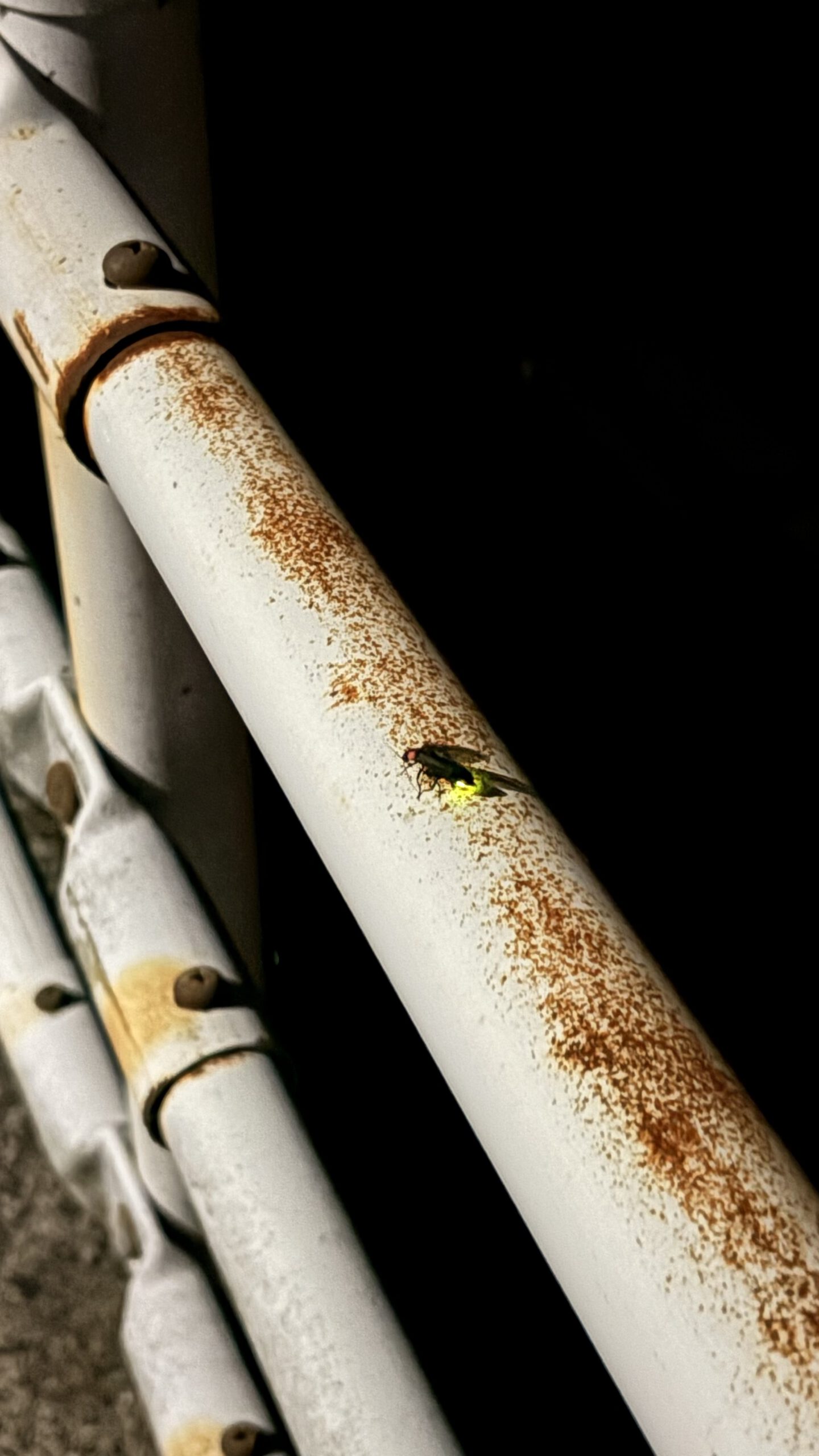
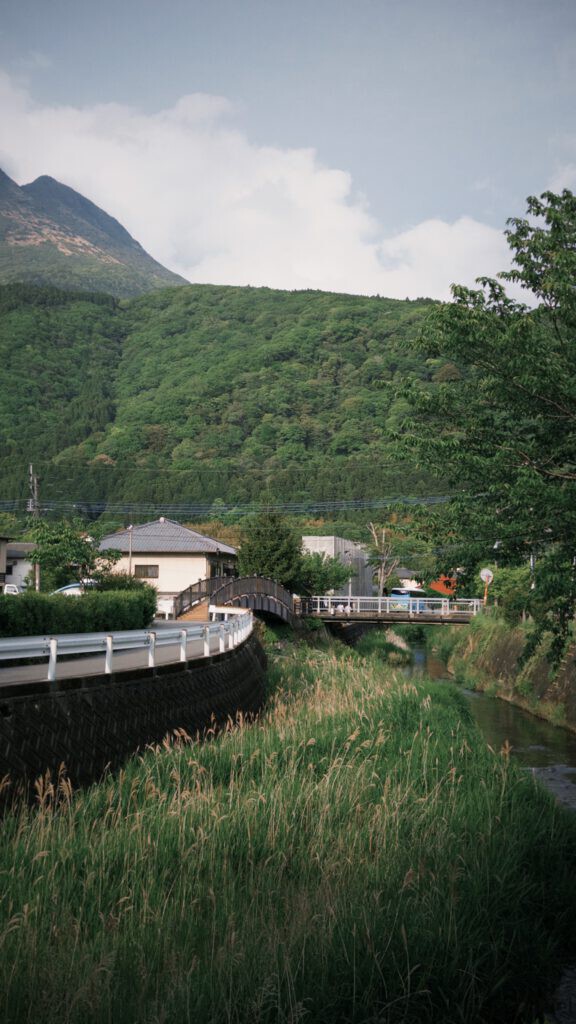
By the time we finished eating it was dark, and we walked back along an empty, pitch-black Yunotsubo Street, unable to picture the crowds that would fill it the next day. Then, near Hotarumi Bridge, we saw a firefly. The name of the bridge happened to echo exactly what was in front of us — but what struck me more was that even in a place this busy with tourists, conservation is still taken this seriously. For a moment the dark country road through Yufuin looked like a scene from a Japanese drama.
06Lake Kinrin at Dawn
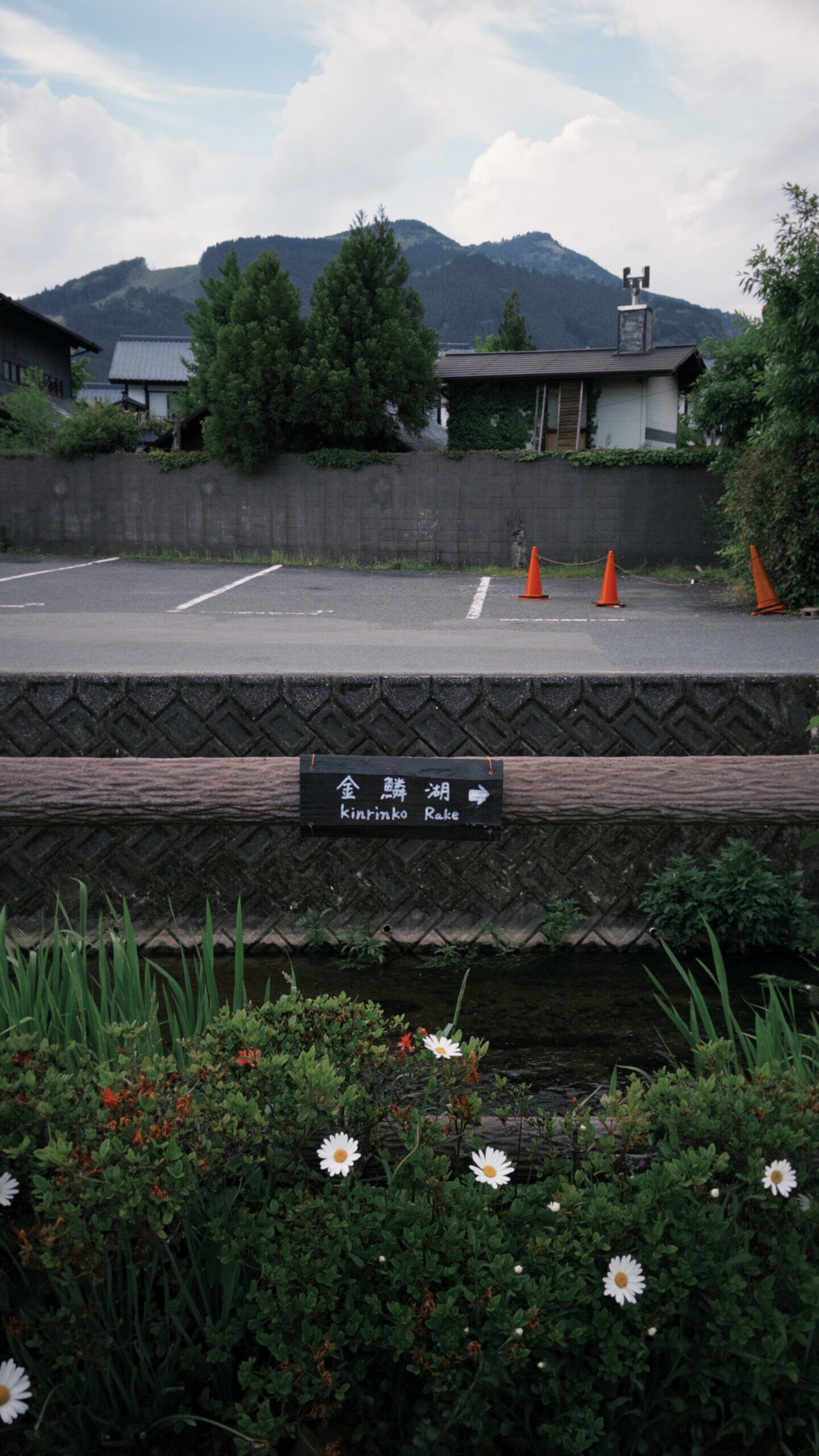
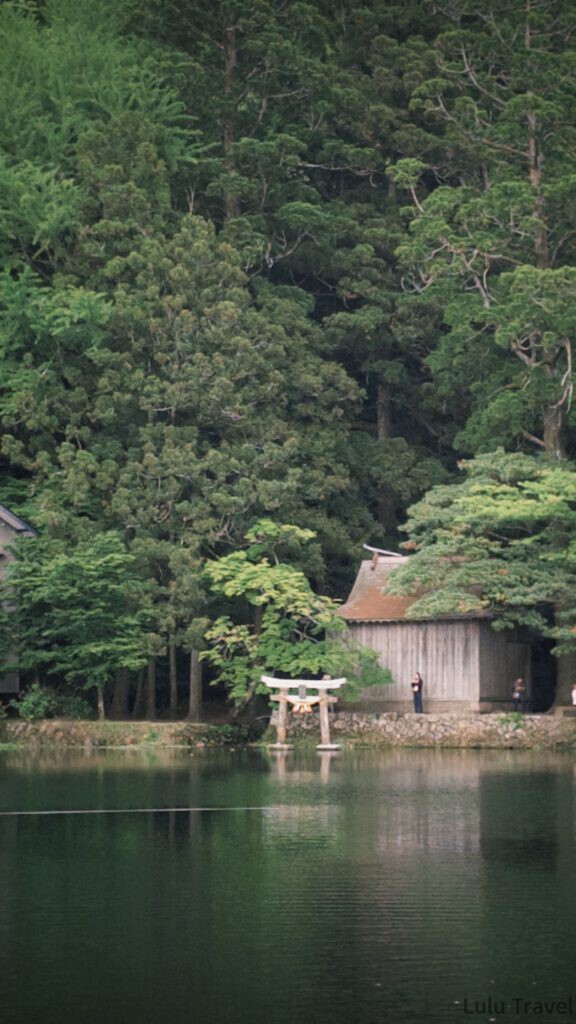
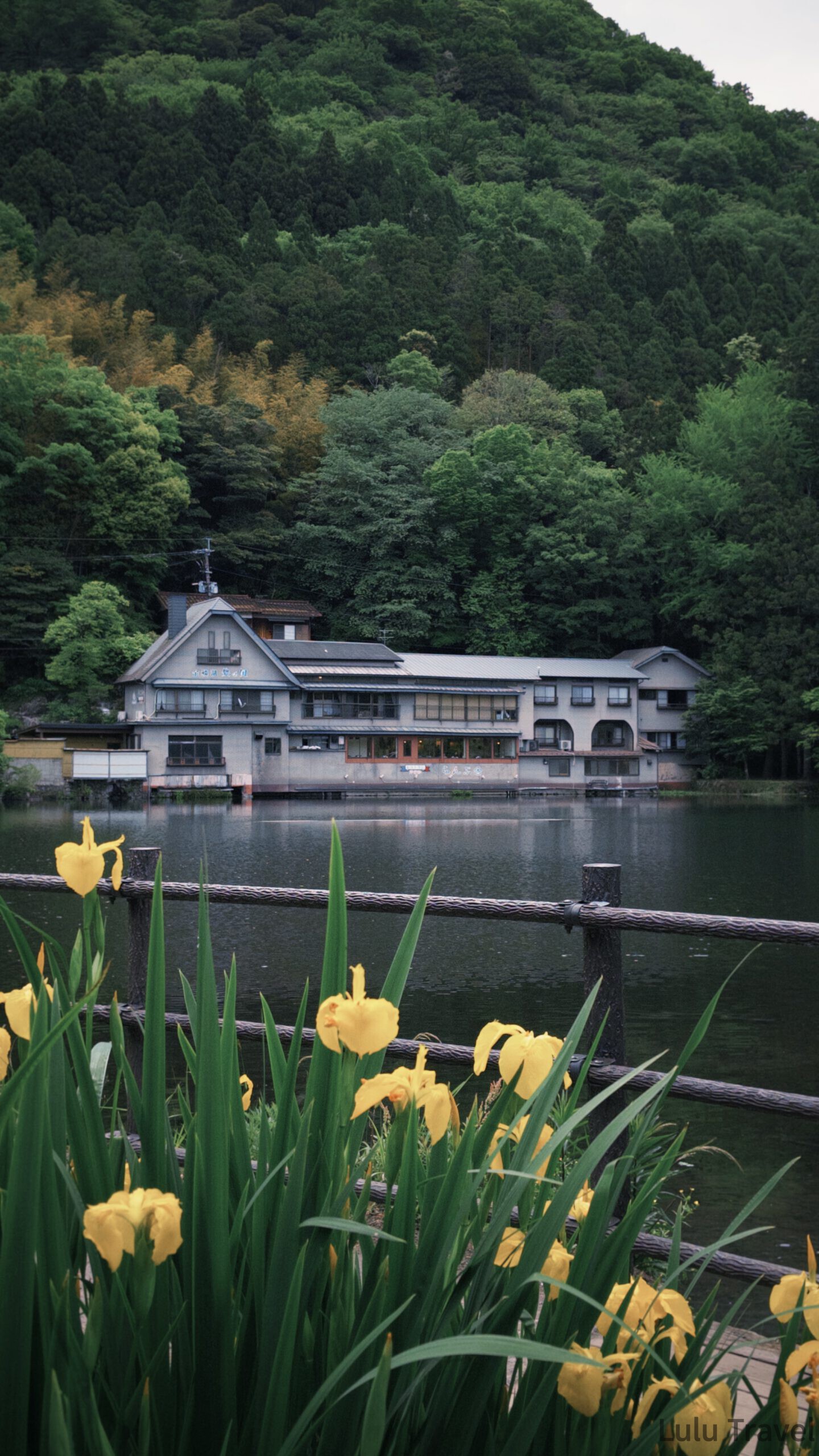
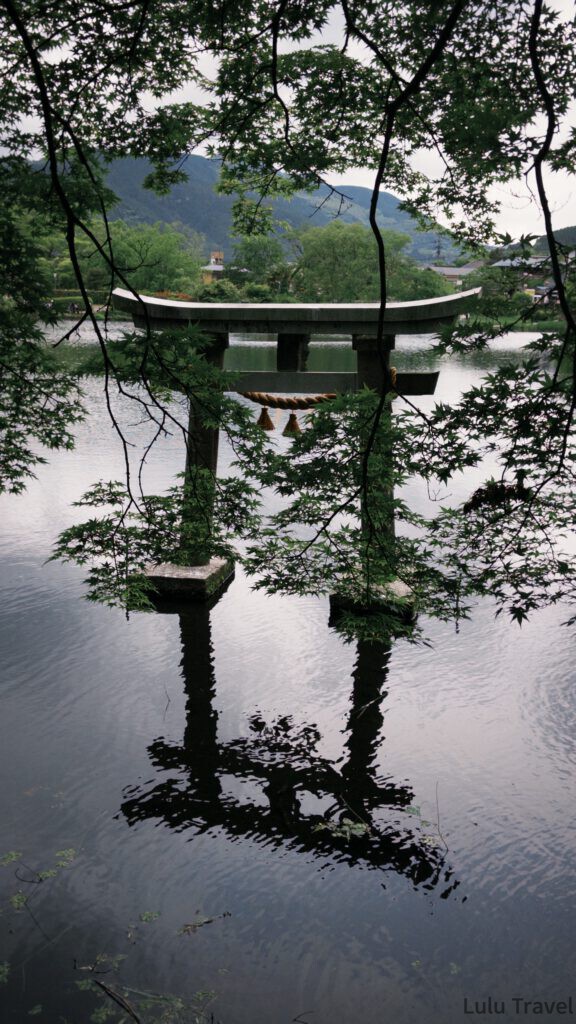
The next morning, before checking out, we walked over to Lake Kinrin, timed to miss the tour groups. Strolling around the shore was unhurried and easy; taking your time with photos, a full loop only needs 15 to 20 minutes.
Lake Kinrin is one of the easiest places in Yufuin to get packed out. This is where staying the night pays off most: before the tour buses arrive, the lake is more or less yours.
07Yunotsubo by Day and the COMICO Art Museum
After checking out we wheeled our luggage over to Yunotsubo Street. Visitors were arriving steadily and the street had come alive — a completely different place from the night before.
Breakfast was eaten as we walked: a deeply honeyed dorayaki from CUCUCHI, a Kinsho curry bread, and a half-baked cheesecake, doughnut and pudding from Yufuin Milch. Getting there before the bigger crowds meant barely any waiting.
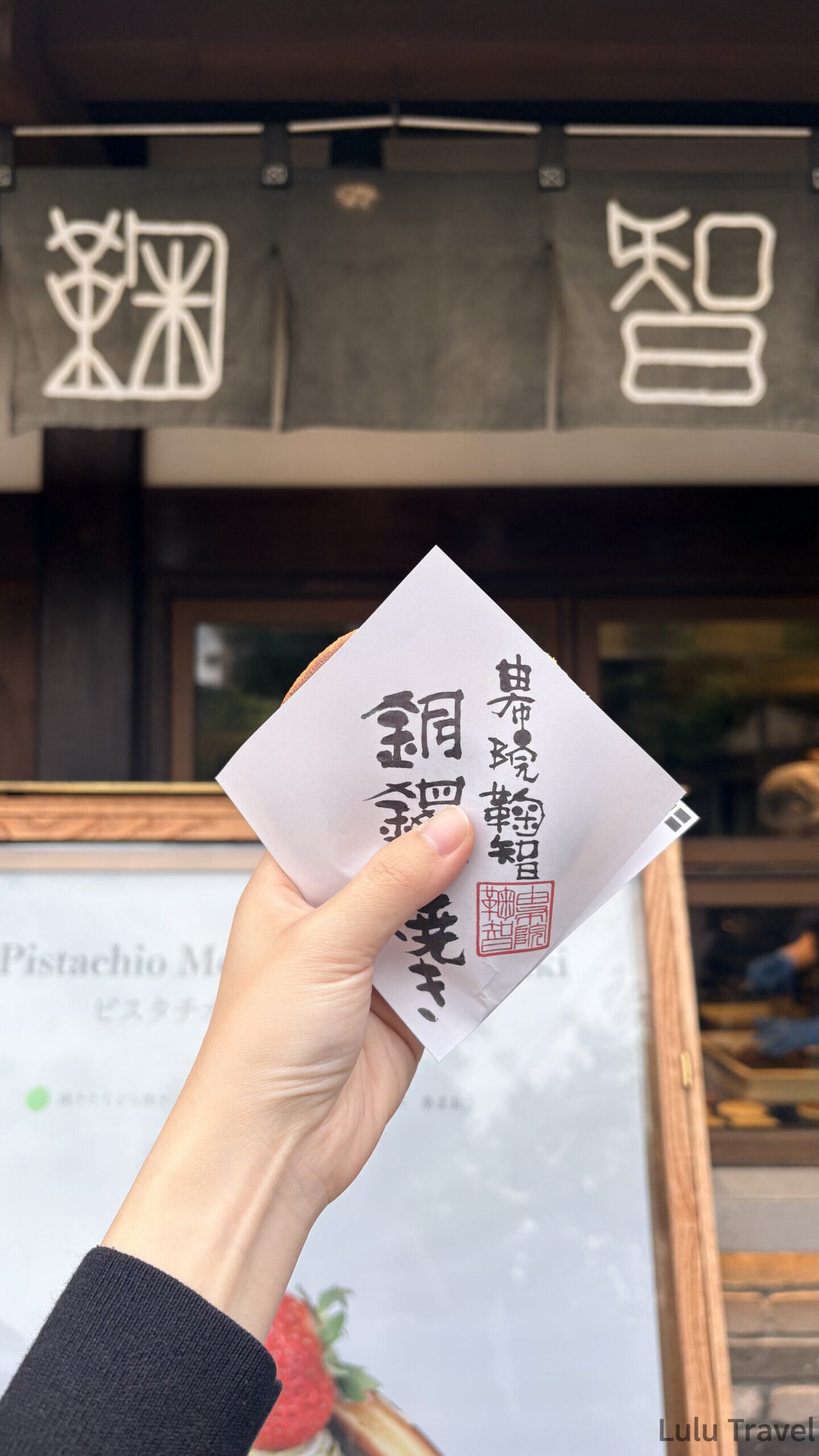
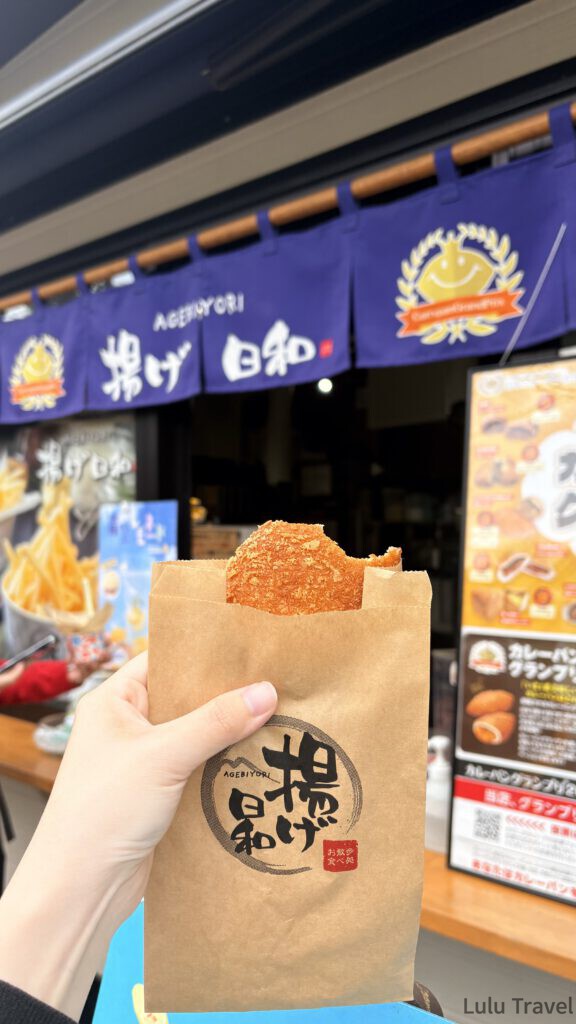
Next was COMICO ART MUSEUM YUFUIN, designed by the Japanese architect Kengo Kuma. Buy a ticket and you can leave your luggage there for free.
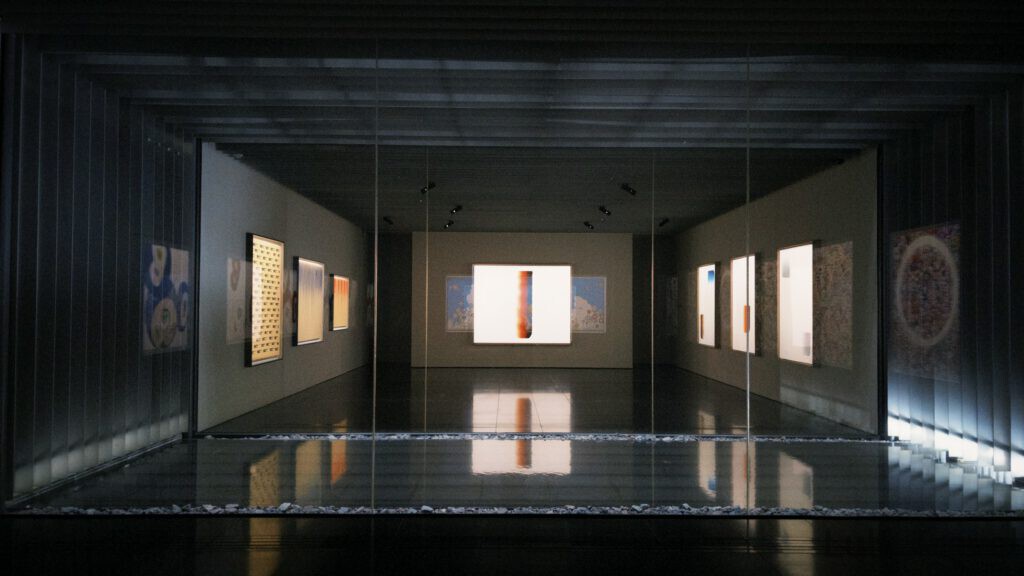
The museum doesn’t cover much ground, but you won’t walk past it. It’s split between the main building and an annex completed in 2022, both designed to sit within the town’s natural landscape and both clad in yakisugi — charred cedar, a traditional Japanese woodworking technique.
The main building uses its layout to striking effect: two rooms separated by a pool of water and a pane of glass, so the works inside reflect off one another across the gap. The annex across a small stream houses not only exhibition space but an open gallery, a café, an outdoor exhibition area and the restrooms. When we visited, Yoshitomo Nara’s well-known your dog in the outdoor area had just been swapped for the naughty boy sculpture — so if there’s a particular piece you want to see, check the current programme before you go.
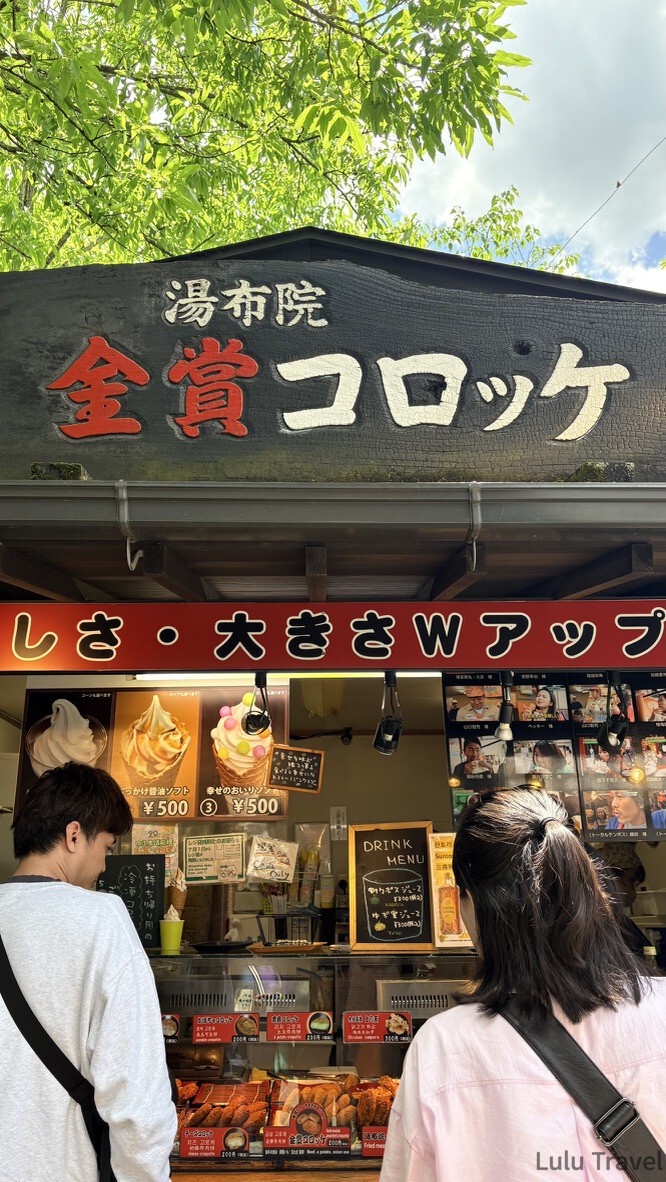
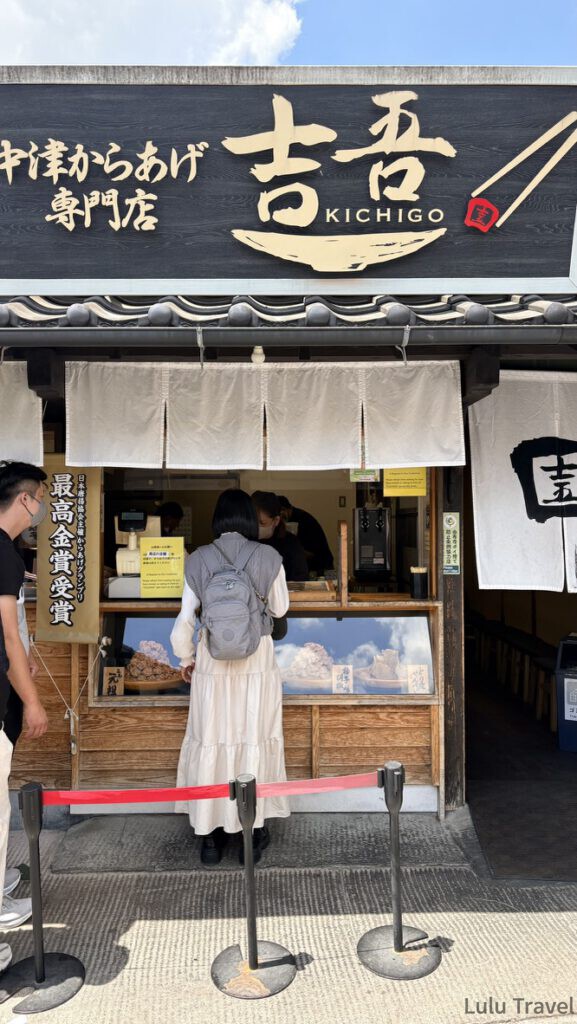
After the museum we carried on working through Yunotsubo Street: croquettes from Yufuin Kinsho, karaage from Nakatsu Karaage Kichigo, and a matcha milk from the tea shop 5 toku — a satisfied way to wind up this six-day Fukuoka trip.
For the rest of the itinerary, see: Fukuoka Itinerary | Booking Golden Week One Month Out, 6 Days and What It Cost
08Straight from Yufuin to Fukuoka Airport
Finally we boarded the highway bus to the airport, leaving the Yufuin Station bus centre at 14:30 and arriving at Fukuoka Airport’s international terminal at 16:05. Book on the official site in advance — ours was completely full. This one bus removes two transfers you’d otherwise make going back through Hakata, which matters a lot on a final day with luggage.
Which brings us back to the question at the start: a day trip to Yufuin really is enough time. Lake Kinrin, Yunotsubo Street and the museum all fit comfortably into one day. What the extra night buys you isn’t more itinerary — it’s a feeling. The Yufuin we found inside that apartment and out on Yunotsubo Street after dark had no showmanship left in it, just ordinary life.
FAQOther Questions People Ask Me About YufuinFrequently Asked Questions
Is it safe to walk along Yunotsubo Street at night when it’s completely dark?
We were a group of four. There was barely anyone on the street, all the shops except the convenience store were closed, and further down, there was only scattered lighting. I definitely had a bit of an inner monologue—the kind you get from watching too many Japanese dramas—and even pulled out a flashlight. But once we spotted fireflies, the vibe instantly shifted from a suburban thriller to a peaceful pastoral scene. However, I still recommend staying alert and avoiding lingering on the streets for too long.
Is it a pain to walk around Yunotsubo Street with luggage?
Compared to the day-trippers, dragging luggage along Yunotsubo Street definitely made us stand out. Fortunately, having a group meant we could help each other out—some watched the bags while others lined up, so it really wasn’t too hard. Later, we stored our luggage for free at COMICO ART MUSEUM YUFUIN, which made getting around much easier.
Where can I store my luggage?
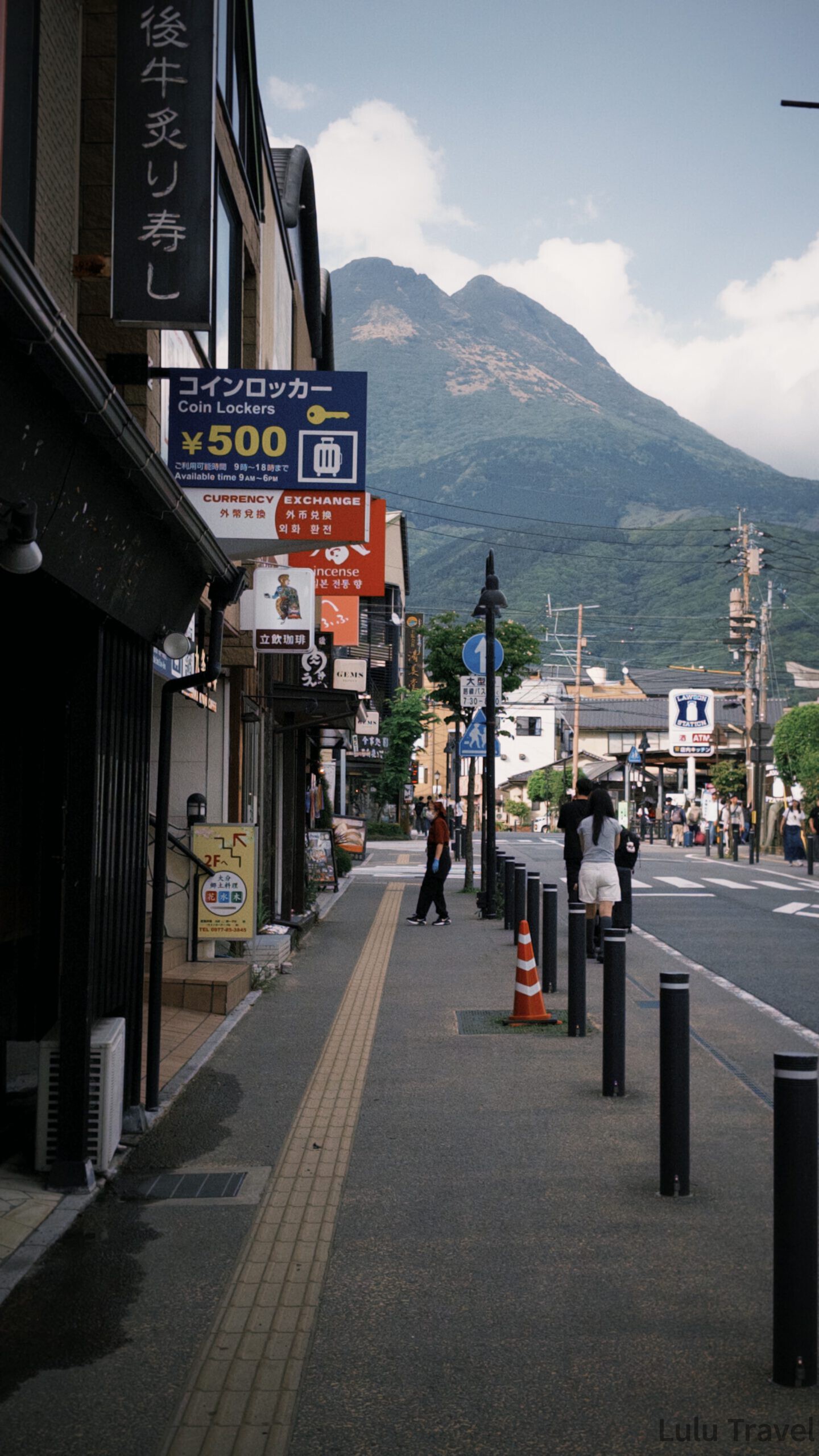
There are a few options. Along the shopping street in front of Yufuin Station, there are coin lockers available for 500 yen per use, operating from 9:00 AM to 6:00 PM. Another option is the COMICO Art Museum, which we actually used. If you buy a ticket for the museum, you can store your luggage for free. So, if your route is like ours—heading to Yunotsubo Street right after check-out—dragging your bags directly to the museum is the most hassle-free choice and saves you that 500 yen.
Is this kind of accommodation still worth it for just two people?
The 4,600 price tag is for the entire house, which came out to 1,150 per person for the four of us. For two people, it becomes 2,300 each, which is roughly the same price as a business hotel in downtown Fukuoka. So, if there are only two of you, I’d say the reason it’s worth it isn’t to save money, but rather for the space itself—a two-story layout, a large balcony, a private onsen bathroom, and a kitchen. These are amenities you simply won’t get at a similarly priced business hotel.